Pairs well with22 on file
Why these belong in the same formula. Each row says what the basis is, from settled biochemistry through to a trial that measured the pair.
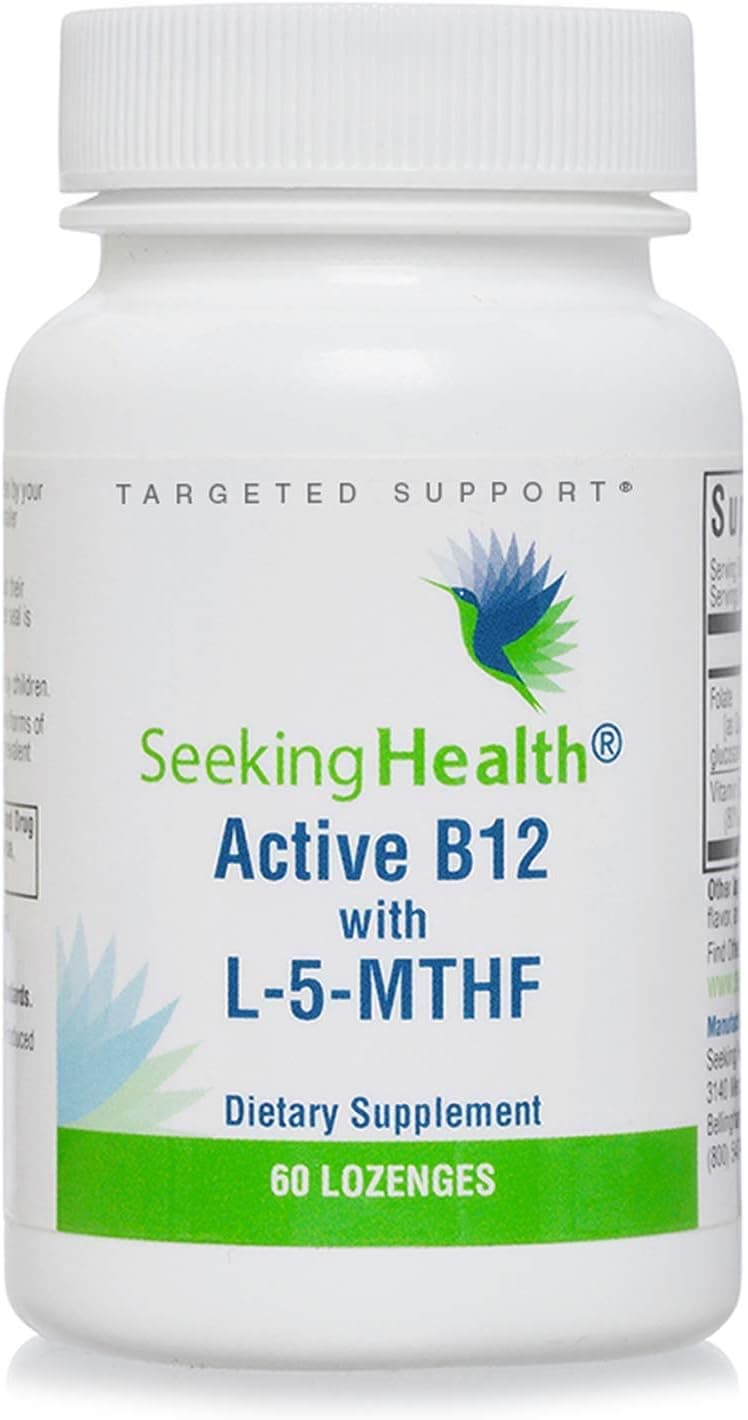
Folate hands its methyl group to vitamin B12, which uses it to regenerate methionine and keep homocysteine metabolism moving, so when B12 runs low folate becomes locked as methyltetrahydrofolate and the cycle stalls. Because folic acid can normalize the enlarged red blood cells that accompany a B12 shortfall, the two are usually paired so a low B12 is not missed.
Folate and B6 cover two different routes for homocysteine: folate with B12 remethylates it back to methionine, while the active form of B6 drives the transsulfuration pathway that converts it toward cysteine. Supplying both together supports the body's normal handling of homocysteine more fully than either does alone.
The enzyme that produces the active circulating form of folate, MTHFR, needs a riboflavin-derived cofactor, FAD, to function. Adequate riboflavin keeps that conversion running, which matters most for people carrying the less stable MTHFR variant.
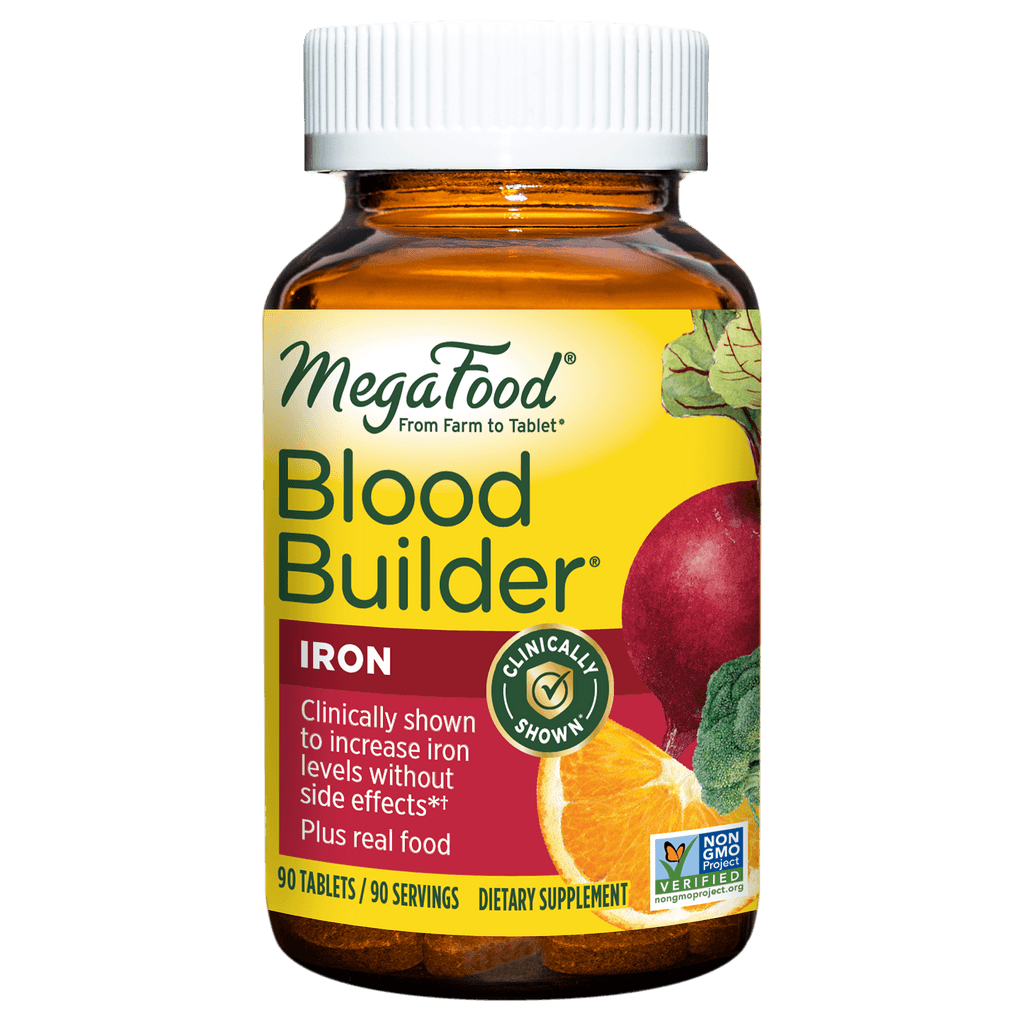
Normal red blood cell formation draws on both nutrients in parallel: folate for the DNA synthesis that lets precursor cells divide, and iron for the hemoglobin those cells fill with. This complementary split is why the two sit together in standard prenatal formulations, each covering a step the other cannot.
Folic acid is a fully oxidised synthetic form that has to be reduced twice by dihydrofolate reductase and then methylated by MTHFR before it can act. Methylfolate is already at the end of that sequence, which matters where MTHFR activity is low.
Choline oxidised to betaine remethylates homocysteine without needing folate. The two nutrients cover for one another, so intake of one changes demand for the other.
Betaine feeds the BHMT enzyme, a second way of putting a methyl group back onto homocysteine that does not use folate or B12. Formulations often carry both so neither route is the bottleneck.
Trimethylglycine is betaine by another name and donates one of its three methyl groups through BHMT. It works beside the folate route rather than through it.
Once folic acid is reduced to tetrahydrofolate it needs a carbon unit to carry, and serine supplies most of them through SHMT. Serine availability sets how much of the reduced folate pool is loaded.
The glycine cleavage system donates carbon units onto tetrahydrofolate, and glycine methylation consumes SAM produced downstream. Glycine sits on both sides of the cycle folic acid enters.
The methyl group carried by 5-methyltetrahydrofolate ends up in methionine and then in SAM, the universal methyl donor. SAM in turn inhibits MTHFR, so the two levels regulate each other.
The tetrahydrofolate made from folic acid oxidises easily and loses activity. Ascorbate holds the reducing conditions that keep more of it usable.
Large folic acid doses can form a complex with zinc in the gut lumen and lower zinc uptake, and zinc-dependent conjugase is needed for dietary folate in the other direction. Where both are supplied the interaction is worth stating.
EGCG inhibits dihydrofolate reductase, the enzyme folic acid must pass through to become active. High-dose catechins taken in the same window can slow that activation step, which does not apply to already-reduced folate forms.
Folic acid is fully oxidised and has to be reduced twice, to dihydrofolate then tetrahydrofolate, before it can carry a one-carbon unit. Both reductions are run by dihydrofolate reductase using NADPH as the electron donor. Niacin is the dietary precursor of the NADP pool, which places it directly underneath the activation of supplemental folic acid.
Methionine synthase uses 5-methyl-THF to remethylate homocysteine back to methionine, and methionine intake sets how much homocysteine enters that cycle in the first place. A high methionine load raises the demand on folate-dependent remethylation. The relationship is a flux one and describes a blood marker, not a clinical endpoint.
Histidine breakdown passes through formiminoglutamate, which hands its formimino group to tetrahydrofolate. When folate is short, that intermediate accumulates and spills into urine, which is why the histidine load test was historically used to read folate status. The two nutrients therefore meet at a single enzymatic handover.
Iron and folic acid are supplied together as a single daily tablet in most antenatal supplementation programmes worldwide, and ferrous sulfate is the usual iron salt in that pairing. A programme comparison reported birthweight outcomes for multiple micronutrient supplementation against the iron plus folic acid standard. The pairing is a delivery convention with a shared population, not a chemical interaction between the two molecules.
A randomised trial tested whether adding a probiotic to iron plus folic acid changed iron status and gut inflammation markers. Separately, several gut bacterial groups synthesise folate themselves, so the microbial community is a genuine second source of the vitamin. The measured endpoints in that trial were markers rather than clinical outcomes.
Myo-inositol and folic acid appear together in many preconception and prenatal formulas. They act through unrelated pathways, inositol through phosphoinositide signalling and folic acid through one-carbon transfer. No combination trial was identified in the candidate set, so this is a formulation observation rather than a measured effect.
Activated charcoal binds a wide range of small organic molecules non-selectively in the gut lumen, which is why it is dosed away from anything meant to be absorbed. Folic acid is a small organic acid and is not exempt from that behaviour. Separating the two by several hours is the standard way this is handled.
Psyllium forms a viscous gel that slows gastric emptying and can blunt the absorption rate of co-ingested small molecules. Whether this meaningfully reduces total folic acid absorption has not been measured directly in the candidate set. Spacing doses is the conventional handling.