
The people it speaks toFieldwork 2020
24.2% of US adults
aged 18 and over met both the aerobic and muscle strengthening activity guidelines in 2020, in the National Health Interview Survey.
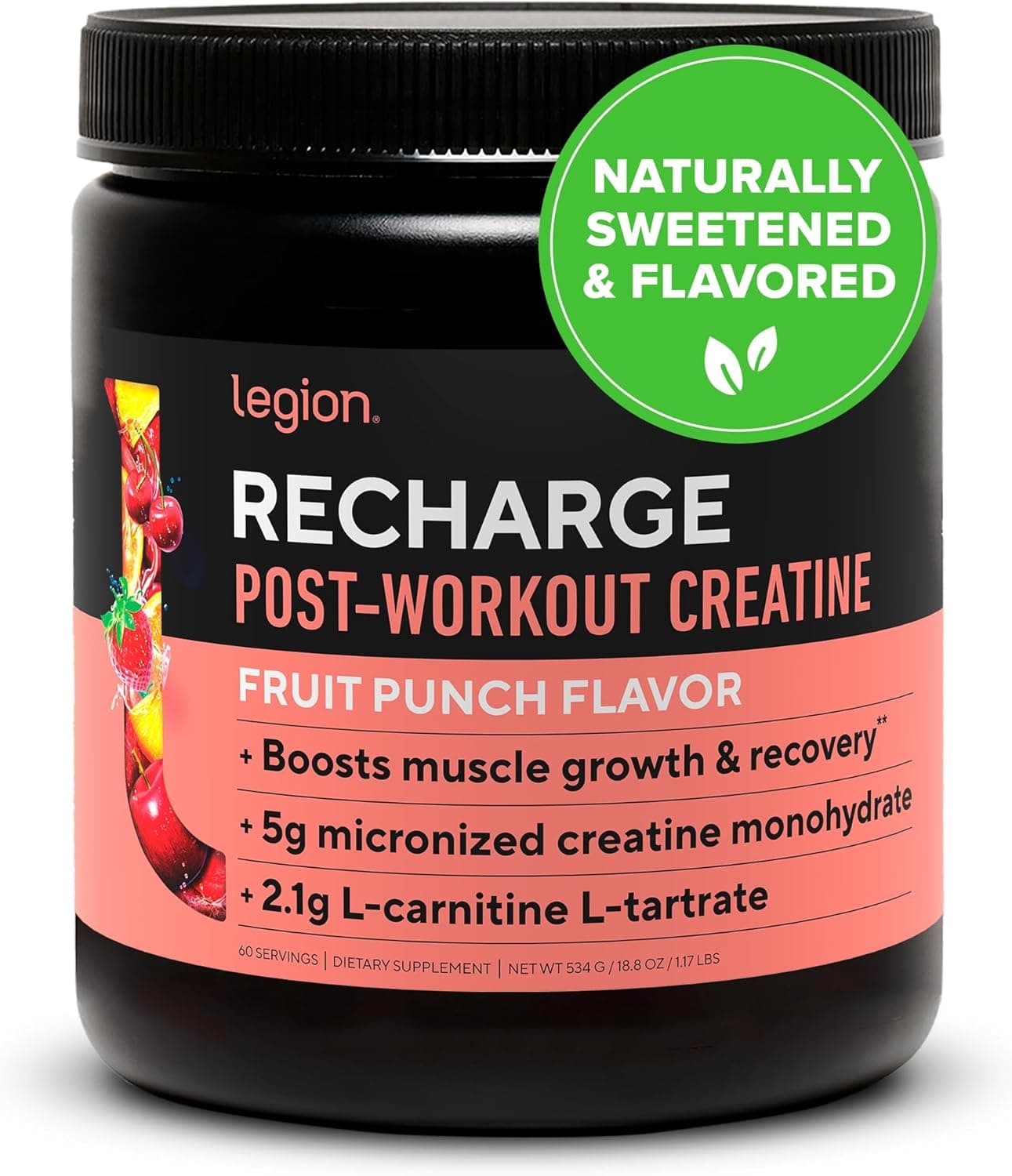
CDC National Center for Health Statistics, 2022Micronized Creatine Monohydrate is the lead active here, studied most for strength. 15 human studies on Micronized Creatine Monohydrate back this formula, each one cited. Each serving carries 5 g of Micronized Creatine Monohydrate, inside the range the published research used. Who it fits: for everyone, adults.
 Verified by IngredientMD
The panel on the left is the one we evaluated, line by line.
All 3 actives checked against the clinical evidence: dose, form, and what the research actually shows.
Doses, ratios, and how the ingredients work together. That assessment is the verdict above: "Strong evidence, strong dose".
The verdict is public and identical whether or not a brand pays. A formula that does not clear the bar gets nothing.
Read by the engine against 2.1 million data points from clinical trials, PubMed and more than a hundred vetted sources. No individual reviewer is named or implied.
Cross-checked against 218 documented interactions for these actives.
Public health figures the engine matched to this formula's ingredients. Reported by their source, cited and dated, never written by the brand.
24.2% of US adults
aged 18 and over met both the aerobic and muscle strengthening activity guidelines in 2020, in the National Health Interview Survey.
CDC National Center for Health Statistics, 202231% of US adults
said they were taking protein supplements such as powders, drinks, or bars, in a Pew Research Center survey fielded in July 2026.
Pew Research Center, 202621.1% of the US population
aged 15 and over took part in sports, exercise, or recreation on an average day in 2023, in the American Time Use Survey.
US Bureau of Labor Statistics, 202457.6%
During 2017 to 2018, 57.6% of US adults aged 20 and over reported using a dietary supplement in the past 30 days.
CDC National Center for Health Statistics41.3% of US men aged 18 to 34
met both the aerobic and muscle strengthening activity guidelines in 2020, the highest rate of any age and sex group, in the National Health Interview Survey.
CDC National Center for Health Statistics, 202237% of US adults aged 18 to 29
said they were taking protein supplements such as powders, drinks, or bars, roughly double the rate among adults aged 65 and over, in a Pew Research Center survey fielded in July 2026.
Pew Research Center, 202659 to 66 days
was the median time it took adults to make a new daily health habit automatic across the studies a 2024 review pooled, with individuals ranging from 4 to 335 days.
Systematic review and meta-analysis, 202461% to 74%
About 61 to 74 percent of adults refilling a long-term medicine on their own stopped within a year, versus 33 to 44 percent on one set pickup day.
Cohort study, 2015Systematic review and meta-analysis, 2017
Across 53 trials, creatine gave a small boost to upper-body strength versus placebo, about 0.32 standardized, including a real gain in bench press.
Sports MedicineA small improvement in memory (standardized effect 0.29)
Also gives healthy adults a small memory benefit. Measured in healthy people, pooled across 8 randomised trials (0.04 to 0.53).
Meta-analysisMeta-analysis, 2025
Across 69 trials in 1,937 adults, creatine with resistance training added about 1.43 kg to bench press and 5.64 kg to squat, with no change in grip strength.
NutrientsMeta-analysis, 2025
Pooling trials of creatine alongside resistance training, creatine groups gained more muscle strength than controls, with larger gains in untrained people and at low to moderate doses.
PeerJRandomised trial, 2008
L-carnitine L-tartrate at 1 to 2 g daily shifted markers of muscle oxygenation and blood flow after a bout of resistance exercise in healthy resistance-trained men.
Journal of strength and conditioning researchRandomised trial, 2010
L-carnitine L-tartrate was associated with more favourable biochemical markers of recovery from physical exertion in both younger and older participants. The endpoints are blood markers rather than function.
Metabolism: Clinical and ExperimentalSystematic review and meta-analysis, 2022
This review of 35 randomized trials found creatine combined with resistance training increased lean body mass by about 1.1 kg beyond training alone.
NutritionSystematic review, 2021
Pooling acute and chronic oral L-carnitine trials, benefits to exercise performance and recovery showed up mainly with longer dosing and depended on exercise intensity, with little effect on short high-intensity efforts.
NutrientsNarrative review, 2026
The review maps the described pharmacology of corosolic acid across glucose transporter movement, enzyme inhibition and signalling pathways, drawing mainly on cell and animal work.
Frontiers in PharmacologyRandomised trial, 2003
L-carnitine L-tartrate supplementation was associated with differences in hormonal responses and markers of tissue disruption after resistance exercise. These are biochemical markers, not performance outcomes.
Journal of Strength and Conditioning ResearchOpen-label trial, 2025
Myo-inositol combined with banaba standardised to one percent corosolic acid improved HOMA-IR and a hepatic insulin extraction index. Both are calculated markers of insulin handling rather than clinical outcomes.
Gynecological EndocrinologyRandomised trial, 2014
A placebo-controlled trial of soybean leaf extract in adults with elevated blood sugar markers. Banaba and corosolic acid are named only as comparators inside the discussion, so this is context and not evidence for the ingredient itself.
Food and FunctionRandomised trial, 2025
Oral acetylcarnitine and carnitine showed low bioavailability with substantial conversion to TMAO, indicating that most of an oral dose does not arrive as intact carnitine.
Molecular Nutrition and Food ResearchRandomised trial, 2025
A single acute dose of L-carnitine before a CrossFit workout did not produce a detectable performance difference against placebo, which is a failure to detect an effect rather than evidence there is none.
NutrientsPopulation figures from public health data. Context for the category, not a statement about any individual and not a claim about this product.
Each line below was derived from this formula's own record at the time of verification. Nothing here was written by the brand, and nothing can be added that the evidence does not carry.
Where a trial measured an actual number, we show it next to the claim. It is the average across the trials, never a promise about one person.
About 1.4 kg more lean mass than the same resistance training without it.
Read at the source. The magnitude sits beside the same trial the claim already cites. It describes what the trials measured, never what any one person will feel.
Time-to-effect windows the engine read from the trial record. Each is a window a named study measured, cited and dated, never written by the brand.
In the trial record, muscle creatine stores rise to a loaded level over about 4 weeks at 3 g daily, or about 1 week with a higher loading dose, and return toward baseline about 4 weeks after stopping.
Windows measured in the cited trials. Context for how the active behaves over time, not a statement about any individual and not a claim about this product.
Three ingredients, from each one's own page.
Before muscle stores are full and training shows it. A front-loaded first week gets there in about five to seven days.
Soreness after hard sessions eases over roughly three weeks of daily use. Muscle carnitine content builds slowly, so this is a repeated-dose ingredient rather than an acute one.
Post-meal readings on a glucose meter can shift within days. The steadier fasting picture takes four to twelve weeks of daily use to settle.
How each ingredient usually behaves over time, from its own page on IngredientMD. General timing for the ingredient, not a measurement of this product.
What each form is, and where it fits in a formula. Measured findings carry the study that reported them.
Creatine complexed with one molecule of water in a crystalline powder. It is the most widely manufactured and most studied form of creatine, and the form sold as Creapure.
In a seven-week double-blind randomised trial in untrained men, creatine monohydrate raised total muscle creatine content relative to placebo alongside a matched resistance-training programme.
A crystalline salt pairing L-carnitine with L-tartaric acid. Roughly two-thirds of the weight is carnitine and the balance is the tartrate counter-ion.
In placebo-controlled crossover trials in resistance-trained men, 2 g per day of L-carnitine as the tartrate for three weeks was accompanied by less MRI-detected muscle tissue disruption after squat exercise and higher IGFBP-3 than placebo.
The single triterpene separated from the leaf matrix by chromatography or repeated recrystallisation, typically above ninety percent purity.
Descriptions of the form itself, read from the cited studies. Not a comparison between products and not a statement about any individual.
It is a powder, so the serving scales to the amount you want and mixes into something you already drink.
Where two of this brand's products carry actives the literature has read together, the pairing and its basis are below. The evidence word is the corpus row's own confidence, never a score.
The two hydroxylases in the carnitine pathway are iron dependent enzymes that also need ascorbate to keep the iron in its active state. Iron status is part of the same requirement.
cofactor for carnitine biosynthesis. No combination trial has tested this exact pairing.
Because the effect builds and holds only with continued daily use, a steady recurring supply is the practical way to keep it going.
Put an earned verification on your own product page.
These statements have not been evaluated by the Food and Drug Administration. This product is not intended to diagnose, treat, cure, or prevent any disease. This record is not medical advice. Always consult your healthcare provider before starting any supplement regimen.