Butyric acid.
It's the preferred fuel of the cells lining your colon. Your own gut bacteria make it from fibre, and an oral form is a way of putting some there directly.
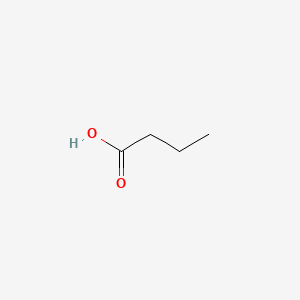 Compound
- Category
- Compound
What Butyric acid is, and what it does.
- Does it work
- Suits people whose fibre intake runs low or whose gut has felt off since a course of antibiotics. If you eat plenty of resistant starch and vegetables, your bacteria are already making it.
- How much to take
- No dose figure is on record. Start low, split across meals, and keep it steady. A coated salt or the tributyrin form is what gets material past the small intestine.
- Time to feel it
- Changes in digestive comfort build across weeks of daily use rather than after one capsule. Nobody has pinned a precise onset.
- The first dose
- Usually quiet. Some people notice a little more gas or a change in stool as the gut adjusts, and uncoated forms can leave a butter-like aftertaste.
- With regular use
- Weeks of daily use keep a steady supply reaching the colon, feeding the barrier cells and supporting the low-oxygen conditions that fibre-fermenting bacteria prefer.
- How well tolerated
- Generally well tolerated, with odour the usual complaint. Check with your clinician if you're pregnant, breastfeeding, or managing an ongoing gut condition.
- The overlooked benefit
- Feeding the bacteria works too. Resistant starch, pectin and oat beta-glucan let your own colon make butyrate, which is why fibre so often sits beside it on a label.
The proof, claim by claim.
What these words mean
These words describe the research, not the molecule's worth. Research strength is how much work stands behind one claim, and it is never a product score.
- colonocyte energy supplyNarrative review
- gut barrier integrityAnimal study
4 more claims
- histone deacetylase inhibition in gut epitheliumIn vitro study
- short-chain fatty acid receptor signalling on immune cellsIn vitro study
- digestive comfort and stool consistencyRandomised trial
- maintenance of an anaerobic colonic environmentAnimal study
Why these belong in the same formula, 16 pairings
Why these belong in the same formula. Each row says what the basis is, from settled biochemistry through to a trial that measured the pair.
Resistant starch reaches the colon undigested and is among the most butyrogenic substrates available to the resident flora. Rather than delivering butyrate, it lets the bacteria make it in place, along the length of the colon where oral doses struggle to reach. The size of the shift depends on which organisms a person already carries.
Inulin is fermented in the proximal colon, feeding bifidobacteria that release acetate and lactate. Butyrate-producing species then cross-feed on those intermediates. The route is indirect and the gas that comes with rapid proximal fermentation is the usual tolerance limit.
Shorter-chain fructans ferment faster and further up the colon than inulin, so they raise short-chain fatty acid output early in transit. Butyrate arises mostly through cross-feeding rather than direct production. Bloating tends to appear sooner with the shorter chains.
Galactooligosaccharides are selectively fermented by bifidobacteria, which do not themselves make butyrate but supply the acetate that butyrate producers consume. The pairing is a substrate-plus-consumer arrangement. Output depends on whether butyrogenic species are present to take up the acetate.
Partially hydrolysed guar gum ferments slowly and distally, so short-chain fatty acid release is spread across the colon instead of concentrated at the start. That profile is the reason it is chosen where rapid fructan fermentation is poorly tolerated. It is a substrate, not a source of butyrate itself.
Pectin is fermented to a mixture of acetate, propionate and butyrate, with the ratio shifting by pectin source and degree of esterification. It also raises viscosity in the small intestine, which slows delivery of everything else in the meal. Both effects travel together and cannot be separated by dose.
Oat beta-glucan is largely fermented rather than excreted, contributing to the colonic short-chain fatty acid pool. Molecular weight drives both viscosity and how quickly it is broken down, so processed and intact preparations behave differently. It is one substrate among several and not a substitute for a mixed fibre intake.
Psyllium is only partly fermented, which is precisely why it holds water and bulks stool rather than producing gas. Its contribution to butyrate output is smaller than that of fully fermentable fibres. Pairing it with a fermentable fibre gives bulk and substrate from different sources.
Bifidobacteria do not produce butyrate. They release acetate and lactate, which butyrate-forming species such as Faecalibacterium prausnitzii and Anaerostipes convert onward. That handoff is the reason a bifidobacterial strain can raise butyrate without making any.
Lactate from lactobacilli is a substrate for lactate-utilising butyrate producers in the colon. Whether that translates into more butyrate depends on whether those consumers are present. Without them lactate simply accumulates. Read the pairing as conditional on an individual's existing flora.
This yeast does not make butyrate and is not fermented into it. Its relevance is that it alters the bacterial community during and after antibiotic courses, which is when butyrate producers are most depleted. The link to butyrate output is indirect and inconsistently measured.
Glutamine is the preferred fuel of small intestinal enterocytes while butyrate dominates colonocyte energy supply. The two feed different segments of the same tissue rather than competing. Pairing them covers more of the tract than either does alone, which is a rationale rather than a demonstrated outcome.
Activated charcoal is a broad, non-selective adsorbent and will bind organic acids and much else taken alongside it. Any oral butyrate given in the same window is liable to be adsorbed before it is absorbed. Separating the two by several hours is the practical answer.
Clay adsorbents bind small charged molecules in the gut lumen without discriminating between what is wanted and what is not. Taken together with a butyrate salt, the exposure that reaches the mucosa is reduced by an amount nobody has quantified. Spacing the doses removes the question.
Both are used with an eye on the gut lining, but their evidence bases sit in different compartments and different segments of the tract. No study has run them together. The pairing is a formulation choice at present, not a tested combination.
Butyrate is usually supplied as a calcium, magnesium or sodium salt because the free acid smells of rancid butter. That means a butyrate dose also carries a mineral dose, which counts against the day's total. The mineral is a consequence of the delivery choice rather than an intended active.
Nothing specific on file for Butyric acid. Match the label to the daily amount above, and tell your doctor what you take.
Not medical advice. Show the label to your pharmacist.What Butyric acid actually does.
Butyrate is the main fuel source for the cells lining your colon, which take it up directly from the gut rather than from blood.
3 more mechanisms
Most of the butyrate in your body is made by gut bacteria fermenting carbohydrate that wasn't digested earlier, mainly by a handful of specific bacterial species.
Free butyric acid smells strongly of rancid butter and gets absorbed high up in the gut, which is why oral products use mineral salts, microencapsulation or a triglyceride form to get it further down.
At the levels reached in the colon, butyrate blocks a class of enzymes that changes gene activity in the cells lining the gut.
Where Butyric acid comes from.
Two routes. Either a chemical plant makes it from petrochemical feedstock, or bacteria ferment sugar into it the same way they do in your colon. Then it is turned into a salt or an oil, because the raw acid smells like vomit.
What this route gives you
The same molecule is reached more than one way. Which route a given product used is a manufacturing choice, and the finished compound is the same either way.
6 steps on record
Industrial synthesis starts from propylene via butyraldehyde. The fermentation route starts from glucose, molasses or starch hydrolysate
Butyraldehyde is oxidised to butyric acid, or Clostridium tyrobutyricum and related anaerobes ferment sugars to it
The acid is separated by distillation, or from broth by extraction and concentration
Neutralised with sodium, calcium or magnesium hydroxide to the salt, or esterified with glycerol to tributyrin
Salts are assayed for butyrate content and held to tight moisture limits because they draw water from the air
Delivered as a plain salt powder, a microencapsulated granule, or tributyrin oil in a softgel
Getting Butyric acid from food.
The whole-food sources on file. A supplement closes the gap, it does not replace dinner.
A gram-for-gram figure (how much of each you would eat to match a dose) will appear here once it is sourced and reviewed. This page will not print a number it cannot cite.
The forms it comes in.
3 more forms
The essence, in one line each.
- In a randomised trial in 22 adults with a diagnosed bacterial infection, taking a supplement of butyric acid and inulin during a 14-day antibiotic course lessened the resulting shifts in gut microbiota composition and function.Randomised trial, in H. pylori-positive patients. Abdulkhakov S et al., 2024 (Microorganisms). PMID 38399723 ↗
7 more findings
- Microencapsulated sodium butyrate was assessed as an addition to standard care in a defined patient group, with remission as the reported endpoint.Randomised trial, in adults with active mild-to-moderate uc. Karłowicz K et al., 2025 (Medical science monitor). PMID 41422374 ↗
- A meta-analysis of 8 human studies found that adults with a diagnosed mood condition had significantly lower blood levels of butyric acid than healthy controls.Meta-analysis, in depressed patients. Do QL et al., 2026 (Biomedical journal). PMID 41865792 ↗
- The review summarises reported associations between short-chain fatty acid levels and food allergy incidence. The direction of causation is not established by the included studies.Systematic review. Szukalska I et al., 2025 (Nutrients). PMID 41097194 ↗
- Butyric acid supplementation altered gut microbiome composition and growth measures on a low crude protein diet.Animal study. Connolly KR et al., 2025 (Microorganisms). PMID 40142581 ↗
- Encapsulated butyric acid in feed was associated with changes in production measures, immune markers and faecal microbial profile.Animal study. Kallam NK et al., 2026 (British poultry science). PMID 42290652 ↗
- Transcriptome and lipid metabolome analysis of subcutaneous fat, used to describe how butyrate-related signalling maps onto fat deposition in this species.Animal study. Chen X et al., 2025 (Genomics). PMID 40633702 ↗
- Transcriptomic work describing how butyric acid acts on cells in an industrial fed-batch culture. This is bioprocess engineering, not nutrition.In vitro study. Schulze M et al., 2022 (Biotechnology and bioengineering). PMID 35641884 ↗
Chosen from the 9 we read for Butyric acid.
The studies, linked.
3 sources behind our Butyric acid verdict, every one linked to PubMed, the journal or ClinicalTrials.gov.
- Clinical trialGamma-Amino Butyric Acid (GABA) Deficits and Vulnerability to Cannabinoid-Induced PsychosisClinicalTrials.gov ↗Early phase 1, 17 participants, Completed
2 more linked trials
- Clinical trialButyric Acid Supplementation for Gut Improvement After Cardiac Surgery in Kids, A Phase IIa Clinical TrialClinicalTrials.gov ↗Phase 1, 105 participants, Not yet recruiting
- Clinical trialEffetto Del Trattamento Con Acido Butirrico Sull'Anoressia NervosaClinicalTrials.gov ↗50 participants, Active not recruiting
From clinical trials and PubMed, ranked by study type and citation weight, not cherry-picked.
Problems people have reported.
Read this carefully. These are 162 voluntary, unverified reactions reported to the FDA (openFDA). The number mostly reflects how popular Butyric acid is, not how risky it is. A report is not proof Butyric acid caused anything. It is a signal of what to watch for, nothing more.
3 more reported effects
Source: openFDA adverse-event reports. Voluntary reporting, not an incidence rate.
FDA Disclaimer: These statements have not been evaluated by the Food and Drug Administration. This information is for educational purposes only and is not intended to diagnose, treat, cure, or prevent any disease. Consult your healthcare provider before starting any supplement regimen.