Dimethylphenethylamine.
It's a lab-made stimulant amine. It pushes noradrenaline and dopamine out of nerve endings, which lifts alertness and raises heart rate and blood pressure at the same time.
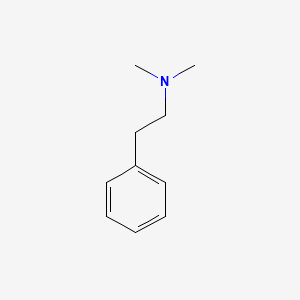 Compound
- Category
- Compound
What Dimethylphenethylamine is, and what it does.
- Does it work
- A narrow audience. Regulatory status for this class differs by country and has changed repeatedly, so anyone tested in sport or taking medication needs to check before using it.
- How much to take
- No daily amount is on record and we won't invent one. It works by releasing stores rather than binding receptors, so the same amount does less each time it's repeated.
- Time to feel it
- Stimulants of this class come on inside an hour of an oral dose. The two methyl groups slow breakdown, so the effect runs longer than the plain amine would.
- The first dose
- Day one is the effect itself: quick alertness, a faster heart rate, then a fade. Some people find the tail longer than they expected.
- With regular use
- Repeated dosing shrinks the response as the releasable pool runs down. No long-term human trials on this compound exist, so nothing beyond that is documented.
- How well tolerated
- Plain words: it raises heart rate and blood pressure by design. With a monoamine oxidase inhibitor it can produce a large, prolonged pressure rise. Talk to a clinician first.
- How it feels
- Wired and forward leaning, with a physical edge. Jitteriness and a raised pulse come with the mechanism rather than being separate from it.
- The overlooked benefit
- Monoamine oxidase is its clearance route, so anything that inhibits that enzyme, a medicine or a strong dietary source, changes how long and how hard it acts.
The proof, claim by claim.
What these words mean
These words describe the research, not the molecule's worth. Research strength is how much work stands behind one claim, and it is never a product score.
- catecholamine release and subjective alertnessNarrative review
- rise in heart rate and systolic blood pressureNarrative review
2 more claims
- tachyphylaxis with repeated dosingNarrative review
- botanical origin implied on labelsNarrative review
Why these belong in the same formula, 5 pairings
Why these belong in the same formula. Each row says what the basis is, from settled biochemistry through to a trial that measured the pair.
Both compounds increase sympathetic drive by separate routes, so the cardiovascular effects stack rather than cancel. The pairing is common in pre-workout and thermogenic formulations, which is exactly where the additive load matters. Reported effects include elevated heart rate and blood pressure that exceed what either produces alone. This is a caution row, not a benefit row.
Anhydrous caffeine is dosed in discrete high amounts, so the additive sympathetic load with a phenethylamine derivative is easier to overshoot than with brewed sources. Heart rate and blood pressure rise from two independent mechanisms at once. Formulators reach for this pairing because the subjective stimulation is stronger. That is also why it deserves a flag rather than a recommendation.
Alpha-2 blockade removes the negative feedback that normally limits noradrenaline release, so any agent increasing catecholamine tone produces a larger swing than it would alone. Anxiety, palpitations and blood pressure elevation are the predictable results. The two show up together in fat-burner stacks. Read this as a compounding risk, not a synergy to seek.
Theanine is used in stimulant formulations to blunt the edgy, overstimulated feeling without lowering the stimulant dose. It shifts the subjective experience rather than the cardiovascular response. Feeling calmer on a stimulant is not the same as the heart rate being lower, and confusing the two is how people overshoot. The evidence base is for caffeine, so extending it here is inference.
Sustained catecholamine elevation raises renal magnesium excretion, and low magnesium status makes cardiac rhythm less stable. That makes a magnesium-poor diet a poor background for heavy stimulant use. This is a plausibility argument from physiology rather than a measured interaction for this compound. It does not offset a stimulant load.
Nothing specific on file for Dimethylphenethylamine. Match the label to the daily amount above, and tell your doctor what you take.
Not medical advice. Show the label to your pharmacist.What Dimethylphenethylamine actually does.
This compound belongs to a chemical family that also includes the body's own stress hormones and amphetamine-type stimulants, and small structural changes in that family determine how strong and how selective the effect is.
3 more mechanisms
Adding two methyl groups to the molecule makes it more fat-soluble and slows down the enzyme that normally breaks it down, which is why its effect lasts longer than the plain version.
It works indirectly by pushing stored noradrenaline and dopamine out of nerve endings rather than acting on the receptor itself, and repeated dosing empties that store, so the effect fades with continued use.
The rise in these stimulating chemicals is what raises heart rate, blood pressure and blood vessel tightening. These aren't separate side effects, they're the direct result of how the compound works.
Where Dimethylphenethylamine comes from.
It is made in a lab, not extracted from a plant, whatever the label implies. It arrives as a salt powder because the raw compound is an unstable oil. Regulatory status for this class of synthetic stimulant differs by country and has changed repeatedly.
What this route gives you
Chemically synthesised. The molecule is identical to the one a plant or an animal makes, and building it deliberately means a known purity, a fixed dose and no crop contaminants. For several nutrients this is the only route that reaches a usable amount.
4 steps on record
Starting material is a petrochemical-derived aromatic amine, not a plant extract.
The primary amine is dimethylated, commonly by reductive amination with formaldehyde and a reducing agent, or by direct alkylation.
The free base is converted to a hydrochloride or citrate and recrystallised, which is what makes it handleable as a powder.
Blended into pre-workout, thermogenic and nootropic powders, usually within a proprietary blend that does not disclose the individual amount.
Products commonly place it inside a proprietary blend, so the amount per serving is not disclosed. Naming conventions vary widely across labels for what may be the same compound.
The forms it comes in.
2 more forms
FDA Disclaimer: These statements have not been evaluated by the Food and Drug Administration. This information is for educational purposes only and is not intended to diagnose, treat, cure, or prevent any disease. Consult your healthcare provider before starting any supplement regimen.