Ergostanol.
A saturated fungal sterol that acts inside the gut rather than the bloodstream, competing with cholesterol for room in the bile-salt micelles that carry fat across the gut wall.
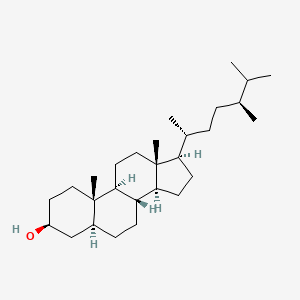 Compound
- Category
- Compound
What Ergostanol is, and what it does.
- Does it work
- It suits people interested in stanol chemistry for cholesterol already in the normal range. Research on this particular stanol is thin: 43 records at Europe PMC, most of it chemistry.
- How much to take
- No dose figure is on record for this stanol. Stanols in general are taken daily with a meal containing fat, which is where the competition with cholesterol actually happens.
- Time to feel it
- This one reads on a blood lipid panel rather than in how you feel, and that takes a few weeks of daily use with meals.
- The first dose
- Day one passes without sensation. The competition at the gut wall starts with the first fat-containing meal you take it alongside.
- With regular use
- Weeks of daily use with meals is where stanol chemistry does its work, measured on a lipid panel. For this specific stanol, nobody has run that measurement in people.
- How well tolerated
- Stanols are well tolerated, with loose stools the usual complaint. They crowd carotenoids and fat-soluble vitamins out of the same micelles, so keep coloured vegetables in the meal.
- How it feels
- No sensation attaches to it at all. What changes happens in the gut lumen and is read on a blood panel rather than noticed.
- The overlooked benefit
- Filling in the double bonds is what removes provitamin D activity. Unlike ergosterol, this molecule cannot become vitamin D2 under UV light, so it contributes none.
The proof, claim by claim.
What these words mean
These words describe the research, not the molecule's worth. Research strength is how much work stands behind one claim, and it is never a product score.
- cholesterol already in the normal range, for the stanol classMeta-analysis
- competition with cholesterol for micellar solubilisationIn vitro study
2 more claims
- reduced carotenoid carriage in mixed micellesRandomised trial
- low intestinal absorption of saturated sterolsNarrative review
Why these belong in the same formula, 6 pairings
Why these belong in the same formula. Each row says what the basis is, from settled biochemistry through to a trial that measured the pair.
Stanols and sterols occupy the same step of intestinal sterol uptake, so combining them does not open a second route, it loads the same one. Formulators mix them mainly to reach a total sterol dose with a workable crystal habit and taste. Anyone stacking several sterol or stanol sources should count the total rather than each product separately.
Carotenoids need bile-salt micelles to cross the intestinal wall, and a sterol or stanol load competes for that limited micellar capacity. Regular high sterol or stanol intake lowers circulating carotenoid concentrations, which is a marker of transport competition rather than an outcome in itself. Eating carotenoid-rich vegetables with fat, at a separate meal, is the usual practical answer.
Lycopene is among the most lipophilic carotenoids and depends entirely on micellar transport, so it is sensitive to sterol and stanol crowding. The effect shows up as lower plasma concentrations, which is a transport signal, not a demonstrated consequence for the person. Separating the doses in time reduces the overlap.
A free crystalline stanol taken dry disperses poorly and much of it passes through unchanged. Delivering it in a fat matrix, or as a fatty acid ester, is what allows it into mixed micelles where it can compete at the uptake step. This is why commercial stanol products are esterified into a fat phase rather than sold as bare crystals.
Ergosterol converts to vitamin D2 under ultraviolet light because of its conjugated 5,7-diene. Ergostanol is the saturated relative and lacks that diene, so it cannot serve as a vitamin D precursor no matter how it is irradiated. Anyone assuming a fungal sterol equals vitamin D activity has the wrong molecule.
Tocopherol uptake depends on the same bile-salt micelles that a sterol or stanol load competes for. Reported effects on vitamin E status are smaller and less consistent than those seen for carotenoids, partly because tocopherol travels with lipoproteins whose concentrations also shift. Read it as a plausible transport interaction rather than a demonstrated depletion.
Nothing specific on file for Ergostanol. Match the label to the daily amount above, and tell your doctor what you take.
Not medical advice. Show the label to your pharmacist.What Ergostanol actually does.
Ergostanol is a saturated version of ergosterol, the main sterol in fungal and yeast cell membranes. That saturation removes the specific chemical feature that defines ergosterol.
3 more mechanisms
Because it's missing that specific chemical feature, ergostanol can't undergo the light driven reaction that turns ergosterol into a vitamin D precursor, so it has no provitamin D activity.
Saturated plant sterols like this one are more fat soluble and absorbed less well than their unsaturated parent compounds, and the small amount that is absorbed tends to get pumped right back out into the gut by intestinal transporters.
These plant compounds compete with cholesterol for space in the mixed particles bile forms in your gut and for the same uptake pathway into gut cells, which is generally how dietary plant stanols lower how much cholesterol you absorb.
Where Ergostanol comes from.
This is a fungal sterol with its double bonds filled in by hydrogen. That small change does two things: it stops the molecule from turning into vitamin D under UV light, and it lowers how much the gut absorbs compared with the parent sterol, which is why stanols are described as acting mainly inside the gut rather than in the bloodstream.
What this route gives you
The same molecule is reached more than one way. Which route a given product used is a manufacturing choice, and the finished compound is the same either way.
5 steps on record
Ergosterol is recovered from Saccharomyces biomass or fungal fruiting bodies. Stanol manufacture more often starts from tall oil or vegetable oil sterols, with fungal routes used when the ergostane skeleton specifically is wanted.
The 5,6 double bond of ergosterol is saturated over a metal catalyst to give the stanol. This step is what removes provitamin D reactivity.
Repeated crystallisation from solvent separates the stanol from residual sterol and from catalyst traces.
Transesterification with a vegetable oil fatty acid gives the fat-miscible ester used in most food and supplement formats.
Specification should state free stanol content, since ester weight and sterol impurities both shift the number.
Getting Ergostanol from food.
The whole-food sources on file. A supplement closes the gap, it does not replace dinner.
A gram-for-gram figure (how much of each you would eat to match a dose) will appear here once it is sourced and reviewed. This page will not print a number it cannot cite.
The forms it comes in.
3 more forms
FDA Disclaimer: These statements have not been evaluated by the Food and Drug Administration. This information is for educational purposes only and is not intended to diagnose, treat, cure, or prevent any disease. Consult your healthcare provider before starting any supplement regimen.