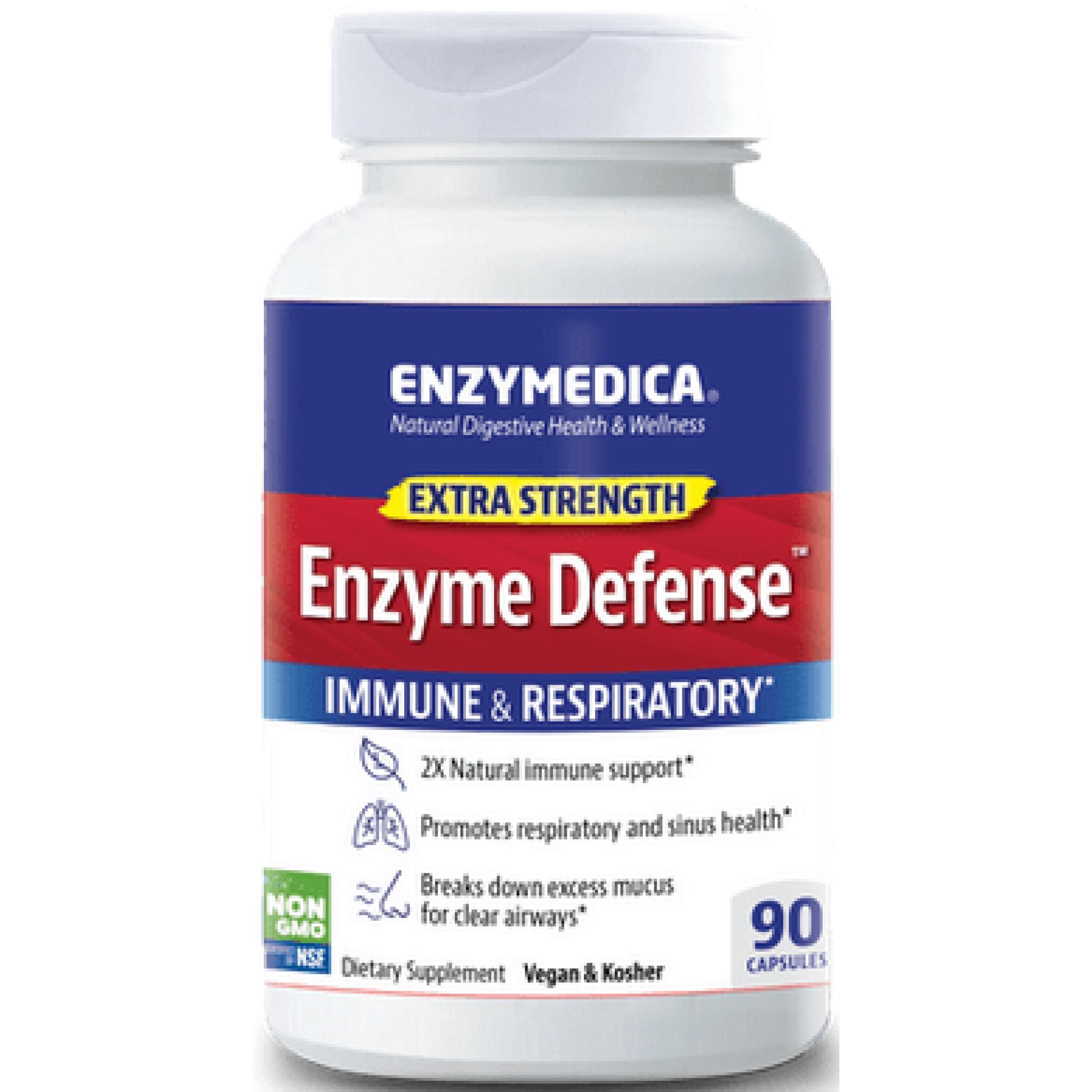
Mucolase.
A fermentation-made enzyme blend that works inside the gut on the sugar and protein parts of mucus. Published human work amounts to 1 record at Europe PMC.
- Category
- Enzyme
What Mucolase is, and what it does.
- Does it work
- It suits people building an enzyme protocol with a practitioner guiding it. With that little published work, expectations belong on the mechanism rather than on trial results.
- How much to take
- No dose figure is on record. Enzymes are measured in activity units rather than milligrams, so start with the units the label declares.
- Time to feel it
- Nobody has measured a time course for this blend. Enzymes act during the hours they spend in the gut, so any effect tracks each dose rather than building up.
- The first dose
- Day one usually passes without a sensation. Some people notice a change in stool or a little extra gas as gut contents shift.
- With regular use
- Nobody has studied weeks of daily use. The inner mucus layer keeps bacteria off the gut wall, so long stretches of daily use deserve a practitioner's eye.
- How well tolerated
- No safety dataset exists for this blend. Enzymes can be irritating for some stomachs, so anyone with sensitive digestion or on prescription medicines should ask their doctor first.
- How it feels
- Not something you sense directly. What people report shows up in stool and gas rather than in any feeling from the capsule.
- The overlooked benefit
- Breaking down mucin takes a team: sugar-cutting enzymes strip the outer glycans first, then proteases reach the backbone. A lone protease makes little impression.
The proof, claim by claim.
What these words mean
These words describe the research, not the molecule's worth. Research strength is how much work stands behind one claim, and it is never a product score.
- enzymatic breakdown of intestinal mucin gelIn vitro study
- glycosidase then protease sequence needed to degrade mucinNarrative review
2 more claims
- oral enzymes acting in the gut lumen rather than systemicallyNarrative review
- digestive comfort with enzyme blendsNarrative review
Why these belong in the same formula, 9 pairings
Why these belong in the same formula. Each row says what the basis is, from settled biochemistry through to a trial that measured the pair.
Mucin gel strength comes from two things: disulphide bridges between mucin monomers and the dense glycan side chains that hold water. NAC breaks the first, glycosidase and protease activity acts on the second. Combining them attacks the network from two directions, which is well established chemistry in laboratory mucus models. Human data on the oral combination for gut mucus specifically are absent.
Serrapeptase is a bacterial metalloprotease that hydrolyses a broad range of peptide bonds, including those in mucin protein backbones. Pairing it with a mucus-directed enzyme blend adds proteolytic activity but also adds redundancy. Neither product category has strong controlled human data for oral mucus effects. Anyone on anticoagulant medicine should raise proteolytic enzyme supplements with a clinician first.
Bromelain hydrolyses peptide bonds across a wide substrate range and retains activity across a useful pH span, which is why it appears in both digestive and systemic enzyme formulas. Combined with a mucus-targeting blend it broadens the proteolytic coverage. The in vitro work is reasonably consistent. The translation to oral dosing in people is not established. It also carries a bleeding-risk note alongside anticoagulants.
A mucolytic component addresses the viscous layer over the mucosa, while amylase, protease and lipase address the food itself. The two jobs are separate and the enzymes are formulated together for convenience. This is formulation convention. The relevant number on the label is activity units per enzyme, not total milligrams of blend.
Fungal enzymes generally hold activity in the pH 3 to 7 window, whereas animal-derived pancreatic enzymes need enteric protection. Lowering gastric pH with betaine hydrochloride helps some enzymes and hurts others, so the direction depends on the specific enzyme source. This is why the pairing appears in some formulas and is deliberately avoided in others. It is not appropriate for anyone with ulceration or on acid-suppressing medicine.
Mucin glycans are fermented by specific gut organisms, and liberated sugars feed cross-feeding networks downstream. Adding enzyme activity that cleaves those glycans changes substrate availability in the mucus layer. The direction of that shift depends on which organisms are present. It is listed as modulating rather than positive because thinning the mucus layer is not automatically desirable.
Mucus is continuously secreted and continuously degraded, so anything that thins it relies on goblet cell output to restore the layer. Glutamine is the primary enterocyte fuel and supports epithelial turnover. Pairing a mucus-degrading enzyme with a substrate for rebuilding the layer is a coherent design. No trial has tested the pair.
Biofilm matrix is a mix of polysaccharide, protein and extracellular DNA that limits antimicrobial penetration. The rationale for sequencing an enzyme before a botanical antimicrobial is to reduce that barrier. The supporting work sits in laboratory biofilm models, not in people. Read it as mechanistic rather than clinical.
Activated charcoal has enormous surface area and binds a wide range of organic molecules with little selectivity. An enzyme preparation taken alongside it will be partly adsorbed and inactivated. Anyone using both should separate them by at least two hours. This applies to essentially every ingested enzyme, not just this one.
Nothing specific on file for Mucolase. Match the label to the daily amount above, and tell your doctor what you take.
Not medical advice. Show the label to your pharmacist.What Mucolase actually does.
Gut mucus is a mesh of big sugar-coated proteins tied together by chemical bridges.
3 more mechanisms
You need several different enzymes working in sequence to break mucus down, not one.
Swallowed enzymes work inside your gut. They do not get into your bloodstream as working enzymes.
Mucus is not just gunk. The inner layer is what keeps bacteria off your gut wall.
Where Mucolase comes from.
It is made by growing a fungus or bacterium in a tank, then collecting and drying the enzymes it produces. The strength is measured in activity units, not milligrams.
What this route gives you
Built by fermentation, the same way vitamin B12 and many amino acids are made at scale. Controlled conditions, consistent output.
5 steps on record
Typically a starch, molasses or soy-derived nitrogen medium supporting fungal or bacterial growth.
Aspergillus oryzae, Aspergillus niger or a Bacillus strain is grown under controlled conditions that induce the target enzyme secretion.
Cells are removed by filtration or centrifugation, leaving the secreted enzyme in the liquid fraction.
Ultrafiltration concentrates the enzyme, followed by precipitation or spray drying onto a carrier.
The finished powder is assayed against a defined substrate and diluted with carrier to a declared unit count per gram.
The forms it comes in.
3 more forms
The studies, linked.
1 source behind our Mucolase verdict, every one linked to PubMed, the journal or ClinicalTrials.gov.
- Clinical trialDouble-blind, Randomized, Placebo Controlled, Multicenter, Phase IV Clinical Trial to Assess the Efficacy and Safety of MUCOLASE Tablet (Streptokinase • Streptodornase) in Patients With Acute Upper Respiratory Infection or Acute BronchitisClinicalTrials.gov ↗Phase 4, 346 participants, Unknown
From clinical trials and PubMed, ranked by study type and citation weight, not cherry-picked.
Problems people have reported.
Read this carefully. These are 42 voluntary, unverified reactions reported to the FDA (openFDA). The number mostly reflects how popular Mucolase is, not how risky it is. A report is not proof Mucolase caused anything. It is a signal of what to watch for, nothing more.
3 more reported effects
Source: openFDA adverse-event reports. Voluntary reporting, not an incidence rate.
FDA Disclaimer: These statements have not been evaluated by the Food and Drug Administration. This information is for educational purposes only and is not intended to diagnose, treat, cure, or prevent any disease. Consult your healthcare provider before starting any supplement regimen.