
DHANHANES 2003 to 2008
Under 250 mg a day
US adults average well under the 250 mg a day of EPA and DHA that health authorities suggest for heart health.
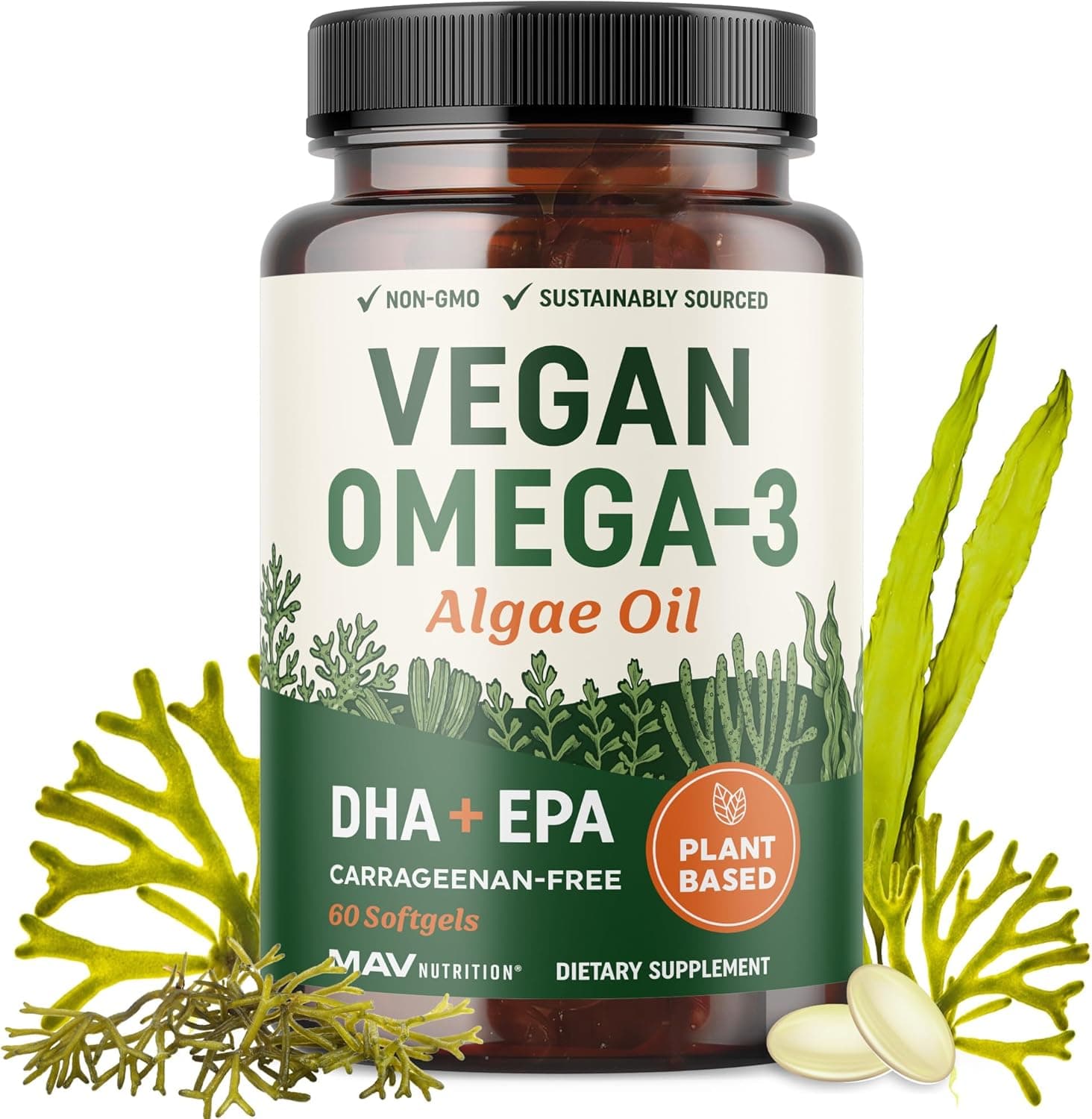
Peer-reviewed analysisDHA is the lead active here, studied most for heart and circulation. Algal Oil is the most studied active here, with 8 human studies behind it, each one cited. Each serving carries 300 mg of DHA, inside the range the published research used. Who it fits: for everyone, adults.
 Verified by IngredientMD
The panel on the left is the one we evaluated, line by line.
All 3 actives checked against the clinical evidence: dose, form, and what the research actually shows.
Doses, ratios, and how the ingredients work together. That assessment is the verdict above: "Strong evidence, strong dose".
The verdict is public and identical whether or not a brand pays. A formula that does not clear the bar gets nothing.
Read by the engine against 2.1 million data points from clinical trials, PubMed and more than a hundred vetted sources. No individual reviewer is named or implied.
Cross-checked against 1 documented interactions for these actives.
Public health figures the engine matched to this formula's ingredients. Reported by their source, cited and dated, never written by the brand.
Under 250 mg a day
US adults average well under the 250 mg a day of EPA and DHA that health authorities suggest for heart health.
Peer-reviewed analysis89% of US adults
aged 19 and over consumed more than the recommended 2,300 milligrams of sodium a day, in a CDC analysis of 2009 to 2012 dietary survey data.
CDC Morbidity and Mortality Weekly Report, 201457.6%
During 2017 to 2018, 57.6% of US adults aged 20 and over reported using a dietary supplement in the past 30 days.
CDC National Center for Health Statistics65.5% of US adults aged 20 to 64
had a blood cholesterol check by a health professional in the past 12 months in 2017, up from 58.0% in 2012, in the National Health Interview Survey.
CDC National Center for Health Statistics, 2019Fewer than 1 in 5 US adults
know their cholesterol or blood sugar numbers, according to a national survey fielded for The Ohio State University Wexner Medical Center in December 2023.
SSRS Opinion Panel Omnibus for The Ohio State University Wexner Medical Center, 20239% of US women
and 5% of US men are getting the recommended daily amount of dietary fibre, based on National Health and Nutrition Examination Survey data collected from 2013 to 2018.
American Society for Nutrition, 202159 to 66 days
was the median time it took adults to make a new daily health habit automatic across the studies a 2024 review pooled, with individuals ranging from 4 to 335 days.
Systematic review and meta-analysis, 202461% to 74%
About 61 to 74 percent of adults refilling a long-term medicine on their own stopped within a year, versus 33 to 44 percent on one set pickup day.
Cohort study, 2015Meta-analysis, 2011
In trials giving DHA by itself, DHA lowered triglycerides and raised HDL cholesterol by about 4.5 mg/dL compared with placebo.
The paperMeta-analysis, 2025
Pooling trials in adults, omega-3 supplementation was linked to small improvements in memory and attention test scores, varying by dose.
Scientific reportsRandomised trial, 2008
In 32 healthy adults taking DHA for two weeks, algal oil capsules and cooked salmon raised DHA about equally, about 80 percent and 25 percent in two blood measures.
Journal of the American Dietetic AssociationMeta-analysis, 2026
Across 9 placebo-controlled eccentric exercise trials in healthy adults, supplements combining DHA with EPA reduced delayed onset muscle soreness (Hedges g -0.75, 95% CI -1.14 to -0.36). The wider body of 43 studies was mixed, and the trials tested the two fats together rather than DHA alone.
NutrientsSystematic review, 2020
Across 86 randomised trials covering 162,796 adults, long-chain omega-3 including DHA lowered blood triglycerides by about 15 percent in a dose-dependent way, with little or no measured change in body fat or blood pressure.
Cochrane Database of Systematic ReviewsRandomised trial, 2010
Formula-fed infants given DHA-enriched formula from 0.32% of fatty acids developed better visual acuity by 12 months than infants on DHA-free formula.
American Journal of Clinical NutritionMeta-analysis, 2024
Pooling 9 randomised trials of DHA given before or after birth, infants in the DHA groups scored 1.47 points higher on the Psychomotor Development Index (95% CI 0.23 to 2.72), with no difference detected on the Mental Development Index.
Frontiers in NeurologyRandomised trial, 2022
In lactating women, DHA from algal oil raised the DHA content of breast milk compared with control, which is a compositional marker rather than an infant outcome.
NutrientsMeta-analysis, 2022
Across 71 trials, omega-3 (DHA and EPA together) at 2 to 3 grams a day lowered the top blood pressure number by about 2.6 points.
Journal of the American Heart AssociationRandomised trial, 2014
In 16 men, after a high-fat meal 5 g of DHA lowered a blood marker of oxidative stress versus control, with no difference detected in fat clearance or vessel function.
The American Journal of Clinical NutritionMeta-analysis, 2023
Pooling 90 randomised trials in 72,598 people, higher daily DHA and EPA intake lowered blood triglycerides and non-HDL cholesterol in a near-linear way, most evident at medium to high doses above about 2 g a day.
Journal of the American Heart AssociationRandomised trial, 2026
In 26 amateur runners, 12 weeks of DHA and EPA raised red blood cell omega-3 levels while placebo stayed the same, blood markers not performance outcomes.
Prostaglandins, Leukotrienes and Essential Fatty AcidsPopulation figures from public health data. Context for the category, not a statement about any individual and not a claim about this product.
Each line below was derived from this formula's own record at the time of verification. Nothing here was written by the brand, and nothing can be added that the evidence does not carry.
Time-to-effect windows the engine read from the trial record. Each is a window a named study measured, cited and dated, never written by the brand.
In a randomised single-blind trial, 20 participants took either fish oil supplying 1,296 mg EPA and 864 mg DHA daily or flaxseed oil for eight weeks, with erythrocyte membrane and plasma samples drawn at weeks 0, 4, 8, 10, 12, 14, 16 and 24. On fish oil, erythrocyte membrane EPA rose 300 percent and DHA rose 42 percent by week eight. Levels held until about week 12 and then declined across the post-supplementation sampling, faster in plasma phospholipids than in erythrocyte membranes. Membrane fatty acid content was measured, not a symptom, and this is one trial of 20 people.
In a randomised double-blind crossover trial, healthy men and women aged 19 to 34 took capsules supplying about 4 g DHA per day, with plasma sampled at days 0, 1, 3, 7, 14 and 28. DHA concentrations tripled and so did DHA-derived oxylipins. Increases were detectable as early as day 1, and 11 of 12 individual DHA oxylipins plus total DHA oxylipins reached a plateau by days 5 to 7. The plateau came earlier and was reached by more oxylipins in females than in males. Plasma marker chemistry was measured, not a feeling.
In the trial record, EPA in blood plasma plateaus after 4 to 8 weeks of daily fish oil, while EPA in the red blood cell membrane rises with a 28 day half-life and reaches a steady state at about 180 days.
Windows measured in the cited trials. Context for how the active behaves over time, not a statement about any individual and not a claim about this product.
Three ingredients, from each one's own page.
Membrane levels move on a scale of weeks. Red cell omega-3 content rises across roughly eight to twelve weeks of daily use and then plateaus.
Membranes fill slowly. The omega 3 index moves over eight to twelve weeks, and the trials reporting cognitive or eye comfort changes run three to six months.
For the omega-3 index to settle at its new level. Triglyceride readings on a blood panel usually move sooner, inside four to eight weeks.
How each ingredient usually behaves over time, from its own page on IngredientMD. General timing for the ingredient, not a measurement of this product.
It is a softgel, so the active is already dissolved in oil and the shell keeps it away from air and light.
Because the effect builds and holds only with continued daily use, a steady recurring supply is the practical way to keep it going.
Put an earned verification on your own product page.
These statements have not been evaluated by the Food and Drug Administration. This product is not intended to diagnose, treat, cure, or prevent any disease. This record is not medical advice. Always consult your healthcare provider before starting any supplement regimen.