
The people it speaks toFieldwork 2020
24.2% of US adults
aged 18 and over met both the aerobic and muscle strengthening activity guidelines in 2020, in the National Health Interview Survey.
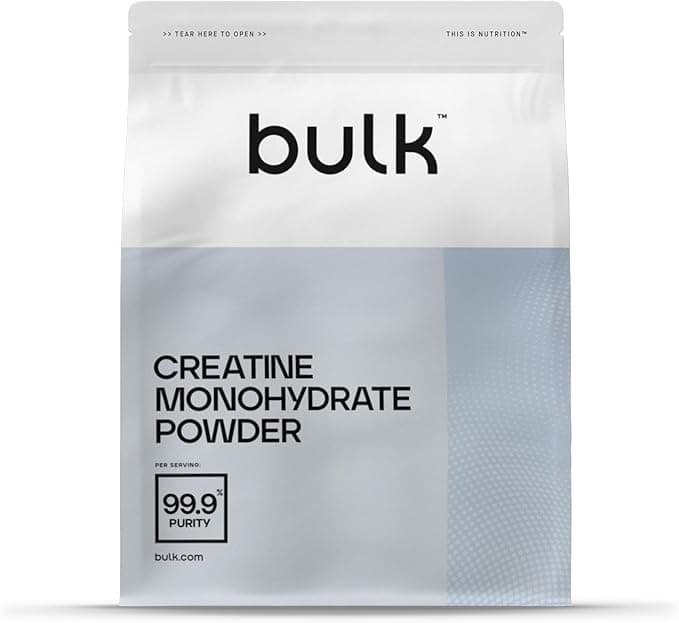
CDC National Center for Health Statistics, 2022Creatine Monohydrate is the lead active here, studied most for strength. 22 human studies on Creatine Monohydrate back this formula, each one cited. Each serving carries 5 g of Creatine Monohydrate, inside the range the published research used. Who it fits: for everyone, adults.
 Verified by IngredientMD
The panel on the left is the one we evaluated, line by line.
All 1 actives checked against the clinical evidence: dose, form, and what the research actually shows.
Doses, ratios, and how the ingredients work together. That assessment is the verdict above: "Strong evidence, strong dose".
The verdict is public and identical whether or not a brand pays. A formula that does not clear the bar gets nothing.
Read by the engine against 2.1 million data points from clinical trials, PubMed and more than a hundred vetted sources. No individual reviewer is named or implied.
Cross-checked against 20 documented interactions for these actives.
Public health figures the engine matched to this formula's ingredients. Reported by their source, cited and dated, never written by the brand.
24.2% of US adults
aged 18 and over met both the aerobic and muscle strengthening activity guidelines in 2020, in the National Health Interview Survey.
CDC National Center for Health Statistics, 202231% of US adults
said they were taking protein supplements such as powders, drinks, or bars, in a Pew Research Center survey fielded in July 2026.
Pew Research Center, 202621.1% of the US population
aged 15 and over took part in sports, exercise, or recreation on an average day in 2023, in the American Time Use Survey.
US Bureau of Labor Statistics, 202441.3% of US men aged 18 to 34
met both the aerobic and muscle strengthening activity guidelines in 2020, the highest rate of any age and sex group, in the National Health Interview Survey.
CDC National Center for Health Statistics, 202237% of US adults aged 18 to 29
said they were taking protein supplements such as powders, drinks, or bars, roughly double the rate among adults aged 65 and over, in a Pew Research Center survey fielded in July 2026.
Pew Research Center, 202659 to 66 days
was the median time it took adults to make a new daily health habit automatic across the studies a 2024 review pooled, with individuals ranging from 4 to 335 days.
Systematic review and meta-analysis, 202461% to 74%
About 61 to 74 percent of adults refilling a long-term medicine on their own stopped within a year, versus 33 to 44 percent on one set pickup day.
Cohort study, 2015Meta-analysis, 2017
In older adults doing resistance training, adding creatine increased lean tissue mass by about 1.37 kg and produced greater chest and leg press strength than training alone across 22 trials.
Open Access Journal of Sports MedicineSystematic review and meta-analysis, 2023
Across 8 randomized trials, creatine improved memory performance in healthy people, with the largest effect in adults aged 66 to 76.
Nutrition ReviewsMeta-analysis, 2003
Combining about 100 controlled studies, creatine gave a small but real improvement in short, intense exercise under 30 seconds, with no improvement seen in running or swimming.
International Journal of Sport Nutrition and Exercise MetabolismSystematic review, 2026
A comparison of protein, creatine and omega-3 found each supported muscle strength and endurance outcomes to a different degree alongside training.
NutrientsRandomised trial, 2025
In 40 healthy men and women, 33 days of creatine before a muscle-damaging workout sped up strength recovery, with less stiffness and fatigue, and less swelling in the women.
NutrientsRandomised trial, 2022
In 8 healthy adults taking 5 grams of creatine monohydrate daily for 14 days, muscle creatine content rose, while creatyl-L-leucine at the same dose produced no change.
International journal of sport nutritionPopulation figures from public health data. Context for the category, not a statement about any individual and not a claim about this product.
Each line below was derived from this formula's own record at the time of verification. Nothing here was written by the brand, and nothing can be added that the evidence does not carry.
Time-to-effect windows the engine read from the trial record. Each is a window a named study measured, cited and dated, never written by the brand.
In the trial record, muscle creatine stores rise to a loaded level over about 4 weeks at 3 g daily, or about 1 week with a higher loading dose, and return toward baseline about 4 weeks after stopping.
Windows measured in the cited trials. Context for how the active behaves over time, not a statement about any individual and not a claim about this product.
One ingredient, from its own page.
Give it two to four weeks of daily use for muscle stores to fill. A higher first week reaches the same place in about five to seven days.
How each ingredient usually behaves over time, from its own page on IngredientMD. General timing for the ingredient, not a measurement of this product.
What each form is, and where it fits in a formula. Measured findings carry the study that reported them.
Creatine crystallised with one water molecule per creatine molecule, roughly 88 percent creatine by mass, weakly soluble in cold water.
Descriptions of the form itself, read from the cited studies. Not a comparison between products and not a statement about any individual.
It is a powder, so the serving scales to the amount you want and mixes into something you already drink.
Because the effect builds and holds only with continued daily use, a steady recurring supply is the practical way to keep it going.
Put an earned verification on your own product page.
These statements have not been evaluated by the Food and Drug Administration. This product is not intended to diagnose, treat, cure, or prevent any disease. This record is not medical advice. Always consult your healthcare provider before starting any supplement regimen.