
CalciumWWEIA NHANES 2009 to 2010
About 42% of Americans
take in less calcium than the estimated average requirement.
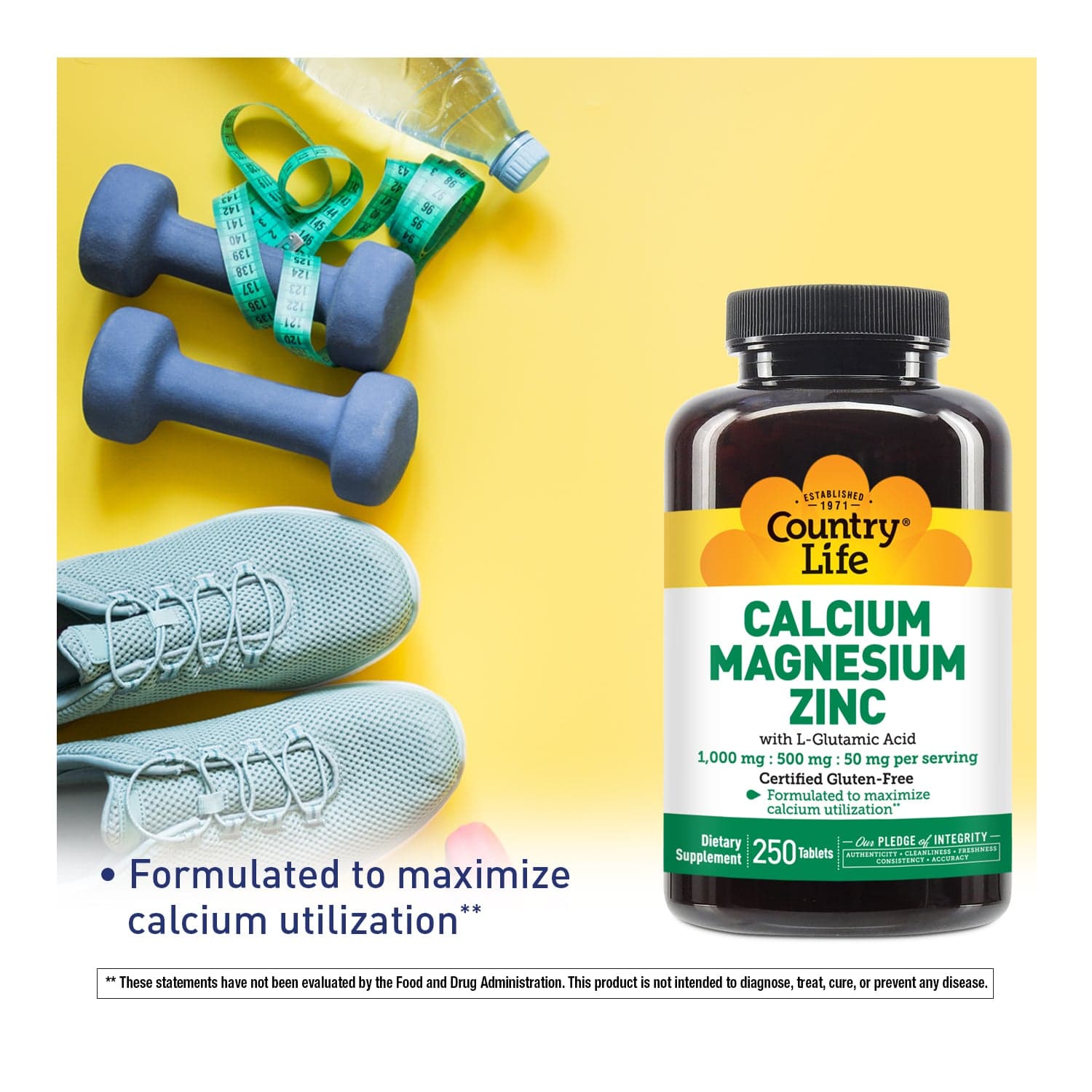
NHANESCalcium is the lead active here, studied most for bone strength. 13 human studies on Calcium back this formula, each one cited. Each serving carries 1,000 mg of Calcium, inside the range the published research used. Who it fits: skews toward women, adults.
 Verified by IngredientMD
The panel on the left is the one we evaluated, line by line.
All 4 actives checked against the clinical evidence: dose, form, and what the research actually shows.
Doses, ratios, and how the ingredients work together. That assessment is the verdict above: "Stronger in a pair".
The verdict is public and identical whether or not a brand pays. A formula that does not clear the bar gets nothing.
Read by the engine against 2.1 million data points from clinical trials, PubMed and more than a hundred vetted sources. No individual reviewer is named or implied.
Cross-checked against 1,885 documented interactions for these actives.
Public health figures the engine matched to this formula's ingredients. Reported by their source, cited and dated, never written by the brand.
About 42% of Americans
take in less calcium than the estimated average requirement.
NHANESAbout 48% of Americans
take in less magnesium than recommended from food and drink.
NIH Office of Dietary SupplementsAbout 15% of US adults
take in less zinc than the estimated average requirement.
Peer-reviewed analysisMore than 1 in 3 US adults
regularly sleep less than the recommended seven hours a night.
Peer-reviewed analysis36.5% of US adults
aged 18 and over had pain in a hip, knee, or foot in the past 3 months, in the 2019 National Health Interview Survey.
CDC National Center for Health Statistics, 202030.7% of US adults
aged 18 and over had pain in a shoulder, elbow, wrist, or hand in the past 3 months, in the 2019 National Health Interview Survey.
CDC National Center for Health Statistics, 202057.6%
During 2017 to 2018, 57.6% of US adults aged 20 and over reported using a dietary supplement in the past 30 days.
CDC National Center for Health Statistics30.2% of non-Hispanic white women
aged 18 and over reported pain, aching, or stiffness in or around a joint lasting more than 3 months, in the 2013 to 2014 National Health Interview Survey.
CDC National Center for Health Statistics, 201628.4% of non-Hispanic white men
aged 18 and over reported pain, aching, or stiffness in or around a joint lasting more than 3 months, in the 2013 to 2014 National Health Interview Survey.
CDC National Center for Health Statistics, 201695% of US adults
aged 19 and over had vitamin D intake from food and beverages below the Estimated Average Requirement, in National Health and Nutrition Examination Survey data from 2005 to 2016.
National Health and Nutrition Examination Survey analysis, 202018.8% of US adults aged 75 and over
needed the help of another person to carry out routine daily tasks outside the home, and 10.6% needed help with basic daily tasks like bathing or dressing, in the 2014 National Health Interview Survey.
CDC National Center for Health Statistics, 201659 to 66 days
was the median time it took adults to make a new daily health habit automatic across the studies a 2024 review pooled, with individuals ranging from 4 to 335 days.
Systematic review and meta-analysis, 202461% to 74%
About 61 to 74 percent of adults refilling a long-term medicine on their own stopped within a year, versus 33 to 44 percent on one set pickup day.
Cohort study, 2015Systematic review, 2021
Across 3 trials in older adults, it shortened the time to fall asleep by about 17 minutes.
BMC Complement Med TherMeta-analysis, 2007
In adults 50 and older, calcium with or without vitamin D slowed bone density loss by about 0.5% at the hip and 1.2% at the spine.
The LancetMeta-analysis, 2024
Across six trials in 739 women, zinc lowered menstrual discomfort scores, with bigger drops after eight weeks or more, even at doses as low as 7 mg daily.
NutrientsRandomised trial, 2025
Calcium taken around prolonged load carriage lowered blood markers of bone calcium loss compared with placebo. These are markers, not measured bone outcomes.
Randomised trialRandomised trial, 2012
In 46 older adults with poor sleep, eight weeks of magnesium improved their scores on a sleep questionnaire against placebo.
older adults with poor sleepSystematic review, 2024
Across exercise studies, magnesium was linked to less muscle soreness and better recovery, with people training hard possibly needing 10 to 20 percent more than sedentary people.
Journal of Translational MedicineRandomised trial, 2026
In one trial, 20 adults on an antidepressant added magnesium, and low mood scores changed over six weeks, with the antidepressant doing part of the work by design.
East Asian Archives of PsychiatryRandomised trial, 1998
Taking 1,200 mg of calcium a day reduced overall premenstrual symptom scores by 48% from baseline by the third cycle, compared with a 30% drop on placebo.
American Journal of Obstetrics and GynecologyMeta-analysis, 2025
Across four trials in women of reproductive age, zinc lowered premenstrual symptom scores, with the biggest gain in mood and a smaller, less certain gain in physical symptoms.
Women and HealthMeta-analysis, 2016
Zinc acetate lozenges cut cold symptom length by about 2.7 days, versus a roughly seven day average, across three pooled trials.
British Journal of Clinical PharmacologyMeta-analysis, 2025
Across over 20 trials, magnesium raised HDL cholesterol by about 1.2 mg/dL but showed no clear change in LDL, total cholesterol or triglycerides.
Nutrition JournalMeta-analysis, 2024
In adults with excess body weight, calcium supplementation produced small reductions in body weight and body fat compared with placebo.
Meta-analysisCase-control, 2025
Plasma metabolomics distinguished adults with elevated blood pressure from comparison participants, with glutamate-related metabolites among the discriminating markers. These are associations between markers, not a demonstrated cause.
World Journal of Experimental MedicineMeta-analysis, 2026
Pooling randomised trials in adults, zinc had a small effect on body weight and waist circumference and no detectable effect on body mass index, fat mass, fat-free mass or adipokine levels, and the authors call the size of the changes minor.
Biological Trace Element ResearchCohort study, 2025
Seminal fluid phosphate concentration was linked with semen quality measures but did not track with supplement intake. An association between two measurements, not a cause.
European Journal of EndocrinologyMeta-analysis, 2011
Across 36 studies in children under five, zinc modestly increased height growth, adding roughly 0.37 cm at about 10 mg a day for 24 weeks.
BMC Public HealthSystematic review and meta-analysis, 2016
In children older than six months, zinc may shorten a bout of diarrhea by about half a day across nine trials, on low certainty evidence.
Cochrane Database of Systematic ReviewsRandomised trial, 2024
Two randomised trials compared a lower daily calcium dose with the higher standard dose in pregnancy. The lower dose met the prespecified non-inferiority margin for one outcome but not for every outcome tested, which is a statement about margins and not a demonstration of equivalence.
The New England Journal of MedicinePopulation figures from public health data. Context for the category, not a statement about any individual and not a claim about this product.
Each line below was derived from this formula's own record at the time of verification. Nothing here was written by the brand, and nothing can be added that the evidence does not carry.
One pairing in this formula has been studied as a combination in human trials. Each finding below is what a named study measured, cited and dated, never written by the brand.
In a 12-month randomised, double-blind trial, 98 adults aged 50 and over drank a litre a day of either a naturally calcium- and magnesium-rich mineral water or a low-mineral water. The mineral-rich group had fewer falls at the 6-month assessment and higher appendicular muscle mass, with the minerals delivered as drinking water rather than a capsule.
Research strength. Research strength says how much work stands behind the combination. It is never a product score.
Fail closed. Where actives were studied on their own rather than together, each shows on its own evidence, never a combined effect no trial measured.
Independent record. Every finding is cited to a named trial, dated, and never written by the brand.
Findings from trials that studied these actives as a combination. Context for how the actives were tested together, not a statement about any individual and not a claim about this product.
Where a trial measured an actual number, we show it next to the claim. It is the average across the trials, never a promise about one person.
About 2 mmHg lower systolic and 1.8 mmHg lower diastolic, on average across the trials.
Read at the source. The magnitude sits beside the same trial the claim already cites. It describes what the trials measured, never what any one person will feel.
Time-to-effect windows the engine read from the trial record. Each is a window a named study measured, cited and dated, never written by the brand.
A randomised cross-over trial in ten women of mean age 69 gave a single 500 mg dose of calcium as citrate fasting, citrate with a meal, fortified juice or a dairy product meal, with blood drawn before and at 1, 2, 4 and 6 hours. Serum ionised and total calcium increased significantly from baseline over six hours, with the rise similar after fortified juice, delayed when citrate was taken with a meal and smaller after the dairy meal. A separate double-blind cross-over trial in 25 postmenopausal women measured parathyroid hormone and a bone resorption marker 12 hours after a single calcium dose. Ten participants is a small sample, and what moved was blood chemistry, not a sensation.
Across three randomised placebo-controlled trials pooled as individual patient data (199 adults with naturally acquired colds, 80 to 92 mg of elemental zinc a day as acetate lozenges), 70 percent of the zinc group had recovered by day 5 against 27 percent on placebo, and colds ran 2.73 days shorter against a 7 day average duration. A separate meta-analysis of seven lozenge trials (575 participants, doses above 75 mg a day, zinc acetate or zinc gluconate) measured cold duration 33 percent shorter, with no significant difference between the two salts.
In a controlled feeding study in nine healthy men, six weeks of restricted zinc intake raised DNA strand breaks in peripheral blood cells, and four weeks of repletion at 11 mg a day, with 20 mg of supplemental zinc for the first seven days, reversed the rise. In a separate randomised placebo-controlled trial in 40 Ethiopian women eating a high-phytate diet, 20 mg a day of zinc sulfate for 17 days lowered mean comet tail moment from 39.7 to 30.0 while plasma zinc did not change significantly. Both windows were measured on a DNA damage marker in blood cells, not on a symptom.
Windows measured in the cited trials. Context for how the active behaves over time, not a statement about any individual and not a claim about this product.
Four ingredients, from each one's own page.
No acute sensation. Parathyroid hormone responds within hours, while bone density shifts over a year or more of steady intake, so this reads on a panel and a scan.
A looser stool can turn up the same day at the higher end. Sleep and cramp changes usually settle in across two to four weeks, because it is refilling a body-wide store.
Blood zinc moves within days. The parts you would notice, skin behaviour and immune resilience, take four to twelve weeks of steady daily intake.
There isn't an onset to time. Gut cells burn most of an oral dose on first pass, so what it contributes is steady substrate for the nitrogen and glutathione pathways.
How each ingredient usually behaves over time, from its own page on IngredientMD. General timing for the ingredient, not a measurement of this product.
What each form is, and where it fits in a formula. Measured findings carry the study that reported them.
The free amino acid, sparingly soluble in water and distinctly acidic in solution because both carboxyl groups are available.
Descriptions of the form itself, read from the cited studies. Not a comparison between products and not a statement about any individual.
It is a tablet, so the amount per serving is fixed and it stores well.
Because the effect builds and holds only with continued daily use, a steady recurring supply is the practical way to keep it going.
Put an earned verification on your own product page.
These statements have not been evaluated by the Food and Drug Administration. This product is not intended to diagnose, treat, cure, or prevent any disease. This record is not medical advice. Always consult your healthcare provider before starting any supplement regimen.