
Inulin (Chicory Root Extract)NHANES-based
About 95% of US adults
do not reach the recommended daily amount of dietary fiber.
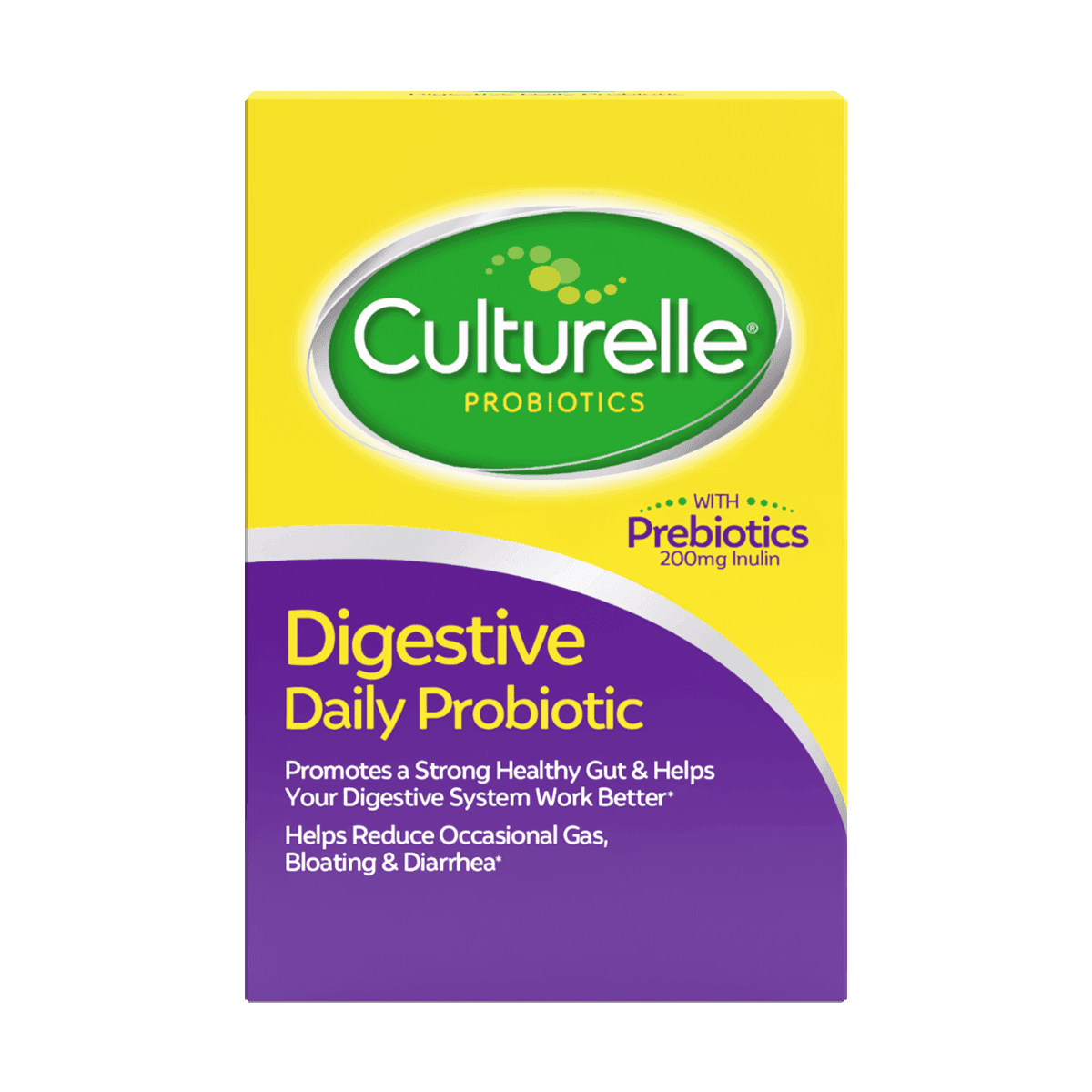
Peer-reviewed analysisLactobacillus rhamnosus GG is the lead active here, studied most for a balanced gut microbiome. 11 human studies on Lactobacillus rhamnosus GG back this formula, each one cited. Who it fits: for everyone, adults.
 Verified by IngredientMD
The panel on the left is the one we evaluated, line by line.
All 2 actives checked against the clinical evidence: dose, form, and what the research actually shows.
Doses, ratios, and how the ingredients work together. That assessment is the verdict above: "Stronger in a pair".
The verdict is public and identical whether or not a brand pays. A formula that does not clear the bar gets nothing.
Read by the engine against 2.1 million data points from clinical trials, PubMed and more than a hundred vetted sources. No individual reviewer is named or implied.
Cross-checked against 167 documented interactions for these actives.
Public health figures the engine matched to this formula's ingredients. Reported by their source, cited and dated, never written by the brand.
About 95% of US adults
do not reach the recommended daily amount of dietary fiber.
Peer-reviewed analysis24% of US adults
say digestive health is the most important aspect of their overall health, per a 2022 IFIC survey on gut health and probiotics.
International Food Information Council, 202252% of US adults
believe common digestive symptoms such as bloating and abdominal pain are just a normal part of life, per a 2026 Harris Poll conducted for Oshi Health.
The Harris Poll for Oshi Health, 202657.6%
During 2017 to 2018, 57.6% of US adults aged 20 and over reported using a dietary supplement in the past 30 days.
CDC National Center for Health Statistics58% of the recommended fiber intake
was reached on average by US consumers, who ate 8.1 grams of fiber per 1,000 calories in 2017 to 2018 versus the 14 grams recommended, per USDA Economic Research Service analysis of federal food consumption survey data.
USDA Economic Research Service, 202340% of US adults
aged 18 and over report they experience bloating at least a few times a month, with 5% saying they experience it daily, per a 2023 Ipsos poll conducted for MDVIP.
Ipsos, 202334% of US adults
aged 18 and over report they experience abdominal discomfort or pain at least a few times per month, with women about twice as likely as men to report it several times weekly, per a 2023 Ipsos poll conducted for MDVIP.
Ipsos, 202328% of US adults
aged 18 and over say that digestive issues impact the quality of their life, a share that rises to about a third among those aged 18 to 44, per a 2023 Ipsos poll conducted for MDVIP.
Ipsos, 202332% of US adults
say they actively try to consume probiotics, and among them 60% try to do so at least once a day, per a 2022 IFIC survey on gut health.
International Food Information Council, 202259 to 66 days
was the median time it took adults to make a new daily health habit automatic across the studies a 2024 review pooled, with individuals ranging from 4 to 335 days.
Systematic review and meta-analysis, 202461% to 74%
About 61 to 74 percent of adults refilling a long-term medicine on their own stopped within a year, versus 33 to 44 percent on one set pickup day.
Cohort study, 2015Meta-analysis, 2026
An umbrella review of trials in athletes reported small and inconsistent changes in immune and inflammatory blood markers after probiotic supplementation.
PeerJSystematic review, 2026
A synthesis of postbiotic and metabiotic preparations on blood sugar markers in adults with high blood sugar. The endpoints are laboratory markers and LGG-derived material is one of several named inputs.
Frontiers in EndocrinologyMeta-analysis, 2026
Pooling trials in healthy people, probiotic supplementation produced little to no detectable change in overall gut bacterial diversity, while some individual studies reported shifts in specific bacterial groups.
BMC medicineMeta-analysis, 2026
A dose-response review found probiotic supplementation linked to a small average drop in blood cortisol, with the evidence graded low certainty.
BMC nutritionRandomised trial, 2026
Early postoperative synbiotic supplementation was assessed for gastrointestinal recovery measures after bariatric surgery. LGG appears as a component of the synbiotic, not as a single agent.
Clinical NutritionRandomised trial, 2025
Oral probiotic Lactobacillus rhamnosus GG use in pregnancy was checked against maternal inflammation markers in a blinded trial, tracking markers rather than clinical outcomes.
American Journal of Reproductive ImmunologyPopulation figures from public health data. Context for the category, not a statement about any individual and not a claim about this product.
Each line below was derived from this formula's own record at the time of verification. Nothing here was written by the brand, and nothing can be added that the evidence does not carry.
Time-to-effect windows the engine read from the trial record. Each is a window a named study measured, cited and dated, never written by the brand.
In a randomised double-blind placebo-controlled trial in constipated elderly volunteers (25 in the inulin arm), 15 g per day of chicory native inulin significantly raised total faecal bacteria and bifidobacteria counts after 28 days, alongside reported reductions in defecation difficulty. Flatulence was reported but did not stop participation. A separate four-week randomised trial funded by the ingredient maker BENEO gave 8 g per day to 18 subjects with reduced tolerance of intestinal gas and found gas retention fell 22 percent against baseline, a change that did not separate from placebo, with higher bifidobacteria counts against placebo.
Windows measured in the cited trials. Context for how the active behaves over time, not a statement about any individual and not a claim about this product.
Two ingredients, from each one's own page.
Digestive changes usually show over one to two weeks. Used alongside antibiotics, the relevant window is the course itself plus a week or two after.
Gurgling can show up the first day. The steadier part, regularity and a rise in bifidobacteria, builds over roughly two weeks of daily use.
How each ingredient usually behaves over time, from its own page on IngredientMD. General timing for the ingredient, not a measurement of this product.
It is a capsule, so the amount per serving is fixed and travels without measuring.
Where two of this brand's products carry actives the literature has read together, the pairing and its basis are below. The evidence word is the corpus row's own confidence, never a score.
Inulin passes human digestion intact and is fermented by lactic acid bacteria to lactate and short-chain fatty acids, lowering colonic pH. Strain plus substrate is the defining synbiotic pairing.
fermentable substrate for lactic acid bacteria. No combination trial has tested this exact pairing.
Inulin is a fermentable fructan that lactobacilli use as a carbon source, so it feeds the strain being delivered. This is the classic synbiotic pairing of a prebiotic fibre with an organism that can ferment it.
prebiotic substrate. No combination trial has tested this exact pairing.
Inulin is a fructan that human enzymes cannot break down, so it arrives in the colon intact and is fermented by lactobacilli. Pairing a live strain with its fermentable substrate is the standard synbiotic design.
prebiotic substrate for the strain. No combination trial has tested this exact pairing.
Put an earned verification on your own product page.
These statements have not been evaluated by the Food and Drug Administration. This product is not intended to diagnose, treat, cure, or prevent any disease. This record is not medical advice. Always consult your healthcare provider before starting any supplement regimen.