
The people it speaks toFieldwork 2024
12% of US adults
regularly reported feelings of worry, nervousness, and anxiety in 2024, in the National Health Interview Survey.
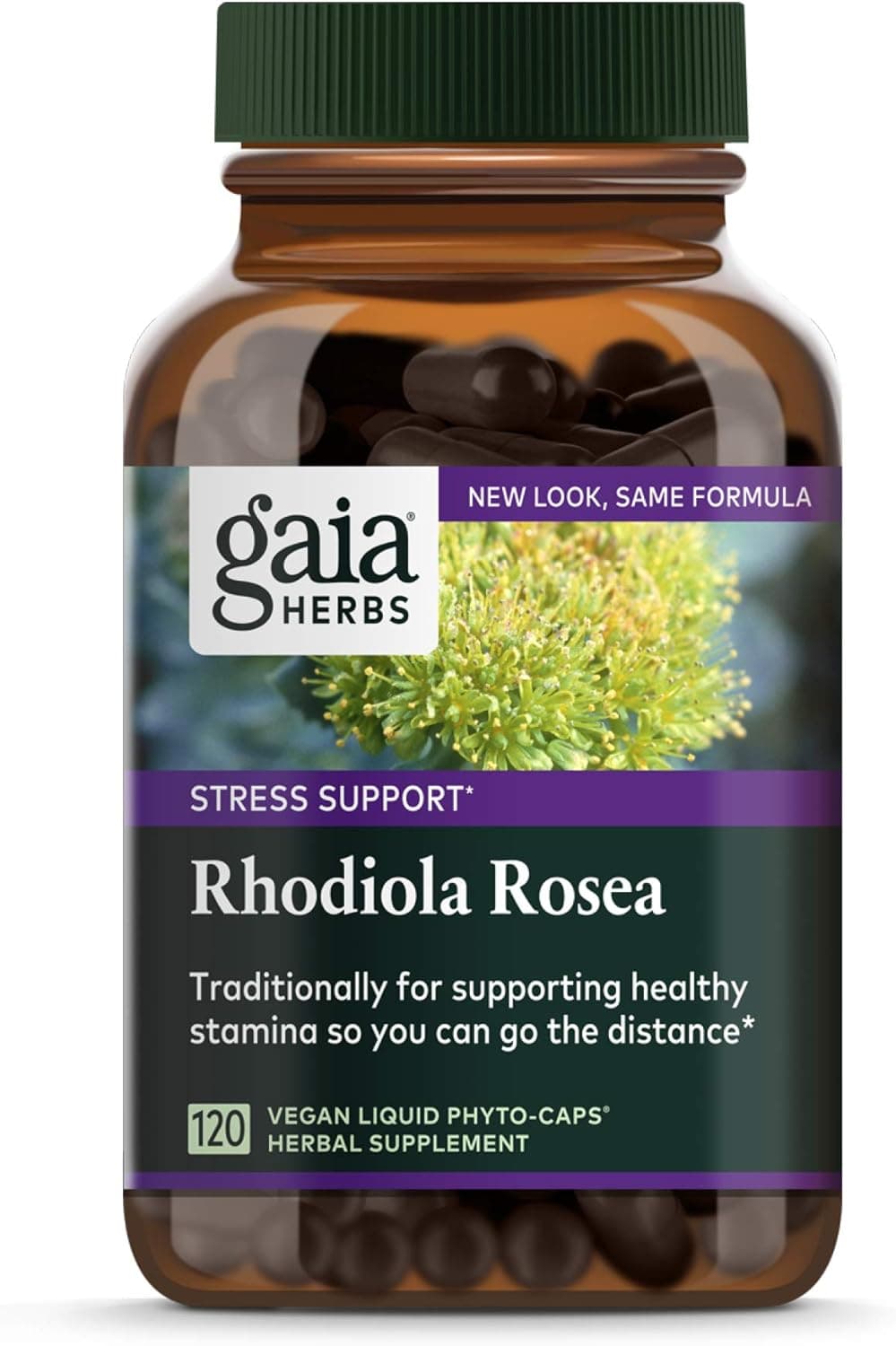
CDC National Center for Health Statistics, 2024Siberian Rhodiola (Rhodiola rosea) root extract is the lead active here, studied most for stress resilience. 17 human studies on Siberian Rhodiola (Rhodiola rosea) root extract back this formula, each one cited. Each serving carries 120 mg of Siberian Rhodiola (Rhodiola rosea) root extract, inside the range the published research used. Who it fits: for everyone, adults.
 Verified by IngredientMD
The panel on the left is the one we evaluated, line by line.
All 2 actives checked against the clinical evidence: dose, form, and what the research actually shows.
Doses, ratios, and how the ingredients work together. That assessment is the verdict above: "Strong evidence, strong dose".
The verdict is public and identical whether or not a brand pays. A formula that does not clear the bar gets nothing.
Read by the engine against 2.1 million data points from clinical trials, PubMed and more than a hundred vetted sources. No individual reviewer is named or implied.
Public health figures the engine matched to this formula's ingredients. Reported by their source, cited and dated, never written by the brand.
12% of US adults
regularly reported feelings of worry, nervousness, and anxiety in 2024, in the National Health Interview Survey.
CDC National Center for Health Statistics, 202439% of adults worldwide
said they worried a lot the previous day, in the Gallup World Poll fielded in 2024 across 144 countries and territories.
Gallup, 202437% of adults worldwide
said they felt stressed the previous day, in the Gallup World Poll fielded in 2024 across 144 countries and territories.
Gallup, 202457.6%
During 2017 to 2018, 57.6% of US adults aged 20 and over reported using a dietary supplement in the past 30 days.
CDC National Center for Health Statistics59 to 66 days
was the median time it took adults to make a new daily health habit automatic across the studies a 2024 review pooled, with individuals ranging from 4 to 335 days.
Systematic review and meta-analysis, 202461% to 74%
About 61 to 74 percent of adults refilling a long-term medicine on their own stopped within a year, versus 33 to 44 percent on one set pickup day.
Cohort study, 2015Randomised trial, 2000
In 56 physicians on night duty, a low daily dose improved a combined index of mental performance covering concentration, short-term memory and calculation over the first two weeks versus placebo.
PhytomedicineSystematic review, 2023
Improvements in perceived exertion and endurance measures were reported most often after a single acute dose of Rhodiola rosea, while repeated-dosing results were mixed.
Systematic reviewSystematic review, 2022
Across studies, rhodiola was linked to improvements in some exercise performance measures, though the trials varied a lot in design.
Frontiers in NutritionSystematic review, 2012
Across 11 controlled trials, five reported that Rhodiola reduced physical or mental fatigue, though the reviewers rated the overall evidence mixed and limited by study quality.
BMC Complementary and Alternative MedicineSystematic review, 2025
Across endurance trials, Rhodiola rosea showed inconsistent effects on performance and on the related blood markers, so no clear benefit could be established.
Systematic reviewRandomised trial, 2009
In 60 adults with stress-related fatigue, 576 mg a day for 28 days improved attention and fatigue symptoms and lowered the cortisol response to waking versus placebo.
Planta MedicaPopulation figures from public health data. Context for the category, not a statement about any individual and not a claim about this product.
Each line below was derived from this formula's own record at the time of verification. Nothing here was written by the brand, and nothing can be added that the evidence does not carry.
Time-to-effect windows the engine read from the trial record. Each is a window a named study measured, cited and dated, never written by the brand.
A randomised double-blind placebo-controlled trial in 161 military cadets aged 19 to 21 measured capacity for mental work after a single dose of the standardised SHR-5 extract taken against a background of fatigue and stress. The antifatigue index was 1.0385 and 1.0195 for the two active doses against 0.9046 for placebo, a difference the authors report at p below 0.001 for both doses, with no significant difference between the two doses. The measure was a psychometric test score, not a subjective report.
Two placebo-controlled trials measured the same daily-use window from different ends. In a phase III parallel-group trial, 60 adults aged 20 to 55 diagnosed with fatigue syndrome took 576 mg per day of the SHR-5 extract or placebo, assessed on day 1 and after 28 days. The active group differed from placebo on the Pines burnout scale, on three attention indices, and on the saliva cortisol response to awakening. In a double-blind crossover trial, 56 physicians on night duty took one low-dose tablet daily and showed a significant improvement in mental fatigue tests during the first two-week period. Both trials were conducted with the extract manufacturer, the Swedish Herbal Institute, among the authors.
Windows measured in the cited trials. Context for how the active behaves over time, not a statement about any individual and not a claim about this product.
Two ingredients, from each one's own page.
Often a few hours for the first sense of calm focus, and clearer after three to seven days. The stress-tolerance shift is judged across two to four weeks.
Nobody has timed rosavin by itself. Studies of the whole root extract run one to four weeks of daily use before measuring anything.
How each ingredient usually behaves over time, from its own page on IngredientMD. General timing for the ingredient, not a measurement of this product.
It is a capsule, so the amount per serving is fixed and travels without measuring.
Where two of this brand's products carry actives the literature has read together, the pairing and its basis are below. The evidence word is the corpus row's own confidence, never a score.
Rhodiola and withanolide-bearing ashwagandha are both described in adaptogen reviews as acting on stress-response signalling, including the hypothalamic-pituitary-adrenal axis. Rhodiola is usually taken in the morning and withanolides at either end of the day. The combination is a traditional and commercial pairing. The shared axis is the rationale, not a measured additive effect.
Put an earned verification on your own product page.
These statements have not been evaluated by the Food and Drug Administration. This product is not intended to diagnose, treat, cure, or prevent any disease. This record is not medical advice. Always consult your healthcare provider before starting any supplement regimen.