
MagnesiumNHANES 2013 to 2016
About 48% of Americans
take in less magnesium than recommended from food and drink.
NIH Office of Dietary SupplementsSodium is the lead active here, studied most for hydration. 11 human studies on Sodium back this formula, each one cited. Who it fits: for everyone, adults.
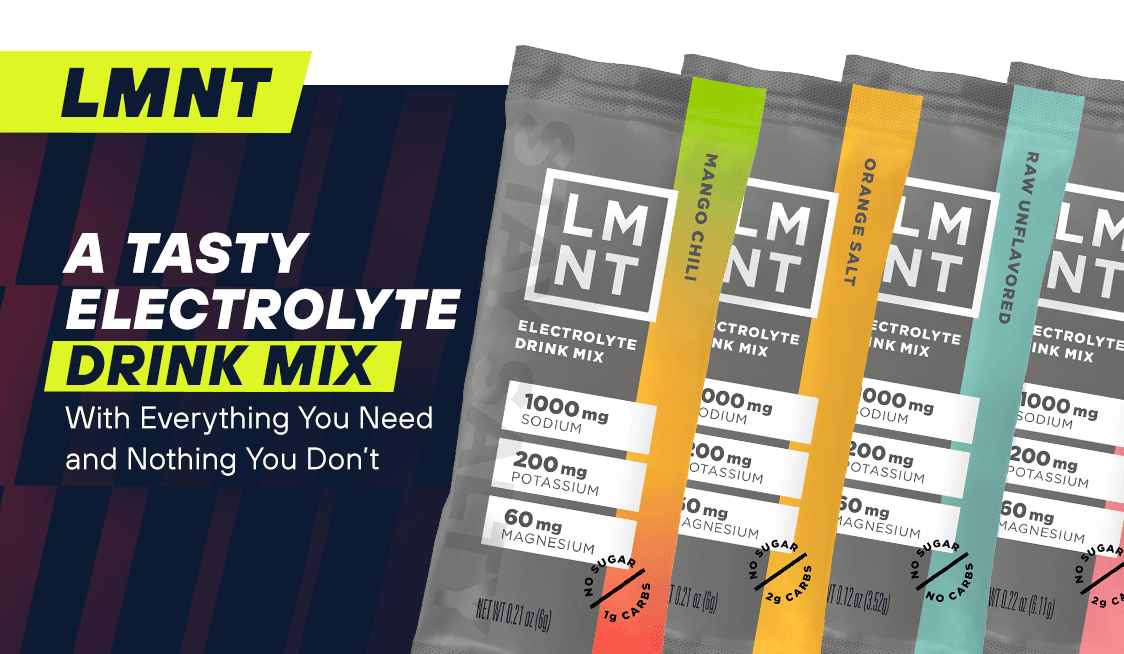 Verified by IngredientMD
The panel on the left is the one we evaluated, line by line.
All 3 actives checked against the clinical evidence: dose, form, and what the research actually shows.
Doses, ratios, and how the ingredients work together. That assessment is the verdict above: "Backed by human trials".
The verdict is public and identical whether or not a brand pays. A formula that does not clear the bar gets nothing.
Read by the engine against 2.1 million data points from clinical trials, PubMed and more than a hundred vetted sources. No individual reviewer is named or implied.
Cross-checked against 611 documented interactions for these actives.
Public health figures the engine matched to this formula's ingredients. Reported by their source, cited and dated, never written by the brand.
About 48% of Americans
take in less magnesium than recommended from food and drink.
NIH Office of Dietary SupplementsMore than 1 in 3 US adults
regularly sleep less than the recommended seven hours a night.
Peer-reviewed analysis8% of US adults
said they rarely or never drink water, in a Yahoo News and YouGov poll of 1,746 US adults fielded in April 2024.
YouGov, 202457.6%
During 2017 to 2018, 57.6% of US adults aged 20 and over reported using a dietary supplement in the past 30 days.
CDC National Center for Health Statistics3.46 liters of water a day
was the average total water intake for US men aged 20 and over from 2009 to 2012, about a quarter liter under the 3.7 liters set as adequate intake by the Institute of Medicine, in the National Health and Nutrition Examination Survey.
CDC National Center for Health Statistics, 20162.75 liters of water a day
was the average total water intake for US women aged 20 and over from 2009 to 2012, close to the 2.7 liters set as adequate intake by the Institute of Medicine, in the National Health and Nutrition Examination Survey.
CDC National Center for Health Statistics, 201649% of US adults
drank a sugar-sweetened beverage on a given day from 2011 to 2014, in the National Health and Nutrition Examination Survey, reported by the CDC National Center for Health Statistics.
CDC National Center for Health Statistics, 201740% of US adult women
drank a sugar drink on a given day from 2005 to 2008, in the National Health and Nutrition Examination Survey, reported by the CDC National Center for Health Statistics.
CDC National Center for Health Statistics, 201159 to 66 days
was the median time it took adults to make a new daily health habit automatic across the studies a 2024 review pooled, with individuals ranging from 4 to 335 days.
Systematic review and meta-analysis, 202461% to 74%
About 61 to 74 percent of adults refilling a long-term medicine on their own stopped within a year, versus 33 to 44 percent on one set pickup day.
Cohort study, 2015Meta-analysis, 2020
Across 32 trials, potassium lowered systolic and diastolic blood pressure, with the biggest drops in adults eating high sodium, and the effect leveled off above about 30 mmol a day.
Journal of the American Heart AssociationRandomised trial, 2026
Compared combined beta-alanine plus sodium bicarbonate against each alone on physical capacity measures in trained participants. The design is what makes the comparison informative for stacking decisions.
International Journal of Sports Physiology and PerformanceRandomised trial, 2020
In a controlled dietary intervention in adults, changing sodium and potassium intake shifted how the body handled calcium and phosphate, indicating that sodium intake affects normal mineral balance.
The Journal of Clinical Endocrinology and MetabolismRandomised trial, 2023
Oral potassium chloride lowered the abundance and phosphorylation of the thiazide-sensitive sodium chloride cotransporter measured in urinary extracellular vesicles, a mechanistic marker of distal tubule sodium handling.
Kidney International ReportsMeta-analysis, 2016
Across 18 double-blind trials, oral magnesium lowered fasting blood sugar in adults whose blood sugar ran high, and improved 2-hour glucose tolerance readings in adults at raised risk, at a small to moderate effect size with wide variation between trials.
European Journal of Clinical NutritionSystematic review, 2026
The review reported associations between electrolyte status, potassium included, and muscle discomfort. Association, not cause, and potassium is named inside a broader electrolyte review.
International Dental JournalRandomised trial, 2026
Microencapsulated sodium butyrate was tested against abdominal symptom scores and carbohydrate metabolism markers in adults with high blood sugar. Again a butyrate trial in which sodium is the carrier salt.
Scientific ReportsRandomised trial, 2022
Short-term potassium chloride supplementation raised serum potassium and shifted renal sodium-handling markers. These are markers, not clinical outcomes.
Journal of the American Society of NephrologyRandomised trial, 2023
Short-term potassium chloride supplementation was followed by changes in fibroblast growth factor 23 and phosphate, both regulatory markers of mineral handling.
Clinical Journal of the American Society of NephrologyRandomised trial, 2025
Short-term magnesium supplementation slightly worsened cycle ergometer performance in trained adults rather than improving it, a small effect the authors describe as modest and detrimental.
NutrientsMeta-analysis, 2021
Pooling 3 trials in 151 older adults sleeping poorly, oral magnesium shortened time to fall asleep by about 17 minutes, while the 16-minute gain in total sleep time was not statistically distinguishable from chance and the authors rated the evidence low to very low quality.
BMC Complementary Medicine and TherapiesMeta-analysis, 2015
Across 14 studies, alkaline potassium salts lowered urinary calcium excretion and the bone-resorption marker NTX, consistent with conserving bone mineral.
The paperSystematic review, 2026
A systematic review catalogued gastrointestinal symptoms reported across sodium bicarbonate dosing protocols and described how symptom burden varies with dose, timing and whether the dose is split or given with food.
European Journal of Sport ScienceSystematic review, 2025
The review authors pool randomised trials of magnesium supplementation in adults and report that dose, salt form and trial quality varied enough that they rate certainty in the pooled estimates as limited.
Cochrane Database of Systematic ReviewsRandomised trial, 2026
A randomised trial tested an algorithm-driven sodium supplementation protocol against usual care and measured growth in infants born preterm.
Pediatrics Open ScienceMeta-analysis, 2016
Pooling 34 double-blind trials in 2,028 adults, magnesium at a median 368 mg a day for about 3 months lowered systolic blood pressure by about 2.0 mmHg and diastolic by about 1.8 mmHg on average.
The paperRandomised trial, 2018
In 91 adults taking a timed-release magnesium supplement, red blood cell magnesium rose 6 percent at 30 days and 30 percent at 90 days.
Journal of the American College of NutritionRandomised trial, 2025
In a trial of 104 very preterm infants, oral sodium supplementation raised daily weight gain by 3.6 grams per kilogram compared with placebo.
BMJ Paediatrics OpenPopulation figures from public health data. Context for the category, not a statement about any individual and not a claim about this product.
Each line below was derived from this formula's own record at the time of verification. Nothing here was written by the brand, and nothing can be added that the evidence does not carry.
Time-to-effect windows the engine read from the trial record. Each is a window a named study measured, cited and dated, never written by the brand.
In the excretion studies the EFSA reference opinion reviews, urinary output closely tracked dietary sodium once intake was held steady: 98% of dietary sodium appeared in 24-hour urine in a 3-day study, and 86% of sodium ingested over 4 weeks was recovered in 24-hour urine collected during the same period.
In the controlled metabolic study the EFSA reference opinion reviews, young men held at constant sodium intakes for 29 days per level showed rising average daily urinary aldosterone excretion as intake was stepped down from 4.9 g/day to 2.5 g/day.
Windows measured in the cited trials. Context for how the active behaves over time, not a statement about any individual and not a claim about this product.
Three ingredients, from each one's own page.
Fast. Sodium shifts fluid within an hour or two, which is why an electrolyte drink lands quickly when you have been sweating.
Cramp steadiness can settle within a couple of days. The sodium-to-potassium shift shows up on a blood pressure cuff over about four to six weeks.
To settle in, and two to four weeks for magnesium stores to fill. Any steadiness in energy builds across those weeks rather than arriving with one dose.
How each ingredient usually behaves over time, from its own page on IngredientMD. General timing for the ingredient, not a measurement of this product.
What each form is, and where it fits in a formula. Measured findings carry the study that reported them.
The simple mineral salt of potassium and chloride ions. It carries a high amount of elemental potassium by weight, a little over half its mass, and is highly water soluble.
Magnesium held as a salt of malic acid, the four-carbon fruit acid that also sits in the citric acid cycle. The common di-magnesium form is roughly 15 percent magnesium by weight, dissolves in water and carries a mild tart note.
Descriptions of the form itself, read from the cited studies. Not a comparison between products and not a statement about any individual.
It is a powder, so the serving scales to the amount you want and mixes into something you already drink.
Put an earned verification on your own product page.
These statements have not been evaluated by the Food and Drug Administration. This product is not intended to diagnose, treat, cure, or prevent any disease. This record is not medical advice. Always consult your healthcare provider before starting any supplement regimen.