
The people it speaks toFieldwork 2024
12% of US adults
regularly reported feelings of worry, nervousness, and anxiety in 2024, in the National Health Interview Survey.
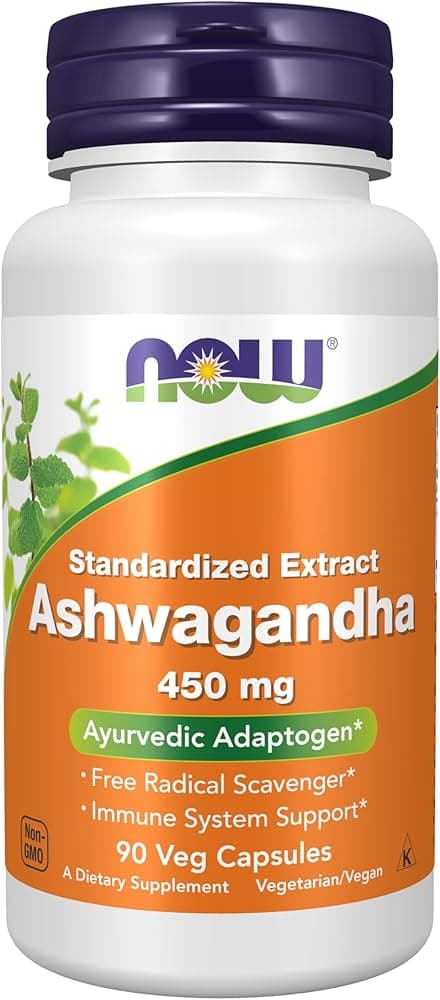
CDC National Center for Health Statistics, 2024Ashwagandha is the lead active here, studied most for everyday stress. 21 human studies on Ashwagandha back this formula, each one cited. Each serving carries 450 mg of Ashwagandha, inside the range the published research used. Who it fits: for everyone, adults.
 Verified by IngredientMD
The panel on the left is the one we evaluated, line by line.
All 1 actives checked against the clinical evidence: dose, form, and what the research actually shows.
Doses, ratios, and how the ingredients work together. That assessment is the verdict above: "Strong evidence, strong dose".
The verdict is public and identical whether or not a brand pays. A formula that does not clear the bar gets nothing.
Read by the engine against 2.1 million data points from clinical trials, PubMed and more than a hundred vetted sources. No individual reviewer is named or implied.
Cross-checked against 7 documented interactions for these actives.
Public health figures the engine matched to this formula's ingredients. Reported by their source, cited and dated, never written by the brand.
12% of US adults
regularly reported feelings of worry, nervousness, and anxiety in 2024, in the National Health Interview Survey.
CDC National Center for Health Statistics, 202439% of adults worldwide
said they worried a lot the previous day, in the Gallup World Poll fielded in 2024 across 144 countries and territories.
Gallup, 202437% of adults worldwide
said they felt stressed the previous day, in the Gallup World Poll fielded in 2024 across 144 countries and territories.
Gallup, 202459 to 66 days
was the median time it took adults to make a new daily health habit automatic across the studies a 2024 review pooled, with individuals ranging from 4 to 335 days.
Systematic review and meta-analysis, 202461% to 74%
About 61 to 74 percent of adults refilling a long-term medicine on their own stopped within a year, versus 33 to 44 percent on one set pickup day.
Cohort study, 2015Meta-analysis, 2022
Pooling trials, ashwagandha lowered self-reported anxiety and stress scores compared with placebo.
Phytotherapy researchMeta-analysis, 2025
In a pooled analysis of supplement trials, ashwagandha was among the interventions linked with better self-reported sleep quality.
NutrientsMeta-analysis, 2024
Pooling nine randomized trials in 558 adults, ashwagandha lowered perceived stress scores by about 4.7 points and serum cortisol by about 2.6 micrograms per deciliter compared with placebo.
ExploreMeta-analysis, 2021
Across five randomized trials in 400 adults, ashwagandha extract improved overall sleep with a small pooled effect (standardized mean difference -0.59), most noticeable at doses of 600 mg or more per day taken for at least eight weeks.
PLoS OneMeta-analysis, 2020
Pooling four randomized trials in 142 athletes and healthy adults, ashwagandha raised maximal oxygen uptake (VO2max) by about 3.0 mL/kg/min compared with placebo.
NutrientsMeta-analysis, 2026
Across randomised trials, ashwagandha supplementation was associated with small gains in exercise performance measures such as strength and oxygen uptake.
NutrientsPopulation figures from public health data. Context for the category, not a statement about any individual and not a claim about this product.
Each line below was derived from this formula's own record at the time of verification. Nothing here was written by the brand, and nothing can be added that the evidence does not carry.
Time-to-effect windows the engine read from the trial record. Each is a window a named study measured, cited and dated, never written by the brand.
In a 60 day randomised, double-blind, placebo-controlled trial, 60 stressed healthy adults took 240 mg of a standardised ashwagandha extract (Shoden) once daily or placebo. The ashwagandha arm showed a larger fall in Hamilton Anxiety Rating Scale scores (p = .040) and in morning cortisol (p < .001) than placebo, with the DASS-21 change near-significant (p = .096). A separate 8 week randomised, double-blind, placebo-controlled dose-ranging trial enrolled 131 adults with self-reported high stress and analysed 98, measuring reduced Perceived Stress Scale scores at 125, 250 and 500 mg per day of an aqueous root and leaf extract. Two trials on two different extracts, both landing in the same eight to nine week band.
Windows measured in the cited trials. Context for how the active behaves over time, not a statement about any individual and not a claim about this product.
One ingredient, from its own page.
Give it two to four weeks. Morning cortisol shifts on a blood draw before a calmer week is something you'd describe out loud.
How each ingredient usually behaves over time, from its own page on IngredientMD. General timing for the ingredient, not a measurement of this product.
It is a capsule, so the amount per serving is fixed and travels without measuring.
Put an earned verification on your own product page.
These statements have not been evaluated by the Food and Drug Administration. This product is not intended to diagnose, treat, cure, or prevent any disease. This record is not medical advice. Always consult your healthcare provider before starting any supplement regimen.