
The people it speaks toFieldwork 2024
30.5% of US adults
slept less than 7 hours on average in a 24-hour period in 2024, in the National Health Interview Survey.
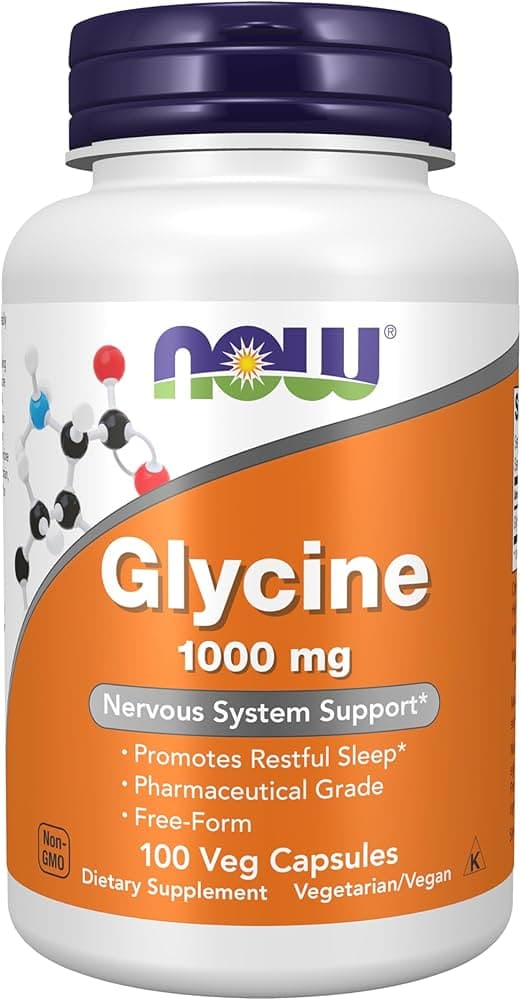
CDC National Center for Health Statistics, 2026Glycine is the lead active here, studied most for sleep quality. 4 human studies on Glycine back this formula, each one cited. Each serving carries 3 g of Glycine, inside the range the published research used. Who it fits: for everyone, adults.
 Verified by IngredientMD
The panel on the left is the one we evaluated, line by line.
All 1 actives checked against the clinical evidence: dose, form, and what the research actually shows.
Doses, ratios, and how the ingredients work together. That assessment is the verdict above: "Strong evidence, strong dose".
The verdict is public and identical whether or not a brand pays. A formula that does not clear the bar gets nothing.
Read by the engine against 2.1 million data points from clinical trials, PubMed and more than a hundred vetted sources. No individual reviewer is named or implied.
Cross-checked against 485 documented interactions for these actives.
Public health figures the engine matched to this formula's ingredients. Reported by their source, cited and dated, never written by the brand.
30.5% of US adults
slept less than 7 hours on average in a 24-hour period in 2024, in the National Health Interview Survey.
CDC National Center for Health Statistics, 202654.8% of US adults
woke up feeling well-rested every day or most days in the past 30 days in 2024, in the National Health Interview Survey.
CDC National Center for Health Statistics, 202663% of US adults who want more sleep
say they frequently experience stress, against 31% of those who get the sleep they need, in a December 2023 Gallup poll.
Gallup, 202474% of US adults
report their sleep is sometimes, often or always disrupted by stress, in a 2024 survey commissioned by the American Academy of Sleep Medicine.
American Academy of Sleep Medicine, 20242.1% of US adults
reported using melatonin in 2017 to 2018, up from 0.4% in 1999 to 2000, across ten cycles of the National Health and Nutrition Examination Survey.
JAMA, 202215.4% of US adults
had trouble falling asleep, and 18.1% trouble staying asleep, every day or most days in the past 30 days in 2024, in the National Health Interview Survey.
CDC National Center for Health Statistics, 202612.9% of US adults
used a sleep aid most days or every day in the past 30 days to help them fall or stay asleep in 2024, in the National Health Interview Survey.
CDC National Center for Health Statistics, 202642% of US adults
say they get as much sleep as they need, the first time since Gallup began asking in 2001 that fewer than half did, in a December 2023 poll.
Gallup, 202459 to 66 days
was the median time it took adults to make a new daily health habit automatic across the studies a 2024 review pooled, with individuals ranging from 4 to 335 days.
Systematic review and meta-analysis, 202461% to 74%
About 61 to 74 percent of adults refilling a long-term medicine on their own stopped within a year, versus 33 to 44 percent on one set pickup day.
Cohort study, 2015Systematic review, 2023
Across 52 human studies, glycine's clearest effects were on the nervous system, with longer-term use associated with better sleep in healthy adults.
GeroScienceClinical trial, 2025
In an uncontrolled two-week study of 19 adults with a very high body mass index, dietary glycine at 100 mg/kg a day raised plasma glycine and urinary acylglycine excretion, and plasma triglyceride and liver enzyme values fell, with no change in body weight. With no control group these marker shifts cannot be attributed to glycine alone.
Sci RepRandomised trial, 2025
Enteral glycine raised plasma glycine in critically ill adults. Muscle structure, size and function were also measured, and plasma glycine is a blood marker rather than a functional outcome.
Clinical NutritionRandomised trial, 2002
Taken together with 25 g of glucose, glycine cut the rise in blood glucose over the following two hours by more than half compared with glucose alone.
American Journal of Clinical NutritionPopulation figures from public health data. Context for the category, not a statement about any individual and not a claim about this product.
Each line below was derived from this formula's own record at the time of verification. Nothing here was written by the brand, and nothing can be added that the evidence does not carry.
Time-to-effect windows the engine read from the trial record. Each is a window a named study measured, cited and dated, never written by the brand.
In a placebo-controlled study in healthy volunteers whose sleep was cut to 25 percent below their usual time for three consecutive nights, 3 g of glycine was taken before bedtime and outcomes were measured the following day. Visual analogue scale scores showed a significant reduction in fatigue and a tendency toward reduced sleepiness, and a psychomotor vigilance test improved significantly. The measures were self-rated scales plus one computer-based performance test, not polysomnography. The work was carried out by employees of Ajinomoto Co., Inc, an amino acid manufacturer.
Windows measured in the cited trials. Context for how the active behaves over time, not a statement about any individual and not a claim about this product.
One ingredient, from its own page.
The sleep side usually turns up on the first or second night. The collagen and glutathione side is a weeks-long shift that shows up in tissue and blood markers.
How each ingredient usually behaves over time, from its own page on IngredientMD. General timing for the ingredient, not a measurement of this product.
It is a capsule, so the amount per serving is fixed and travels without measuring.
Put an earned verification on your own product page.
These statements have not been evaluated by the Food and Drug Administration. This product is not intended to diagnose, treat, cure, or prevent any disease. This record is not medical advice. Always consult your healthcare provider before starting any supplement regimen.