
The people it speaks toFieldwork August 2023
74% of US adults
take dietary supplements, and 55% are regular users, in the Council for Responsible Nutrition's 2023 consumer survey of 3,192 adults.
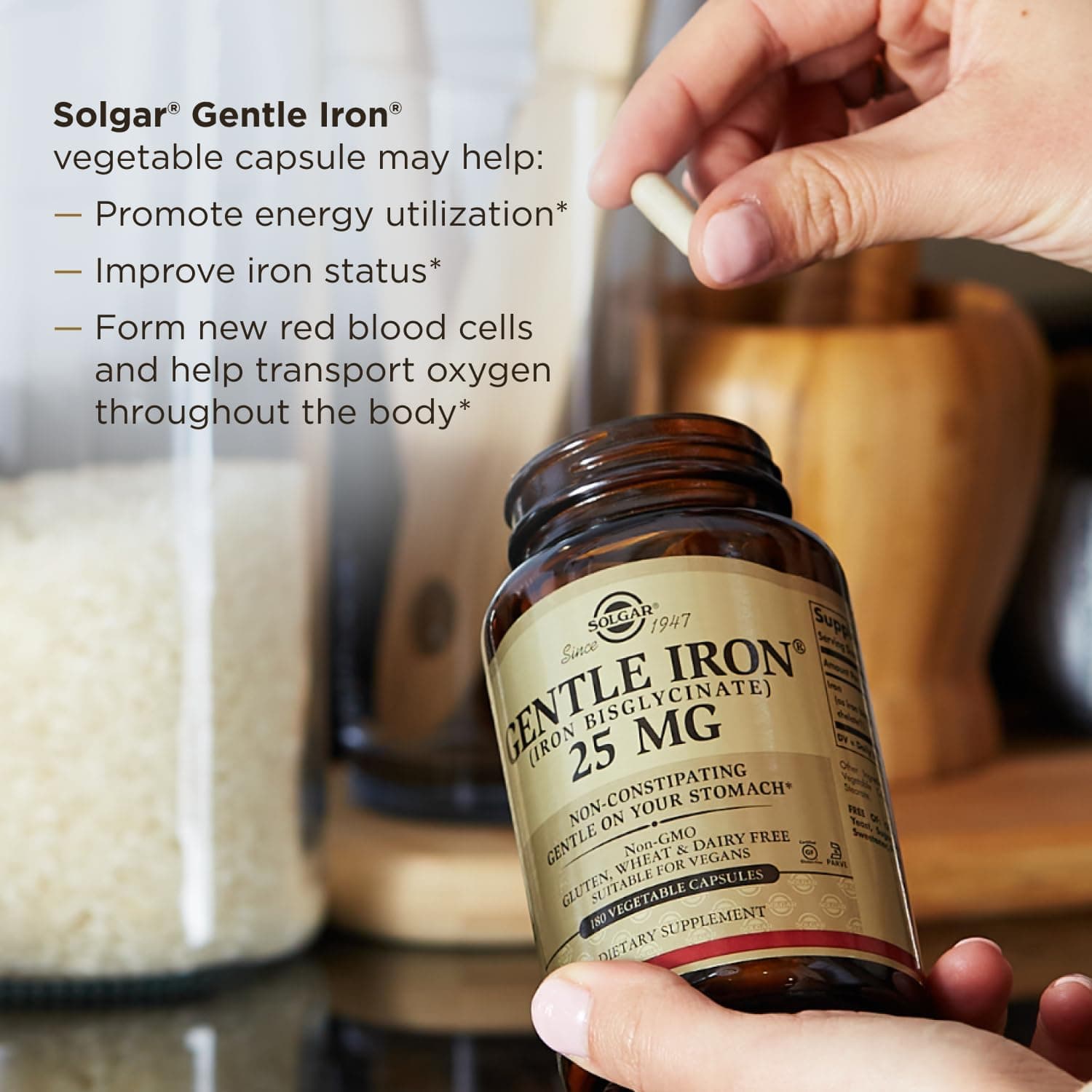
Council for Responsible Nutrition and Ipsos, 2023Iron (as iron bisglycinate) is the lead active here, studied most for iron status. 6 human studies on Iron (as iron bisglycinate) back this formula, each one cited. Who it fits: skews toward women, adults.
 Verified by IngredientMD
The panel on the left is the one we evaluated, line by line.
All 1 actives checked against the clinical evidence: dose, form, and what the research actually shows.
Doses, ratios, and how the ingredients work together. That assessment is the verdict above: "Backed by human trials".
The verdict is public and identical whether or not a brand pays. A formula that does not clear the bar gets nothing.
Read by the engine against 2.1 million data points from clinical trials, PubMed and more than a hundred vetted sources. No individual reviewer is named or implied.
Cross-checked against 559 documented interactions for these actives.
Public health figures the engine matched to this formula's ingredients. Reported by their source, cited and dated, never written by the brand.
74% of US adults
take dietary supplements, and 55% are regular users, in the Council for Responsible Nutrition's 2023 consumer survey of 3,192 adults.
Council for Responsible Nutrition and Ipsos, 202392% of US supplement users
agree that dietary supplements are essential to maintaining their health, in the Council for Responsible Nutrition's 2023 consumer survey.
Council for Responsible Nutrition and Ipsos, 202312.3% of US adults
met the fruit intake recommendation and 10.0% the vegetable recommendation in 2019, in the Behavioral Risk Factor Surveillance System across 49 states.
CDC, MMWR, 202215% of US adults
aged 20 and over ate no breakfast on the day of their dietary recall, in the 2017 to March 2020 What We Eat in America survey.
USDA Agricultural Research Service, 2024About 10% of US women of reproductive age
are iron deficient.
Peer-reviewed analysis60.2% of US adults aged 20 and over
took a dietary supplement in the past 30 days, and 38.7% took two or more, in the 2021 to 2023 National Health and Nutrition Examination Survey.
CDC National Center for Health Statistics, 202659 to 66 days
was the median time it took adults to make a new daily health habit automatic across the studies a 2024 review pooled, with individuals ranging from 4 to 335 days.
Systematic review and meta-analysis, 202461% to 74%
About 61 to 74 percent of adults refilling a long-term medicine on their own stopped within a year, versus 33 to 44 percent on one set pickup day.
Cohort study, 2015Controlled trial, 2017
A controlled trial in women found improved aerobic exercise performance with a combination of three mineral chelates, including chelated iron, plus two conditionally essential nutrients, tested as a combination rather than iron alone.
Journal of the International Society of Sports NutritionRandomised trial, 2018
In a small pilot randomised comparison in children with low iron stores, iron bisglycinate chelate raised haemoglobin and ferritin at a lower elemental iron dose than iron polymaltose, with the pilot too small to establish that the two are equivalent.
Current pediatric reviewsMeta-analysis, 2023
Across 17 randomised trials, at least 4 weeks of ferrous bisglycinate raised haemoglobin in pregnant women more than other iron supplements (standardised mean difference 0.54) and was linked to fewer reported stomach and gut complaints (incidence rate ratio 0.36), while no difference was detected in children.
Nutrition ReviewsRandomised trial, 2025
In a head to head absorption comparison, a glycoprotein matrix bound iron produced a larger rise in serum iron than ferrous bisglycinate chelate or ferrous fumarate.
CureusRandomised trial, 2022
In young children, iron chelate absorption from oat cereal was about 7.4%, similar to iron salt, lower than other cereals.
The Journal of NutritionPopulation figures from public health data. Context for the category, not a statement about any individual and not a claim about this product.
Each line below was derived from this formula's own record at the time of verification. Nothing here was written by the brand, and nothing can be added that the evidence does not carry.
Time-to-effect windows the engine read from the trial record. Each is a window a named study measured, cited and dated, never written by the brand.
A randomised crossover study in 54 nonanemic young women with plasma ferritin at or below 20 ug/L gave labelled iron sulfate as single fasting morning doses of 40, 60, 80, 160 and 240 mg. Twenty four hours after doses of 60 mg or more, serum hepcidin was raised and fractional iron absorption from the following dose was 35% to 45% lower. Across the dose range a sixfold rise in dose, 40 to 240 mg, produced a threefold rise in iron absorbed, 6.7 to 18.1 mg. Total iron absorbed from three doses inside 24 hours was not significantly greater than from two morning doses. The measure was iron absorption and serum hepcidin, not a symptom.
Windows measured in the cited trials. Context for how the active behaves over time, not a statement about any individual and not a claim about this product.
One ingredient, from its own page.
Before haemoglobin and ferritin start shifting on a blood panel, and everyday stamina tends to follow the markers rather than lead them.
How each ingredient usually behaves over time, from its own page on IngredientMD. General timing for the ingredient, not a measurement of this product.
What each form is, and where it fits in a formula. Measured findings carry the study that reported them.
Iron chelated to two molecules of the amino acid glycine, rather than carried as a simple salt.
Descriptions of the form itself, read from the cited studies. Not a comparison between products and not a statement about any individual.
It is a capsule, so the amount per serving is fixed and travels without measuring.
Where two of this brand's products carry actives the literature has read together, the pairing and its basis are below. The evidence word is the corpus row's own confidence, never a score.
Folate supplies one-carbon units for DNA synthesis in dividing erythroid precursors while iron supplies the heme those cells fill with. Both limit normal red cell production at separate steps.
co-nutrient for red cell formation. No combination trial has tested this exact pairing.
B12 keeps folate cycling for precursor cell division while iron builds hemoglobin. They are complementary inputs to the same output.
co-nutrient for red cell formation. No combination trial has tested this exact pairing.
Put an earned verification on your own product page.
These statements have not been evaluated by the Food and Drug Administration. This product is not intended to diagnose, treat, cure, or prevent any disease. This record is not medical advice. Always consult your healthcare provider before starting any supplement regimen.