Pairs well with31 on file
Why these belong in the same formula. Each row says what the basis is, from settled biochemistry through to a trial that measured the pair.
Vitamin C keeps dietary iron in its more soluble ferrous form as it passes through the gut, which supports how much of an iron dose the body takes up. The two are routinely formulated together for this reason.
The body relies on copper-dependent enzymes to load absorbed iron onto its transport protein and to release it from storage, so adequate copper supports normal iron movement and use once the iron is on board. This is why iron and copper are often balanced in the same formula.
Calcium and iron compete at the absorption step, so a large calcium dose taken in the same sitting can lower how much iron is taken up from that dose. Spacing the two apart is the common way to keep iron uptake steady.
Zinc and iron are both divalent minerals that draw on the same intestinal uptake pathway, so large supplemental doses taken together without food can each reduce the other's absorption. Balancing the ratio or separating high doses avoids the overlap.
Retinoids act on the release of stored iron and on erythroid precursor maturation. Adequate vitamin A lets absorbed iron reach the cells that use it.
FAD dependent reductases release iron from ferritin and reduce it for transport. Riboflavin status changes how much of an absorbed iron dose becomes usable.
The first controlling step of heme synthesis, ALA synthase, needs pyridoxal phosphate. Iron has nowhere to go if the porphyrin ring is not being built.
Folate supplies one-carbon units for DNA synthesis in dividing erythroid precursors while iron supplies the heme those cells fill with. Both limit normal red cell production at separate steps.
B12 keeps folate cycling for precursor cell division while iron builds hemoglobin. They are complementary inputs to the same output.
Any iron freed from the glycinate chelate competes with divalent manganese on DMT1, and iron status also shifts DMT1 expression. The bisglycinate form reduces but does not remove the overlap because part of it dissociates before uptake.
Tea catechins bind free non heme iron into unabsorbable complexes, which is a main reason the glycinate chelate exists. The chelate shields much of the dose, so the interaction is real but weaker than with a simple iron salt.
Curcumin binds iron at its keto-enol sites and can pull metal out of weaker complexes. Taken together it lowers the absorbable fraction, though the glycinate ligand competes for the same iron.
Phytate is the dominant chelator that holds plant iron unavailable, and phytase hydrolyses it. The glycinate form already resists phytate binding, so the benefit is largest for the food iron eaten alongside.
Histidine chelates iron through its imidazole nitrogen in the same way glycine does in the bisglycinate salt. It keeps non heme iron from the rest of the meal soluble at intestinal pH.
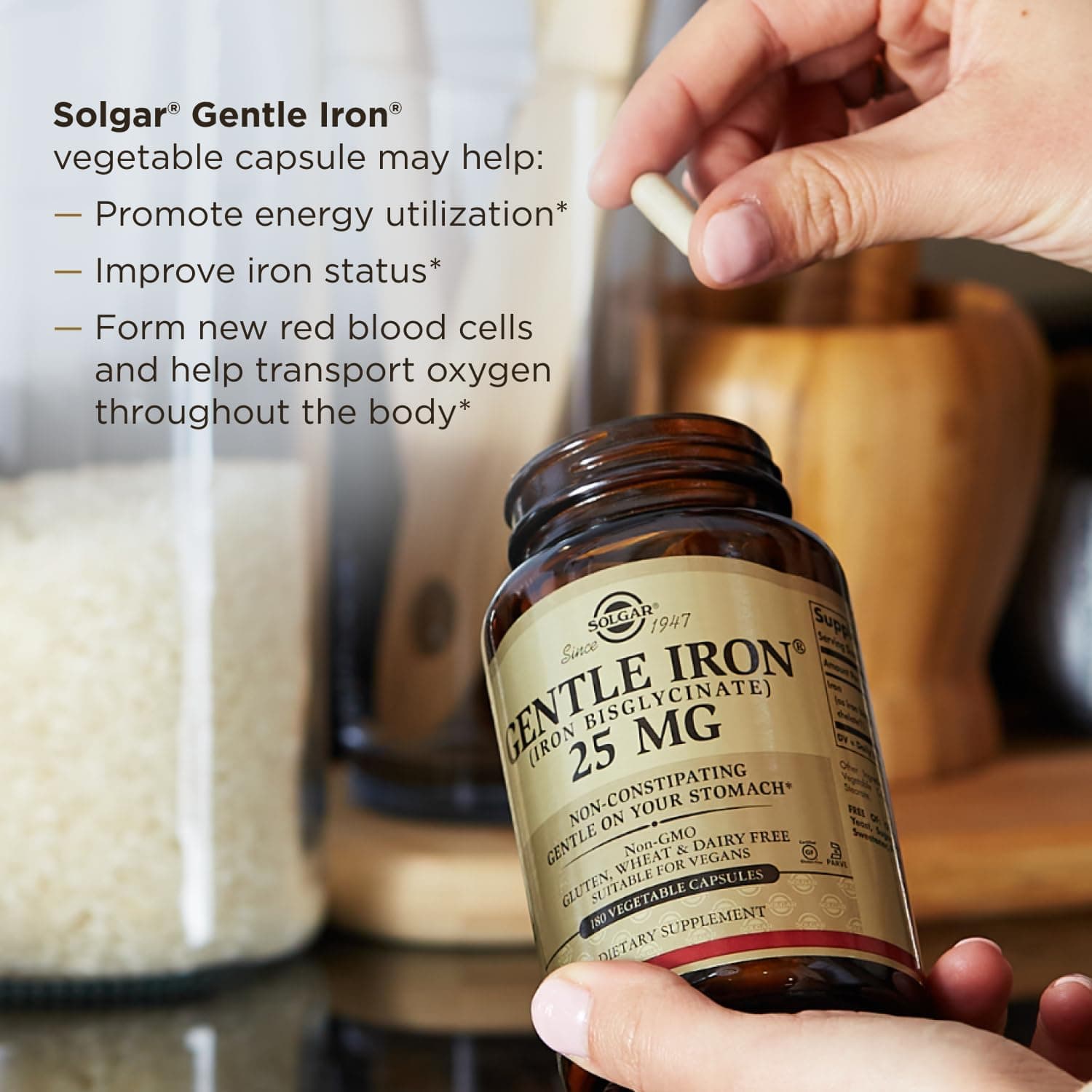
Ferrous bisglycinate is one iron atom held by two glycine molecules through both their amino and carboxyl groups, forming two stable five-membered rings. That ring structure is what keeps the iron from reacting with phytate, polyphenols and other luminal binders. Free glycine added to a formula does not increase the chelate's stability. The ligand only counts when it is bound. This row records the chemistry, not a dosing recommendation.
Lactoferrin binds two ferric ions with very high affinity and is taken up by a receptor-mediated route distinct from DMT1. Iron bisglycinate uses a partly separate route again. Products combining them are covering more than one uptake pathway. The interaction has not been measured directly in this ingredient's candidate literature.
Some L. plantarum strains lower luminal pH through lactate production and produce reductases that keep iron in the ferrous state. Both conditions favour non-heme iron uptake. The chelate is less pH dependent than a simple iron salt, so the size of any benefit is likely smaller here than with ferrous sulfate. The direction is supported, the magnitude for this specific pairing is not established.
Fermentation of inulin to short-chain fatty acids drops colonic pH, which keeps minerals soluble and supports some absorption distal to the small intestine. Most of that work concerns calcium and magnesium, with iron less consistently studied. Adding fermentable substrate is a mechanistically coherent choice in a mineral formula. The evidence for iron specifically sits lower than for calcium.
Galactooligosaccharides are fermented to short-chain fatty acids, acidifying the colonic contents. Lower pH keeps iron in a soluble form for longer. The mechanism is the same as for inulin and the evidence base is likewise stronger for calcium than for iron. Read it as plausible support rather than a demonstrated absorption gain.
Resistant starch ferments further along the colon than rapidly fermented fibres, extending the region of lowered pH. That is the mechanistic argument for mineral support. Direct measurement with an iron chelate is not present here. The row records the reasoning, not a measured effect.
Tannins from tea, coffee and some botanicals bind non-heme iron and drop its absorption substantially when taken in the same meal. The bisglycinate chelate is more resistant to this than a simple ferrous salt because the glycine ligands already occupy the coordination sites. More resistant is not immune: high polyphenol loads still reduce uptake. Spacing tea and coffee an hour or two from the dose is the usual practice.
Condensed tannins in grape seed extract carry the catechol and galloyl groups that complex ferrous and ferric iron. Combining a concentrated polyphenol extract with an iron dose reduces the fraction that is absorbed. The chelate structure blunts the effect relative to ferrous sulfate but does not remove it. Separating the two doses is the straightforward answer.
Quercetin's catechol B ring and its 3-hydroxy-4-keto arrangement are both iron-binding motifs, which is why it acts as an iron chelator in laboratory systems. Taken with an iron dose it can reduce the iron available for uptake. The same chelation is part of why quercetin behaves as an antioxidant in iron-rich systems. Direction stated, magnitude in people not established for this pair.
Calcium interferes with non-heme iron uptake at the enterocyte, an effect documented across single-meal absorption studies. Bisglycinate is less affected than ferrous sulfate because part of its uptake bypasses the DMT1 route, but the two minerals are still better spaced. The stored calcium row covers the mineral generally. This one names the carbonate salt formulators actually put in tablets. Practically, take the iron away from a calcium-containing multivitamin or antacid.
Psyllium forms a gel that raises the viscosity of gut contents and slows diffusion to the mucosal surface. Minerals dosed in that gel present more slowly and some are carried through. The effect is physical rather than chemical binding. A two-hour gap between the fibre and the iron dose is the conventional handling.
Activated charcoal adsorbs a broad range of organic molecules on its surface. The glycine ligands of the chelate are exactly the sort of small organic species it captures. Co-dosing lowers how much intact chelate reaches the absorptive surface. Charcoal should be separated from any supplement dose by several hours.
Ferrous sulfate needs an acidic stomach to stay dissolved and reduced before it reaches the duodenum. The bisglycinate chelate holds the iron in a soluble complex across a wider pH range, which is the main formulation argument for using it. Adding an acidifier therefore changes less here than it would with a simple salt. Anyone reaching for betaine HCl to improve iron uptake should know the chelate was already designed around that problem.
Unbound ferrous iron catalyses Fenton chemistry, generating hydroxyl radicals that start lipid peroxidation chains. Tocopherols terminate those chains and are consumed doing so. Chelation reduces the pool of free reactive iron in the lumen, which is part of the gastrointestinal tolerance argument for this form. In a formula holding both iron and oils, this is a stability consideration as well as a physiological one.
N-acetylcysteine carries a free thiol that reduces ferric iron and can coordinate metal ions directly. That is a reducing environment in which iron's redox cycling changes character. Whether the net effect on absorption or on oxidative markers is favourable has not been measured for this pairing. The row exists so the chemistry is on record, at low confidence.
Glutathione peroxidase, a selenoenzyme, reduces hydrogen peroxide and lipid hydroperoxides to water and alcohols. Iron is the metal most able to generate those species through Fenton chemistry. Adequate selenium status therefore supports the normal disposal side of iron's redox chemistry. This is settled biochemistry, not a claim about supplementing the pair together.
Xanthine oxidoreductase is a molybdenum and iron-sulfur enzyme implicated in the reductive mobilisation of iron from ferritin stores. The link places molybdenum status upstream of one route of iron handling. It is a mechanistic relationship documented in biochemistry rather than a supplement pairing with outcome data. Stated at moderate confidence for that reason.