Caryophyllene.
The peppery terpene in black pepper, cloves and hops. It binds CB2 receptors, which sit on immune cells rather than in the brain, so there is no high.
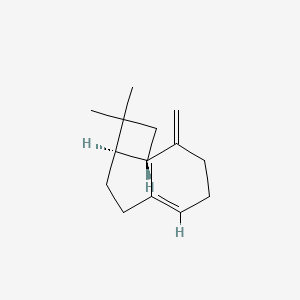 Compound
- Category
- Compound
What Caryophyllene is, and what it does.
- Does it work
- Suits people building a terpene or inflammatory-response formula who want a CB2 binder with no psychoactive effect. Most of the evidence is animal and cell work.
- How much to take
- No daily amount is on record. Start with the label amount, taken with fat or as a cyclodextrin complex, because the plain terpene absorbs poorly.
- Time to feel it
- No human time course has been measured. What is known about its action comes from animal and cell work rather than a clock in people.
- The first dose
- A peppery, woody taste and little else. Any CB2 signalling happens quietly, without the head effects people associate with cannabinoids.
- With regular use
- Weeks of daily intake keep a steady supply of the terpene arriving. Human outcomes across that span have not been measured yet.
- How well tolerated
- It is a common food terpene and settles well at dietary amounts. Concentrated oils can irritate the stomach. Check with your clinician if you are pregnant.
- How it feels
- Peppery and slightly woody on the tongue. There is no high and no sedation, because the receptor it prefers sits outside the brain.
- The overlooked benefit
- It oxidises in air into caryophyllene oxide, a different compound with different receptor behaviour, so a bottle left open becomes something else.
The proof, claim by claim.
What these words mean
These words describe the research, not the molecule's worth. Research strength is how much work stands behind one claim, and it is never a product score.
- selective CB2 receptor agonismIn vitro study
- a healthy inflammatory responseAnimal study
3 more claims
- dietary terpene intakeNarrative review
- gut and immune signalling in peopleRandomised trial
- oxidative stress marker changesAnimal study
Why these belong in the same formula, 8 pairings
Why these belong in the same formula. Each row says what the basis is, from settled biochemistry through to a trial that measured the pair.
Beta-caryophyllene is a highly lipophilic sesquiterpene with negligible water solubility and meaningful volatility. Dispersing it in medium-chain triglycerides is the standard way to get a reproducible dose into a capsule and to limit evaporative loss during manufacture. Taking it with fat rather than on an empty stomach follows the same logic.
Work in Caco-2 intestinal cells reports that beta-caryophyllene changes how those cells take up and metabolise butyrate. That is a cell-level observation about the colonocyte fuel pathway, not a measured outcome in a person. It is worth knowing for anyone combining a terpene with a butyrate or fibre product.
A published clinical evaluation combined beta-caryophyllene with myrcene, hemp seed oil and ginger extract in adults reporting knee joint discomfort. Because the ingredients were given as one product, the contribution of each cannot be separated. Read it as support for the blend rather than for caryophyllene alone.
Both beta-caryophyllene and long-chain omega-3 fatty acids act as ligands at PPAR-family nuclear receptors in laboratory systems. The fish oil also serves as a dissolving medium for the terpene. The receptor overlap is mechanistic and has not been tested as a combination in people.
Limonene and beta-caryophyllene occur together in the same essential oil fractions and are both cleared largely by cytochrome P450 oxidation. A whole-oil product delivers both whether or not the label names them. Anyone reasoning from an isolate study to a whole-oil product is comparing different exposures.
Black pepper oil is one of the richest dietary sources of beta-caryophyllene, so a piperine extract from the same plant often carries the terpene along with it. Piperine separately slows conjugation of several co-administered compounds. Formulators should account for the terpene already present rather than assume the label dose is the whole exposure.
Murine and cell work reports that beta-caryophyllene dampens NF-kappaB driven signalling, a pathway curcumin is also described as acting on. Both observations sit at the mechanistic level in non-human systems. Combining them is a reasonable formulation hypothesis and nothing more.
Beta-caryophyllene binds CB2 selectively and has essentially no CB1 activity, which is why it is described as a dietary cannabinoid without central psychoactivity. Cannabidiol acts on the same system through different routes. Their co-occurrence in cannabis-derived extracts means the terpene fraction is part of what any full-spectrum product delivers.
Nothing specific on file for Caryophyllene. Match the label to the daily amount above, and tell your doctor what you take.
Not medical advice. Show the label to your pharmacist.What Caryophyllene actually does.
Beta caryophyllene is a plant compound found in black pepper, clove, hops, copaiba and cannabis. It's one of the most common terpenes in a normal diet.
3 more mechanisms
It activates one type of cannabinoid receptor while having essentially no effect on the other type, which is why it's called a dietary cannabinoid with no mind altering effect.
This receptor is found mainly on immune cells and in the gut rather than in the brain or spinal cord, so this compound's main site of action sits outside the brain.
Beta caryophyllene reacts with air over time into a different compound with different receptor behavior, so storing it exposed to air or heat changes what's actually left in the bottle.
Where Caryophyllene comes from.
This is the peppery terpene in black pepper, cloves and hops. It fits the CB2 receptor, which sits on immune cells rather than in the brain, so it is a cannabinoid without any high. Most of the research is in animals and cells, with only a couple of small human studies so far.
What this route gives you
The same molecule is reached more than one way. Which route a given product used is a manufacturing choice, and the finished compound is the same either way.
5 steps on record
Clove and copaiba are the dominant commercial sources. Black pepper, hops and cannabis carry it as a major volatile but at lower recoverable yield.
Clove and pepper oils are steam distilled from the plant material. Copaiba oleoresin is tapped directly from the trunk of Copaifera trees.
The sesquiterpene fraction is separated from eugenol and lighter monoterpenes by distillation under reduced pressure, which keeps temperatures low enough to limit oxidation.
Purity and the ratio of parent terpene to its oxide are checked by gas chromatography, since the two convert into one another on standing.
Sold as a neat oil, pre-dispersed in a carrier lipid for softgels, or complexed with cyclodextrin for dry formats.
Getting Caryophyllene from food.
The whole-food sources on file. A supplement closes the gap, it does not replace dinner.
A gram-for-gram figure (how much of each you would eat to match a dose) will appear here once it is sourced and reviewed. This page will not print a number it cannot cite.
The forms it comes in.
3 more forms
The essence, in one line each.
- In a 45-day double-blind trial in 38 adults with a diagnosed knee condition, a supplement containing hemp seed oil and terpenes (including beta-caryophyllene) led to greater improvements in knee pain and function scores compared to a supplement with hemp seed oil alone.Randomised trial, in patients suffering from knee osteoarthritis (KOA). Fari et al., 2023 (Medicina). PMID 36837393 ↗
4 more findings
- The authors report that beta-caryophyllene altered butyrate uptake and metabolic handling in an intestinal cell line.In vitro study. Scroggins et al., 2026 (Scientific Reports). PMID 41922720 ↗
- The authors report changes in PPAR-gamma, NF-kappaB and CNR2 expression consistent with CB2-mediated signalling along the gut and brain axis.Animal study. Pech-Jimenez et al., 2025 (Metabolites). PMID 41149616 ↗
- The authors report that beta-caryophyllene, acting as a CB2 ligand, altered inflammatory responses of isolated immune cells.In vitro study. Butenko et al., 2026 (Scientific Reports). PMID 42031999 ↗
- The authors report that beta-caryophyllene reduced pyroptosis markers linked to histone lactylation in a model of cerebral ischaemia.Animal study. Xin et al., 2026 (Frontiers in Pharmacology). PMID 42389269 ↗
Chosen from the 6 we read for Caryophyllene.
The studies, linked.
6 sources behind our Caryophyllene verdict, every one linked to PubMed, the journal or ClinicalTrials.gov.
- Clinical trialDevelopment and Evaluation of Computerized Chemosensory Based Orbitofrontal Networks Training for Treatment of Pain (CBOT-P)ClinicalTrials.gov ↗Phase 1, 86 participants, Completed
5 more linked trials
- Clinical trialRandomized, Double Blind, Placebo Controlled Crossover Trial With Open Label Extension Of Topical 20% Beta Caryophyllene Alone And In Combination With 0.025% Capsaicin In The Treatment Of Pain Caused By Osteoarthritis Of The KneeClinicalTrials.gov ↗Phase 2, 56 participants, Completed
- Clinical trialEffects of Beta Caryophyllene Supplementation on Autonomic Regulation and Apnea Performance in Elite Divers - a Randomized Crossover TrialClinicalTrials.gov ↗15 participants, Completed
- Clinical trialEffectiveness of a Combined Therapy With Paravertebral Oxygen-ozone Injections and Topical Patch Containing Cannabidiol and β-Caryophyllene for Treatment of Neck Pain: a Prospective, Randomized, Controlled Trial.ClinicalTrials.gov ↗Phase 3, 52 participants, Unknown
- Clinical trialAnalgesic and Subjective Effects of Terpenes Administered Alone and in Combination With THCClinicalTrials.gov ↗Phase 1, 45 participants, Active not recruiting
- Clinical trialAcute Changes In Thermal Pain Response Following Single Oral Dose of Beta-CaryClinicalTrials.gov ↗Phase 1, Withdrawn
From clinical trials and PubMed, ranked by study type and citation weight, not cherry-picked.
FDA Disclaimer: These statements have not been evaluated by the Food and Drug Administration. This information is for educational purposes only and is not intended to diagnose, treat, cure, or prevent any disease. Consult your healthcare provider before starting any supplement regimen.