Limonene.
The compound that gives citrus peel its smell. In the body it is oxidised to perillic acid and it switches on the phase two enzymes your liver uses to conjugate compounds.
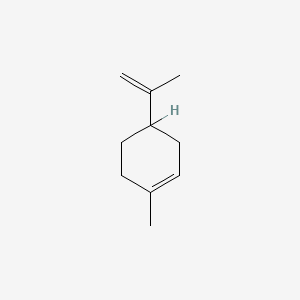 Compound
- Category
- Compound
What Limonene is, and what it does.
- Does it work
- Suits people interested in liver conjugation pathways, and cooks and formulators after the aroma. It is also the usual reason a citrus-scented product bothers sensitive skin.
- How much to take
- No dose figure is on record. Start with what a softgel states and take it with food, since it needs a lipid carrier and irritates the mouth and stomach taken neat.
- Time to feel it
- Perillic acid turns up in urine within hours of a dose. Enzyme induction builds across days, and neither of those is something you sense.
- The first dose
- Day one usually brings citrus burps and little else. That is the oil surfacing rather than a problem, and taking it with a meal reduces it.
- With regular use
- Over weeks it keeps nudging the conjugating enzymes that clear compounds by glucuronidation and glutathione. That is a laboratory change rather than a felt one.
- How well tolerated
- Well tolerated at food amounts. Oxidised oil is a known contact sensitiser, so keep bottles sealed. If you take medicines cleared by the liver, check with a doctor first.
- How it feels
- Bright citrus smell, a little warming in the mouth, and citrus burps or reflux if you take it without food. Past that there is no sensation.
- The overlooked benefit
- Air is what turns it. Once a bottle is opened it oxidises into hydroperoxides, and those, not the fresh molecule, are what irritate skin. Headspace matters.
The proof, claim by claim.
What these words mean
These words describe the research, not the molecule's worth. Research strength is how much work stands behind one claim, and it is never a product score.
- Induction of phase two conjugation enzymesAnimal study
- Urinary perillic acid as an exposure markerNarrative review
3 more claims
- Contact sensitisation from oxidised limoneneNarrative review
- Comfort after mealsRandomised trial
- Solvent and penetration aid in topical formulationIn vitro study
Why these belong in the same formula, 12 pairings
Why these belong in the same formula. Each row says what the basis is, from settled biochemistry through to a trial that measured the pair.
The compound will not disperse in water and irritates mucosa when taken neat, so a carrier lipid is what makes a tolerable and repeatable dose possible. Medium-chain triglycerides are the usual choice in softgels because they stay clear and resist rancidity. This is a delivery decision and carries no claim of its own.
Phospholipids form mixed micelles that carry oil-phase compounds across the aqueous layer at the gut wall, which reduces the dependence on whether a meal happened to contain fat. It is standard formulation practice for volatile oil constituents. The lecithin contributes nothing pharmacologically at formulation levels.
Autoxidation produces the hydroperoxides and the epoxide that account for this compound's sensitising behaviour, so slowing that reaction changes what is actually in the bottle by the end of shelf life. Tocopherols interrupt the peroxidation chain in the oil phase. This is a stability job, and it matters most in products that will sit on a shelf for a year.
Limonene-1,2-epoxide is detoxified by conjugation with glutathione, and the parent compound also induces the transferase enzymes that carry out that conjugation. The two therefore sit on the same disposal pathway from opposite ends. Oral glutathione is itself poorly absorbed intact, so the practical value of adding it is uncertain.
Cysteine availability limits how fast glutathione is made, and glutathione is what conjugates the epoxide metabolite. Supporting that pool is mechanistically coherent. Nobody has shown it changes anything measurable in a person taking a citrus terpene, so read it as pathway logic rather than a demonstrated pairing.
Both push in the same direction on glutathione S-transferase and UGT expression, which means their effects on the clearance of other compounds handled by those routes can compound. That is worth knowing for anyone taking medication cleared by glucuronidation. The induction data are largely animal and cell work.
Both alter conjugation enzyme activity, and stacking two agents that shift the same clearance route makes the net effect on any co-administered compound difficult to predict. The direction is not even consistent across the silymarin literature. Regard this as a reason for caution in a crowded formula rather than as a benefit.
Both are volatile monoterpenes that irritate mucosa in neat form, both need an oil carrier or an enteric coat, and both add to the total terpene load in a capsule. Combining them stacks the same tolerability constraint rather than adding two independent effects. Peppermint oil also relaxes the lower oesophageal sphincter, which is worth weighing in anyone prone to reflux.
Both are commonly used in digestive comfort formulas and both travel in the same oil phase, so they are formulated together often. Whether the combination does anything the individual constituents do not has not been tested. Count it as formulation convention.
Berberine affects intestinal CYP3A4 and P-glycoprotein, while this compound induces phase II enzymes, so a formula containing both is pushing gut drug handling in two directions at once. The net result on anything else taken at the same time is not predictable from either agent alone. This is a flag for people on prescribed medication rather than a described benefit.
Both are terpenoid-family lipophiles that depend on the same oil carrier and the same bile-mediated micellar uptake, so they travel together comfortably in a softgel. The carotenoid also contributes antioxidant protection to the oil phase, which slows the terpene's autoxidation. The pairing is about the formulation, not about a biological interaction between them.
Carotenoids and lipophilic terpenes both rely on mixed micelles to cross the intestinal wall, and micellar capacity at a given meal is finite. Loading several lipophiles into one dose can lower uptake of each compared with taking them separately. This is a delivery constraint, not an antagonism between the molecules.
Nothing specific on file for Limonene. Match the label to the daily amount above, and tell your doctor what you take.
Not medical advice. Show the label to your pharmacist.What Limonene actually does.
Limonene barely dissolves in water, so getting it absorbed or formulated depends on a fat-based or specialized carrier, and taken undiluted it can irritate mucous membranes, which is why it's sold in softgels rather than as a plain liquid.
3 more mechanisms
In the body limonene is broken down mainly by liver enzymes into other compounds, ending up as perillic acid, which is further processed and excreted in urine. Perillic acid is the main way researchers track exposure.
When exposed to air, limonene breaks down into oxidation products, and it's those breakdown products, not limonene itself, that tend to trigger skin sensitization, which is why how a product is stored matters for skin use.
Limonene is made early in a broader plant pathway that also produces related terpenes, which is why compounds like carveol and carvone typically show up alongside it in plant material.
Where Limonene comes from.
The compound that makes orange peel smell like orange. It is squeezed out of citrus rind as a by-product of juice manufacturing, which is why it is cheap and abundant. The mirror-image version from pine and mint smells completely different despite being the same formula.
What this route gives you
Made from a plant. What ends up in the capsule tracks the harvest, so batch testing and a stated marker matter more here than with a made molecule.
5 steps on record
Orange, lemon and grapefruit rind left after juicing. Conifer and mint sources supply the (S)-(-) enantiomer separately.
Cold pressing preserves the sensitive minor constituents including the furocoumarins. Steam stripping of juice essence recovers a lighter, more volatile fraction.
Vacuum distillation raises purity toward 95 to 99 percent and removes the heavier waxes and pigments. It also strips out the furocoumarins found in cold-pressed peel oil, which matters for photosensitivity.
Chiral gas chromatography confirms which enantiomer is present, since the two are indistinguishable by ordinary purity assay.
Consumer supply is almost always a softgel, because neat monoterpene is a mucosal irritant and evaporates readily.
Getting Limonene from food.
The whole-food sources on file. A supplement closes the gap, it does not replace dinner.
A gram-for-gram figure (how much of each you would eat to match a dose) will appear here once it is sourced and reviewed. This page will not print a number it cannot cite.
The forms it comes in.
5 more forms
The essence, in one line each.
- Sweet orange essential oil and the (+) enantiomer reduced oxidative stress markers, inflammatory signalling and apoptosis readouts in a differentiated cell model.In vitro study. Pandur E et al., 2025 (BMC Complementary Medicine and Therapies). PMID 41366672 ↗
2 more findings
- The compound and its metabolite perillyl alcohol restricted intracellular growth of Chlamydia trachomatis by altering host isoprenoid metabolism.In vitro study. Cebollada P et al., 2026 (Natural Products and Bioprospecting). PMID 41968205 ↗
- Dietary supplementation altered growth performance and several immunological parameters in common carp relative to unsupplemented diets.Animal study. Yousefi M et al., 2023 (Animals). PMID 37893921 ↗
Chosen from the 3 we read for Limonene.
The studies, linked.
8 sources behind our Limonene verdict, every one linked to PubMed, the journal or ClinicalTrials.gov.
- Clinical trialIdentification of New Non-invasive Biomarkers of Metabolic Dysfunction-associated Steatotic Liver Disease (MASLD) in Patients by Blood Plasma Spectroscopy, Breath Volatile Organic Compounds Analysis and Serum Bile Acids AnalysisClinicalTrials.gov ↗172 participants, Completed
7 more linked trials
- Clinical trialEfficacy and Safety of a Food Supplement With Standardized Menthol, Limonene, and Gingerol Content in Patients With Irritable Bowel Syndrome: a Double-blind, Randomized, Placebo-controlled TrialClinicalTrials.gov ↗56 participants, Completed
- ClinicalTrials.gov ↗
- Clinical trialLow Dose Exposure to Oxidized R-limonene - A Double Blinded Vehicle Controlled Repeated Open Application Test (ROAT) StudyClinicalTrials.gov ↗48 participants, Completed
- Clinical trialOlfactory Odour Stimulation for Metabolism Control - the "OLFAMET-Study"ClinicalTrials.gov ↗41 participants, Completed
- Clinical trialHuman Salivary Gland Disposition of Alda-341 in Patients Undergoing Salivary Gland SurgeryClinicalTrials.gov ↗Early phase 1, 10 participants, Completed
- Clinical trialBehavioral Pharmacology of Orally Administered THC and D-limoneneClinicalTrials.gov ↗Phase 1, 65 participants, Recruiting
- Clinical trialA Phase I Study of d-Limonene With Concurrent Radiation and Platinum Based Chemotherapy for Xerostomia Prevention in Locally Advanced Head and Neck Squamous Cell Carcinoma (HNSCC)ClinicalTrials.gov ↗Phase 1, 40 participants, Recruiting
From clinical trials and PubMed, ranked by study type and citation weight, not cherry-picked.
Problems people have reported.
Read this carefully. These are 273 voluntary, unverified reactions reported to the FDA (openFDA). The number mostly reflects how popular Limonene is, not how risky it is. A report is not proof Limonene caused anything. It is a signal of what to watch for, nothing more.
3 more reported effects
Source: openFDA adverse-event reports. Voluntary reporting, not an incidence rate.
FDA Disclaimer: These statements have not been evaluated by the Food and Drug Administration. This information is for educational purposes only and is not intended to diagnose, treat, cure, or prevent any disease. Consult your healthcare provider before starting any supplement regimen.