Higenamine.
It's a plant alkaloid that switches on beta adrenoceptors, the receptors adrenaline uses, raising heart rate and relaxing airway smooth muscle. It shows up in stimulant pre-workouts.
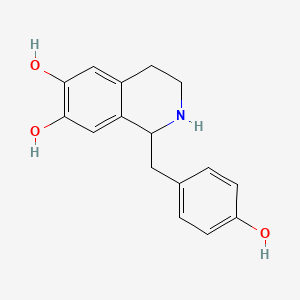 Compound
- Category
- Compound
What Higenamine is, and what it does.
- Does it work
- It suits very few people and no tested athlete: the World Anti-Doping Agency prohibits it in and out of competition, so anyone subject to testing has to stay clear.
- How much to take
- No dose figure is on record, and we won't invent one. Oral availability is low and clearance fast, so a capsule behaves very differently from injected animal work.
- Time to feel it
- Plasma levels rise and fall quickly after an oral dose, so what it contributes lands within the first hour and fades over the next few.
- The first dose
- Day one can bring a faster heart rate and a warm, switched-on feeling, especially alongside caffeine. Some people get restless and jittery instead.
- With regular use
- Nobody has measured weeks of daily use in people. What's on record is short-term receptor pharmacology, not what repeated dosing does over time.
- How well tolerated
- It's a real cardiovascular actor: it adds to caffeine and is opposed by beta blockers. Talk to a doctor first if you take heart or blood pressure medicine.
- How it feels
- Warm, switched on, heart running a bit faster. With caffeine on top it tips toward jittery and restless for plenty of people.
- The overlooked benefit
- The same molecule, as norcoclaurine, is the precursor every plant benzylisoquinoline alkaloid branches from. It's a hub of plant chemistry, not just a pre-workout additive.
The proof, claim by claim.
What these words mean
These words describe the research, not the molecule's worth. Research strength is how much work stands behind one claim, and it is never a product score.
- beta adrenoceptor activationIn vitro study
- heart rate and cardiac contractilityAnimal study
2 more claims
- airway smooth muscle relaxationAnimal study
- fat oxidation during exerciseRandomised trial
Why these belong in the same formula, 6 pairings
Why these belong in the same formula. Each row says what the basis is, from settled biochemistry through to a trial that measured the pair.
Higenamine is a beta adrenoceptor agonist and caffeine raises cyclic AMP by blocking its breakdown, so the two converge on the same downstream signal from different directions. Heart rate and blood pressure responses add rather than cancel. Pre workout products routinely stack them, and anyone with a cardiovascular history or on blood pressure medication should take this as a reason to raise it with a clinician.
Yohimbine blocks the alpha 2 autoreceptor that normally restrains noradrenaline release, while higenamine directly stimulates beta receptors, so the two push adrenergic tone up by separate routes. The combined effect on heart rate, blood pressure and anxiety is greater than either produces alone. Yohimbine already has a poor tolerability record on its own.
Green tea extract appears with higenamine in most thermogenic formulas, contributing caffeine as well as catechins that slow noradrenaline breakdown by inhibiting COMT. That prolongs adrenergic signalling that higenamine is already driving. The pairing is formulation convention, and the added cardiovascular load has not been characterised as a combination.
Theanine is used alongside stimulants because it reduces the subjective jitteriness and blunts part of the blood pressure rise seen with caffeine. Whether it does the same against a direct beta agonist has not been shown. Smoothing how a stimulant feels is not the same as reducing what it does to the heart.
Taurine is abundant in cardiac muscle and participates in calcium handling and membrane stabilisation, which is why it appears in energy formulas beside stimulants. The idea that it offsets stimulant driven cardiac strain is mechanistic reasoning rather than a tested pairing. Do not count it as protection.
Melatonin lowers arousal and evening blood pressure while a beta agonist raises heart rate and alertness, so taking them close together sets the two against each other. In practice this shows up when a late training session stimulant collides with a sleep aid the same night. Separating them by several hours is the straightforward answer.
Nothing specific on file for Higenamine. Match the label to the daily amount above, and tell your doctor what you take.
Not medical advice. Show the label to your pharmacist.What Higenamine actually does.
Higenamine is a plant alkaloid that switches on beta adrenergic receptors, the same receptors behind effects on heart rate, how hard the heart contracts, and airway muscle tone.
3 more mechanisms
Turning on these receptors raises a cell signal called cyclic AMP, and anything else that raises the same signal, including caffeine, adds to the effect, while beta-blocker medicines work directly against it.
The same molecule is also the starting building block plants use to make an entire family of related alkaloids, formed from two simpler compounds, with every downstream compound in that family branching off from it.
Taken by mouth it's poorly absorbed and cleared quickly, with a lot broken down before it even reaches circulation, so blood levels drop fast, which is why findings from injected doses in animal studies don't carry over cleanly to an oral capsule.
Where Higenamine comes from.
It turns up in several unrelated plants, from lotus plumule to nandina to some aconite species, and it can also be made in a factory. Most of what ends up in a pre workout tub is the factory version even when the label points at a plant. Same molecule either way. The thing worth knowing is that it is on the World Anti-Doping Agency prohibited list in and out of competition, so any tested athlete needs to stay away from it entirely.
What this route gives you
The same molecule is reached more than one way. Which route a given product used is a manufacturing choice, and the finished compound is the same either way.
5 steps on record
Occurs naturally in Nandina domestica, Aconitum species, Annona squamosa, Tinospora crispa and lotus plumule, and is also made synthetically from dopamine derived building blocks
For the botanical route, plant material is extracted under acid conditions, then basified so the alkaloid fraction partitions into an organic solvent
The free base is converted to the hydrochloride, which gives a stable, water soluble, weighable powder
Recrystallisation or column chromatography raises purity and, for Aconitum sourced material, removes the diterpene alkaloids that plant also carries
White to off white powder with an HPLC purity figure, blended into pre workout powders and capsules at milligram amounts
Whether a given batch is plant extracted or synthesised is usually absent from the label, and higenamine content in botanical extract material is rarely declared at all.
The forms it comes in.
2 more forms
The essence, in one line each.
- In a randomised trial, daily higenamine for 8 weeks produced no statistically significant changes in heart rate, blood pressure, or a panel of blood safety markers in healthy young men.Randomised trial. Bloomer et al., 2015 (Human and Experimental Toxicology). PMID 25591969 ↗
2 more findings
- A narrative review summarising higenamine's beta adrenergic pharmacology and its reported preclinical activities, noting that most published work is preclinical and that human data remain sparse.Narrative review. Shi et al., 2025 (Nutrients). PMID 40290051 ↗
- YS-49, a synthetic analogue related to higenamine, activated PI3K and AKT signalling in a cultured mouse osteoblast line, an observation about a derivative in cells rather than about higenamine in people.In vitro study. Cao et al., 2025 (BMC Musculoskeletal Disorders). PMID 41088103 ↗
Chosen from the 3 we read for Higenamine.
The studies, linked.
1 source behind our Higenamine verdict, every one linked to PubMed, the journal or ClinicalTrials.gov.
- Clinical trialAn Open-Label, Single-dose Administration Study of the Pharmacokinetics and Pharmacodynamics of Higenamine, Administered Intravenously Injection to Healthy Chinese SubjectsClinicalTrials.gov ↗Phase 1, 10 participants, Completed
From clinical trials and PubMed, ranked by study type and citation weight, not cherry-picked.
FDA Disclaimer: These statements have not been evaluated by the Food and Drug Administration. This information is for educational purposes only and is not intended to diagnose, treat, cure, or prevent any disease. Consult your healthcare provider before starting any supplement regimen.