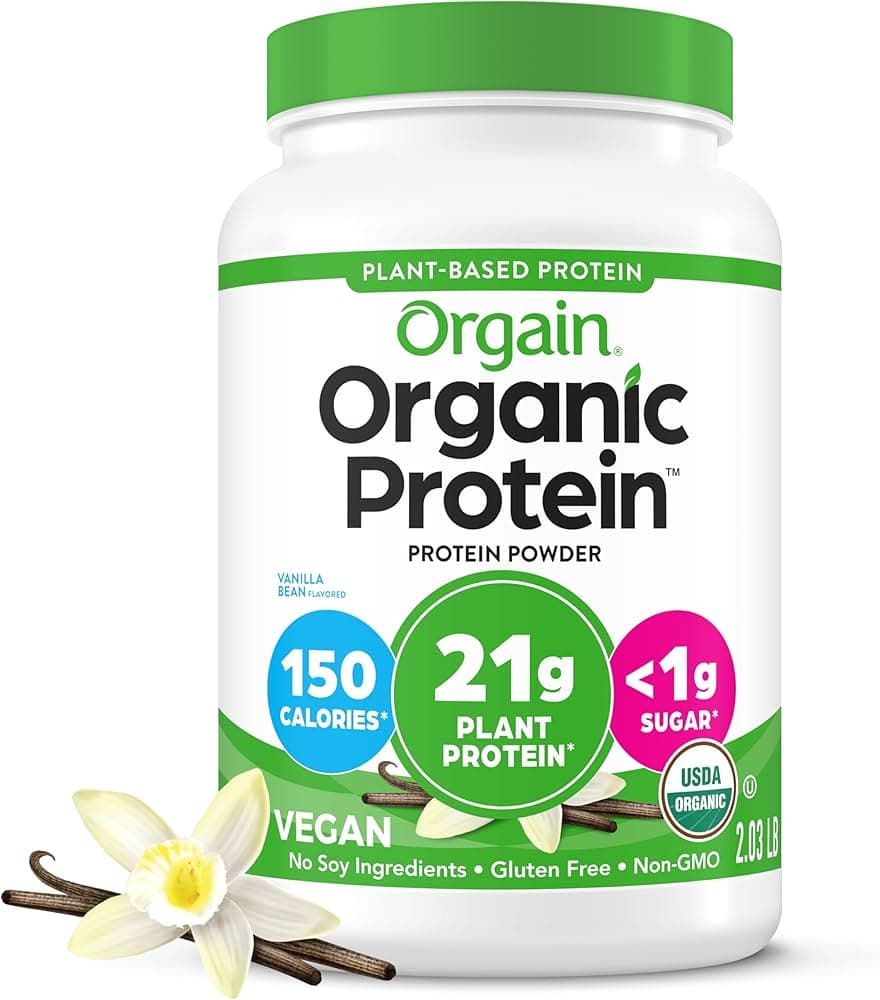
Rice Protein Concentrate 80.
Rice Protein Concentrate 80 supplementation for targeted health support. Gives you roughly 80 percent protein by weight from rice, supplying amino acids that support muscle maintenance and repair without dairy, soy or egg.
Reviewed March 2026
- Category
- Protein
What Rice Protein Concentrate 80 is, and what it does.
- Does it work
- Suits people building protein intake without dairy, soy or egg, and anyone blending plant proteins. Pairing it with pea or added lysine rounds out the amino acid profile.
- How much to take
- 20-40g per serving (provides 16-32g protein). Same protein goals as other sources.
- Time to feel it
- Fullness after a serving is same-day. Changes tied to hitting your protein target alongside training land across four to twelve weeks.
- The first dose
- Supports protein intake. May notice easier digestion than some proteins.
- With regular use
- Muscle maintenance and growth with adequate training and total protein.
- How well tolerated
- Well tolerated. Hypoallergenic. Arsenic levels regulated in quality products.
- How it feels
- Neutral taste, slightly gritty texture, easy on most stomachs. The effect shows up in recovery and fullness rather than as a sensation.
- The overlooked benefit
- Leucine per gram runs lower than in whey, so matching two powders by grams of protein does not match leucine. A slightly larger serving closes that gap.
15 to 25g a day is where Rice Protein Concentrate 80 works.
Source: Joy et al., 2013, Nutr J
The proof, claim by claim.
These words describe the research, not the molecule's worth. Research strength is how much work stands behind one claim, and it is never a product score.
- Provides usable proteinAmino acid analysis + trials
- HypoallergenicLow allergen profile
- Equivalent to wheyWhen lysine complemented
- Well tolerated arsenic levels in quality productsTesting protocols
Questions people ask about Rice Protein Concentrate 80.
- Is rice protein complete?
- No. It's low in lysine, an essential amino acid. Combine with pea protein or eat varied protein sources throughout the day to get complete amino acids.
- Why 80% concentration?
- Concentration refers to protein content by weight. 80% means 80g protein per 100g powder. Higher than whole rice but lower than isolates (90%+).
- Is it as good as whey?
- Lower biological value due to amino acid profile. Studies show similar muscle building when total protein is matched and lysine is complemented. Practical difference is small.
- What about arsenic?
- Rice accumulates arsenic from soil/water. Quality rice proteins are tested to ensure safe levels. Choose third-party tested products. Normal use is well tolerated.
- Does it taste like rice?
- Mild, slightly earthy, generally neutral. Better tasting than many plant proteins. Blends well with flavoring.
- Can I mix it with pea protein?
- Yes, and this is recommended. Pea protein is high in lysine (where rice is low). Together they form a complete amino acid profile.
Why these belong in the same formula. Each row says what the basis is, from settled biochemistry through to a trial that measured the pair.
Rice protein is limiting in lysine while pea protein is limiting in methionine, and each supplies what the other lacks. Blending the two gives a profile close to a complete protein, which is why the combination is standard in plant formulation.
Lysine is the first limiting amino acid in rice protein, so total protein use is capped by it no matter how much is eaten. Adding free lysine lifts that ceiling directly.
Rice protein carries less leucine per gram than whey, and leucine is the amino acid that triggers the mTORC1 response to a meal. Fortifying with free leucine brings a plant serving up to the same signalling threshold.
Rice concentrates carry phytic acid, which binds zinc, iron and calcium into unabsorbable complexes. Phytase hydrolyses the phytate and frees those minerals for uptake.
Phytic acid in rice protein binds zinc tightly in the gut lumen and lowers the fraction available to the ZIP4 transporter. It is the classic mineral limitation of plant protein concentrates.
Phytate binds non-heme iron and forms complexes the enterocyte cannot take up, which is why plant protein meals absorb iron poorly. Vitamin C at the same meal or phytase treatment offsets it.
Ascorbate reduces ferric iron and holds it in a soluble complex that phytate cannot sequester. Adding it to a rice protein meal restores much of the iron that would otherwise be bound.
Rice protein is limited in lysine and comparatively rich in cysteine and methionine. Whey is lysine-dense and leucine-dense. Blending the two raises the amino acid score of the mix above rice alone. The trade-off is that the blend is no longer dairy-free, which is often the reason rice protein was chosen.
Casein contributes lysine and clots in the stomach for a slower amino acid release, while rice protein empties faster. A mixed blend spreads the appearance of amino acids in blood over a longer window. Again, this removes the dairy-free property.
Rice protein concentrate at 80 percent still carries starch, fibre and phytate that slow proteolysis relative to a dairy isolate. Added proteases and carbohydrases are used in plant protein products for that reason. Whether the added enzymes change measured amino acid appearance in people is not settled.
Gastric acid activates pepsinogen to pepsin, the first step in protein digestion, and betaine hydrochloride is used to lower gastric pH in people with low acid output. The rationale is mechanistic. There is no combination evidence with rice protein specifically.
Phytic acid in rice bran and rice protein concentrates binds divalent cations, calcium included, forming poorly absorbed complexes in the gut. Taking a calcium supplement in the same sitting as a phytate-bearing protein lowers the fraction of that calcium absorbed. Separating the two by a couple of hours is the usual formulation answer.
Magnesium is a divalent cation and is bound by phytate on the same chemistry that affects calcium, iron and zinc. The interaction is dose and timing dependent rather than absolute.
Copper absorption is reduced by phytate and by high supplemental zinc, both of which can be in play around a plant protein serving. The effect is on the mineral, not on the protein.
Phytic acid is myo-inositol hexakisphosphate. When phytase hydrolyses it, the phosphate groups come off stepwise and myo-inositol and lower inositol phosphates are released. That is why phytase treatment both frees minerals and generates inositol from the same molecule.
Dietary creatine comes from animal muscle tissue, so a rice protein serving contributes essentially none. People replacing animal protein with plant protein take in less preformed creatine and rely more on endogenous synthesis from glycine, arginine and methionine. Supplemental creatine covers the dietary side of that.
Carnitine is concentrated in meat and dairy and is synthesised endogenously from lysine and methionine. A rice-protein-led diet is low in preformed carnitine and, because rice protein is lysine-limited, also lower in one of the precursors. Plasma and muscle carnitine in plant-based eaters is lower on average, which is a marker rather than an outcome.
Taurine is made from cysteine, which rice protein supplies reasonably well, but preformed taurine is found in animal tissue and not in rice. Plant-based diets show lower plasma taurine, again a marker. Rice protein's relative cysteine adequacy is the reason this pairing is less pressing than lysine.
After lysine, threonine is the next amino acid to fall short in cereal protein patterns, and threonine is also used heavily by intestinal mucin synthesis. Fortifying it addresses the second limitation rather than the first. Lysine remains the one that governs the amino acid score of rice protein.
Nothing specific on file for Rice Protein Concentrate 80. Match the label to the daily amount above, and tell your doctor what you take.
Not medical advice. Show the label to your pharmacist.What Rice Protein Concentrate 80 actually does.
Rice protein brings more of the sulphur amino acids per gram than most legume proteins. That's why it pairs with pea: the pea covers lysine, the rice covers the sulphur side.
Gram for gram it carries less leucine than whey, so hitting the same leucine amount takes a bigger serving. Leucine is the switch that starts muscle protein building.
An 80 percent concentrate keeps roughly a fifth of the powder as starch, fibre, fat, minerals and phytate from the bran. That leftover is what separates a concentrate from a purer isolate, and it's where the mineral binding comes from.
Phytate from the bran grabs onto iron, zinc, calcium, magnesium and copper in the gut, so less of those minerals gets absorbed from the same meal. Phytase, vitamin C, or taking minerals at a different time each ease that in their own way.
Where Rice Protein Concentrate 80 comes from.
Rice is treated so the starch can be washed away and the protein left behind, then the protein is filtered, dried and standardised to about 80 percent. Because rice picks up arsenic from the field, the finished powder should be tested batch by batch, not assumed clean from the crop.
Made from a plant. What ends up in the capsule tracks the harvest, so batch testing and a stated marker matter more here than with a made molecule.
Whole or broken brown rice is the usual starting material. Provenance matters here because paddy soil and water determine the inorganic arsenic load carried forward.
In the enzyme route, amylases and sometimes proteases digest the starch so the insoluble protein can be separated. In the alkaline route, protein is solubilised at high pH and then precipitated at its isoelectric point. The two give different colour, flavour and lysine integrity.
Centrifugation and decanting split the protein-rich solids from solubilised sugars.
Residual sugars, salts and process aids are washed out, and pH is brought back to neutral before drying.
Nitrogen-based protein content is set to the label figure. Batch testing for inorganic arsenic, cadmium, lead and mycotoxins is the release control that matters for a bran-derived concentrate.
Dried to a free-flowing powder and milled to a target particle size for dispersibility.
Getting Rice Protein Concentrate 80 from food.
The whole-food sources on file. A supplement closes the gap, it does not replace dinner.
A gram-for-gram figure (how much of each you would eat to match a dose) will appear here once it is sourced and reviewed. This page will not print a number it cannot cite.
The forms it comes in.
The essence, in one line each.
- Pooling trials of plant versus animal protein, the review did not detect a difference in gains in muscle mass, strength or physical performance in adults, which is not the same as showing the two are equivalent.Meta-analysis. Reid-McCann et al., 2025 (Nutrition reviews). PMID 39813010 ↗
- Across the trials reviewed in healthy young adults, plant-based protein supplements supported recovery of strength and soreness after muscle-damaging resistance exercise, with findings mixed between studies.Systematic review. Govindasamy et al., 2025 (Nutrients). PMID 40806155 ↗
- A systematic review of how protein concentrate production steps affect mycotoxin carryover. It bears on the manufacturing question of what contaminants concentrate along with the protein, and reports no human intake outcome.Systematic review. Senna et al., 2025 (Toxins). PMID 41441608 ↗
- An oral supplementation trial of whey protein concentrate and its hydrolysates measuring blood cholesterol. It concerns a dairy concentrate and is relevant here only as a comparator for the concentrate format, not as evidence about rice protein.Randomised trial. Paik et al., 2026 (Clinical Nutrition Research). PMID 41837400 ↗
- Digestibility and fermentation characteristics of a protein-bearing substrate were measured in vivo and in vitro in an animal feed context. A digestibility measurement in livestock, not a human protein-quality result.Animal study. Crisostomo et al., 2025 (Animal Science Journal). PMID 41074850 ↗
- Yeast preparations were compared for their effect on fermentation of a concentrate-containing diet in animals. It grounds concentrate fermentation behaviour only, in livestock.Animal study. Cherdthong et al., 2026 (Veterinary Medicine International). PMID 42051633 ↗
- A botanical extract altered the rumen microbiome and growth of lambs on a high-concentrate diet. An animal feeding study naming the concentrate diet context and no more.Animal study. Weng et al., 2026 (AMB Express). PMID 41663651 ↗
These are the studies our verdict leans on, chosen from the 2,016 we read for Rice Protein Concentrate 80. The full linked list is below.
FDA Disclaimer: These statements have not been evaluated by the Food and Drug Administration. This information is for educational purposes only and is not intended to diagnose, treat, cure, or prevent any disease. Consult your healthcare provider before starting any supplement regimen.