Zingiberene.
Zingiberene is the compound that carries ginger's smell. What you notice is sensory, a warm sharp ginger note. What it does inside the body on its own hasn't been mapped in people.
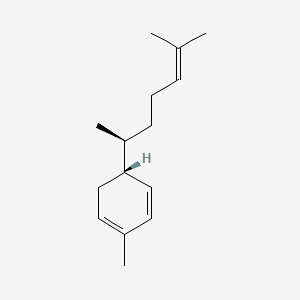 Compound
- Category
- Compound
What Zingiberene is, and what it does.
- Does it work
- It suits people who want whole ginger oil for its aroma and warmth. If you're after gingerols, a gingerol-standardised extract is a different material with a different make-up.
- How much to take
- No daily amount is on record for zingiberene by itself. It arrives inside a ginger oil, so the oil's own serving is what you go by, taken with food that contains fat.
- Time to feel it
- The aroma and the warmth register within minutes. Beyond that, nobody has measured a timeline for this single terpene in people.
- The first dose
- Day one is mostly sensory, a warm ginger note and sometimes a little heat in the stomach. Nothing else about a first day has been measured for the isolated terpene.
- With regular use
- Nobody has measured weeks of zingiberene on its own in people. What's studied over time is whole ginger, which carries gingerols alongside it.
- How well tolerated
- Well tolerated as part of ginger oil. Concentrated oil can irritate skin, and aged oil more so. Check with your clinician if you're pregnant or taking anticoagulants.
- How it feels
- Warm and sharp, the way fresh ginger smells. Some people feel a gentle heat in the stomach. There's no lift and no sedation to it.
- The overlooked benefit
- There's no oxygen in the molecule, so it's fat soluble and volatile. A meal with fat is what gets it absorbed, and a fresh oil is a different aroma profile from an aged one.
The proof, claim by claim.
What these words mean
These words describe the research, not the molecule's worth. Research strength is how much work stands behind one claim, and it is never a product score.
- aroma and flavour character of ginger oilNarrative review
- antioxidant activity of ginger essential oilIn vitro study
2 more claims
- antimicrobial activity in laboratory testingIn vitro study
- digestive comfort with ginger oilAnimal study
Why these belong in the same formula, 7 pairings
Why these belong in the same formula. Each row says what the basis is, from settled biochemistry through to a trial that measured the pair.
Alpha-zingiberene typically makes up a large share of the volatile oil fraction of Zingiber officinale. A ginger extract that retains its oil fraction already supplies it, while a gingerol-standardised extract may not. Anyone formulating both should count the overlap rather than adding blind. The relationship is compositional.
As a C15 hydrocarbon it dissolves in triglycerides and not in water. A medium-chain triglyceride base gives a workable dilution for softgels and roll-ons and keeps the terpene from separating. This is carrier chemistry. It does not add an effect of its own.
Zingiberene oxidises at its double bonds on exposure to air, light and warmth, which changes both the aroma and the composition of the oil. Mixed tocopherols in the oil phase intercept the lipid radicals that drive that chain. The benefit shows up as shelf stability. It is a preparation-level point, not a physiological one.
Without an emulsifier a terpene hydrocarbon separates out of any water-based product within hours. Lecithin forms mixed micelles that hold it dispersed and keep the format visually stable. The same micellar dispersion is what makes the terpene available at the gut wall. This is standard practice rather than a discovered synergy.
Ginger and turmeric belong to the same botanical family and are combined in culinary and traditional practice across South and East Asia. In a formula, the shared lipid vehicle serves both. Whether the pair does more together than either alone has not been tested for the isolated terpene. Read it as culinary and formulation convention.
Menthol acts on cold-sensing channels while ginger-derived terpenes are associated with a warming sensory profile. Blenders use the contrast deliberately in topical and aromatic products. This is a sensory formulation point. No physiological interaction is claimed.
Piperine slows CYP-mediated and glucuronidation clearance, and that effect has been measured for other lipophilic botanicals. Applying it to zingiberene specifically is an extrapolation, because the terpene has not been studied in that pairing. The direction of the interaction is predictable. The size of it is not known. Flag it as mechanistic rather than measured.
Nothing specific on file for Zingiberene. Match the label to the daily amount above, and tell your doctor what you take.
Not medical advice. Show the label to your pharmacist.What Zingiberene actually does.
Zingiberene is an oily, fat-soluble compound and the main volatile part of ginger's essential oil, and it evaporates and breaks down easily in air.
3 more mechanisms
The plant builds it through a standard cell pathway that also produces the other related oily compounds found alongside it in the oil.
It's chemically different from the compounds that most ginger studies actually measure, so a standardized extract can be nearly free of it while an oil-based product can be mostly this compound with little of the other. They aren't stand-ins for each other.
These oily compounds react at their weak points during storage, forming new compounds that change the smell and may make an aged oil more likely to irritate skin than a fresh one.
Where Zingiberene comes from.
It is the compound that gives ginger its smell. Steam is passed through the root, the aromatic oil floats off, and zingiberene is the biggest part of that oil. Worth knowing: this is not the same thing as the gingerols most ginger research is about, so a ginger capsule and a ginger oil are not interchangeable.
What this route gives you
Made from a plant. What ends up in the capsule tracks the harvest, so batch testing and a stated marker matter more here than with a made molecule.
5 steps on record
Fresh or dried Zingiber officinale rhizome is the commercial source. The terpene is also present in smaller amounts in other Zingiberaceae species and in some tomato leaf and Artemisia oils.
Steam distillation carries over the volatile terpene fraction and leaves the gingerols behind. Supercritical CO2 brings both across in one pass.
Where an enriched terpene is needed, vacuum fractional distillation separates the sesquiterpene hydrocarbons from the heavier oxygenated compounds.
Gas chromatography reports the percentage of alpha-zingiberene in the oil. This is the only meaningful specification for the material, since there is no marker to assay in a non-volatile extract.
Diluted into a triglyceride base, encapsulated, or emulsified for aqueous formats. Nitrogen headspace and tocopherol are standard to slow oxidation.
Getting Zingiberene from food.
The whole-food sources on file. A supplement closes the gap, it does not replace dinner.
A gram-for-gram figure (how much of each you would eat to match a dose) will appear here once it is sourced and reviewed. This page will not print a number it cannot cite.
The forms it comes in.
3 more forms
The essence, in one line each.
- Volatile profiling of an Artemisia species reported enzyme inhibitory and antioxidant activity for the whole essential oil, with zingiberene named among the constituents present.In vitro study. Zhu et al., 2025 (Biomolecules). PMID 40427629 ↗
1 more finding
- Volatile compound analysis of a printed meat product listed zingiberene among aroma-contributing terpenes detected during storage.In vitro study. Wu et al., 2025 (Foods). PMID 41227671 ↗
Chosen from the 2 we read for Zingiberene.
FDA Disclaimer: These statements have not been evaluated by the Food and Drug Administration. This information is for educational purposes only and is not intended to diagnose, treat, cure, or prevent any disease. Consult your healthcare provider before starting any supplement regimen.