
The people it speaks toFieldwork March 2022
24% of US adults
say digestive health is the most important aspect of their overall health, per a 2022 IFIC survey on gut health and probiotics.
International Food Information Council, 2022Arabinogalactan is the lead active here, studied most for feeding the bacteria that make butyrate. L-Glutamine is the most studied active here, with 9 human studies behind it, each one cited. Who it fits: for everyone, adults.
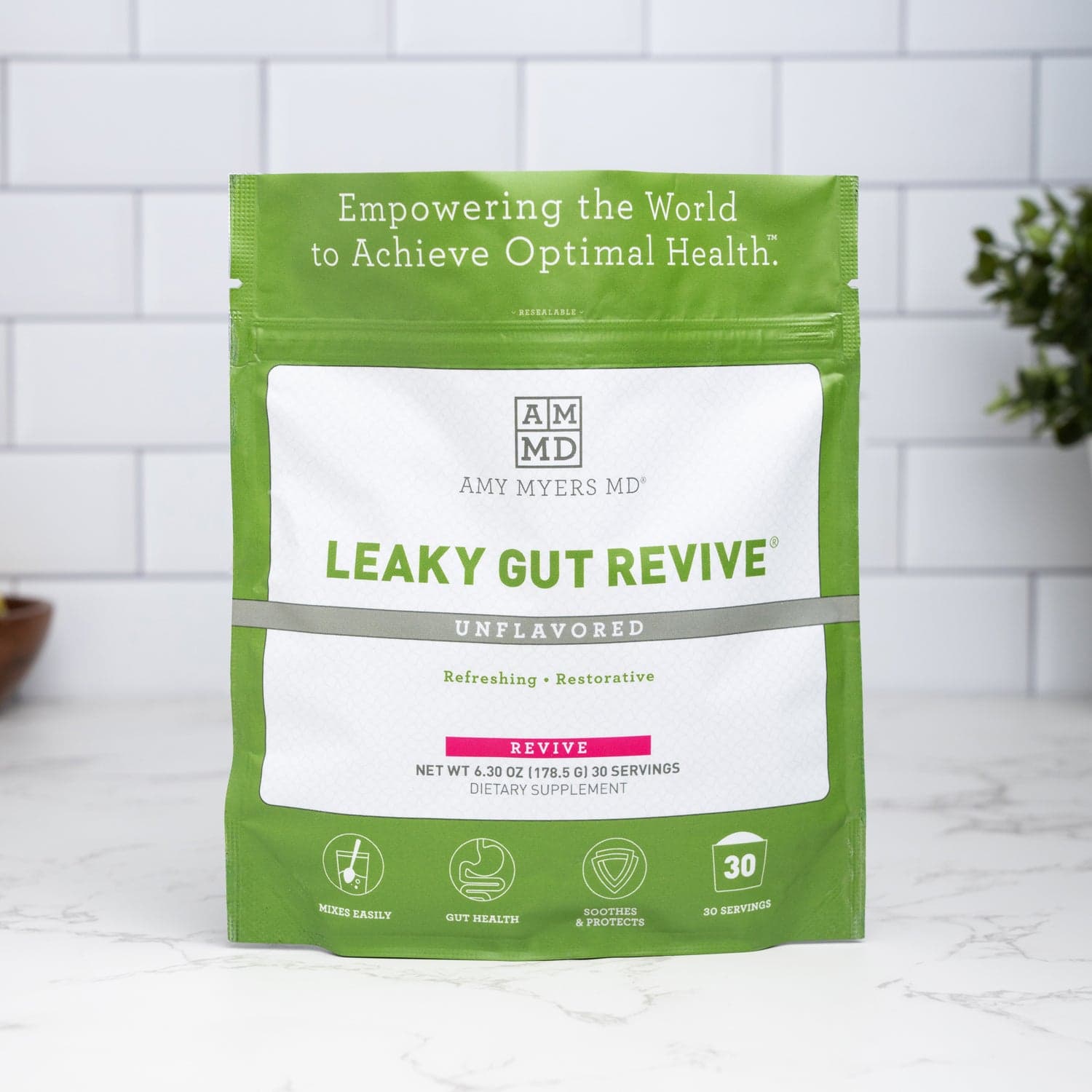 Verified by IngredientMD
The panel on the left is the one we evaluated, line by line.
All 6 actives checked against the clinical evidence: dose, form, and what the research actually shows.
Doses, ratios, and how the ingredients work together. That assessment is the verdict above: "Backed by human trials".
The verdict is public and identical whether or not a brand pays. A formula that does not clear the bar gets nothing.
Read by the engine against 2.1 million data points from clinical trials, PubMed and more than a hundred vetted sources. No individual reviewer is named or implied.
Cross-checked against 21 documented interactions for these actives.
Public health figures the engine matched to this formula's ingredients. Reported by their source, cited and dated, never written by the brand.
24% of US adults
say digestive health is the most important aspect of their overall health, per a 2022 IFIC survey on gut health and probiotics.
International Food Information Council, 202252% of US adults
believe common digestive symptoms such as bloating and abdominal pain are just a normal part of life, per a 2026 Harris Poll conducted for Oshi Health.
The Harris Poll for Oshi Health, 202657.6%
During 2017 to 2018, 57.6% of US adults aged 20 and over reported using a dietary supplement in the past 30 days.
CDC National Center for Health Statistics58% of the recommended fiber intake
was reached on average by US consumers, who ate 8.1 grams of fiber per 1,000 calories in 2017 to 2018 versus the 14 grams recommended, per USDA Economic Research Service analysis of federal food consumption survey data.
USDA Economic Research Service, 202340% of US adults
aged 18 and over report they experience bloating at least a few times a month, with 5% saying they experience it daily, per a 2023 Ipsos poll conducted for MDVIP.
Ipsos, 202334% of US adults
aged 18 and over report they experience abdominal discomfort or pain at least a few times per month, with women about twice as likely as men to report it several times weekly, per a 2023 Ipsos poll conducted for MDVIP.
Ipsos, 202328% of US adults
aged 18 and over say that digestive issues impact the quality of their life, a share that rises to about a third among those aged 18 to 44, per a 2023 Ipsos poll conducted for MDVIP.
Ipsos, 202332% of US adults
say they actively try to consume probiotics, and among them 60% try to do so at least once a day, per a 2022 IFIC survey on gut health.
International Food Information Council, 202259 to 66 days
was the median time it took adults to make a new daily health habit automatic across the studies a 2024 review pooled, with individuals ranging from 4 to 335 days.
Systematic review and meta-analysis, 202461% to 74%
About 61 to 74 percent of adults refilling a long-term medicine on their own stopped within a year, versus 33 to 44 percent on one set pickup day.
Cohort study, 2015Randomised trial, 2021
In a crossover trial, daily arabinogalactan shifted the makeup of gut bacteria compared with placebo, changing the balance of fibre-fermenting bacterial groups.
NutritionRandomised trial, 2026
A randomised double-blind placebo-controlled trial of a fermented deglycyrrhizinated licorice preparation. The design is placebo-controlled and the published report is the source for its endpoints.
EndocrineRandomised trial, 2015
Among 60 adults with low saliva flow, those given marshmallow root four times daily for two weeks reported less mouth dryness, with a smaller quality-of-life gain than a thermal spring water spray.
Clinical Oral InvestigationsRandomised trial, 2024
In a controlled trial, aloe vera improved several blood markers linked to heart health, markers rather than measured heart events.
Avicenna Journal of PhytomedicineRandomised trial, 2013
Adults with elevated blood sugar and clustered metabolic risk factors who took an aloe vera preparation showed improvements in fasting glucose and blood lipid measures relative to control.
The paperMeta-analysis, 2016
Pooling controlled trials in adults with elevated blood sugar, aloe vera supplementation lowered fasting blood glucose and, in those with higher starting values, also lowered glycated haemoglobin.
NutrientsPopulation figures from public health data. Context for the category, not a statement about any individual and not a claim about this product.
Each line below was derived from this formula's own record at the time of verification. Nothing here was written by the brand, and nothing can be added that the evidence does not carry.
Six ingredients, from each one's own page.
Give it one to two weeks of daily use. The cells lining your gut turn over every few days, so changes in digestive comfort build across that stretch rather than after one scoop.
Fermentation begins within a day or two, sometimes as a little extra gas. Shifts in regularity and in bifidobacteria counts take two to four weeks of daily use.
Chewed before a meal, the dispersed extract meets the upper digestive lining within minutes. Day to day comfort tends to settle over two to four weeks of regular use.
On skin the cooling is immediate. Aloin-containing preparations act within six to twelve hours. Inner leaf gel is slower, and reads over two to four weeks.
The coating happens on contact, so a cool infusion soothes while you're drinking it. Nothing needs to build up, and each dose does its own work.
The coating effect on a scratchy throat lands within minutes from a lozenge or a warm drink. For digestive comfort, most people are judging it across a few days of use.
How each ingredient usually behaves over time, from its own page on IngredientMD. General timing for the ingredient, not a measurement of this product.
What each form is, and where it fits in a formula. Measured findings carry the study that reported them.
The free crystalline amino acid, sold as a stand-alone powder or in capsules with nothing chemically bonded to it.
Descriptions of the form itself, read from the cited studies. Not a comparison between products and not a statement about any individual.
It is a powder, so the serving scales to the amount you want and mixes into something you already drink.
Put an earned verification on your own product page.
These statements have not been evaluated by the Food and Drug Administration. This product is not intended to diagnose, treat, cure, or prevent any disease. This record is not medical advice. Always consult your healthcare provider before starting any supplement regimen.