
CalciumWWEIA NHANES 2009 to 2010
About 42% of Americans
take in less calcium than the estimated average requirement.
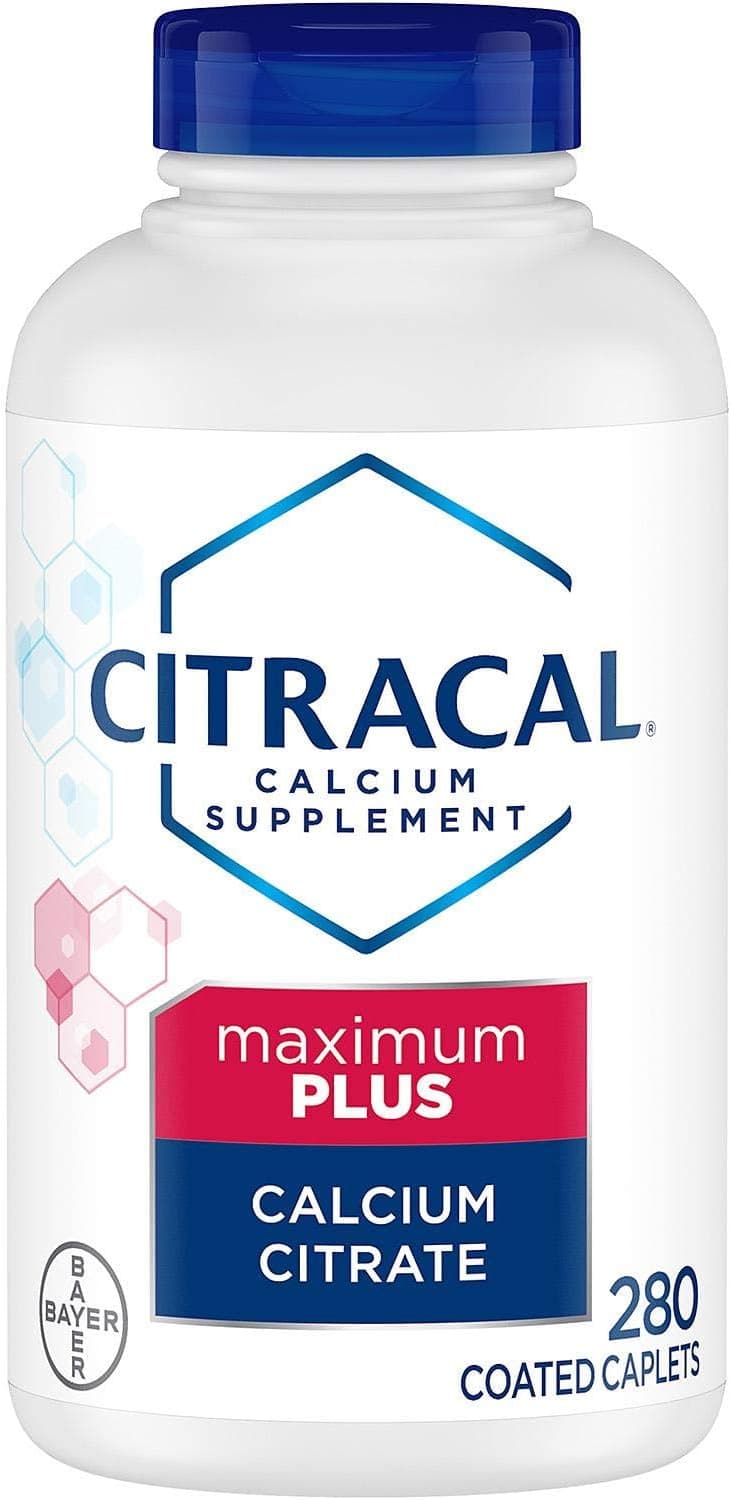
NHANESCalcium is the lead active here, studied most for bone strength. 13 human studies on Calcium back this formula, each one cited. Each serving carries 1,200 mg of Calcium, inside the range the published research used. Who it fits: skews toward women, adults.
 Verified by IngredientMD
The panel on the left is the one we evaluated, line by line.
All 6 actives checked against the clinical evidence: dose, form, and what the research actually shows.
Doses, ratios, and how the ingredients work together. That assessment is the verdict above: "Strong evidence, strong dose".
The verdict is public and identical whether or not a brand pays. A formula that does not clear the bar gets nothing.
Read by the engine against 2.1 million data points from clinical trials, PubMed and more than a hundred vetted sources. No individual reviewer is named or implied.
Cross-checked against 2,337 documented interactions for these actives.
Public health figures the engine matched to this formula's ingredients. Reported by their source, cited and dated, never written by the brand.
About 42% of Americans
take in less calcium than the estimated average requirement.
NHANESAbout 41% of US adults
have blood vitamin D below the level considered sufficient.
Peer-reviewed analysisAbout 15% of US adults
take in less zinc than the estimated average requirement.
Peer-reviewed analysis36.5% of US adults
aged 18 and over had pain in a hip, knee, or foot in the past 3 months, in the 2019 National Health Interview Survey.
CDC National Center for Health Statistics, 202030.7% of US adults
aged 18 and over had pain in a shoulder, elbow, wrist, or hand in the past 3 months, in the 2019 National Health Interview Survey.
CDC National Center for Health Statistics, 202057.6%
During 2017 to 2018, 57.6% of US adults aged 20 and over reported using a dietary supplement in the past 30 days.
CDC National Center for Health StatisticsAbout 24% of US girls aged 14 to 18
take in less copper from food and drink than the estimated average requirement.
NHANES30.2% of non-Hispanic white women
aged 18 and over reported pain, aching, or stiffness in or around a joint lasting more than 3 months, in the 2013 to 2014 National Health Interview Survey.
CDC National Center for Health Statistics, 201628.4% of non-Hispanic white men
aged 18 and over reported pain, aching, or stiffness in or around a joint lasting more than 3 months, in the 2013 to 2014 National Health Interview Survey.
CDC National Center for Health Statistics, 201695% of US adults
aged 19 and over had vitamin D intake from food and beverages below the Estimated Average Requirement, in National Health and Nutrition Examination Survey data from 2005 to 2016.
National Health and Nutrition Examination Survey analysis, 202018.8% of US adults aged 75 and over
needed the help of another person to carry out routine daily tasks outside the home, and 10.6% needed help with basic daily tasks like bathing or dressing, in the 2014 National Health Interview Survey.
CDC National Center for Health Statistics, 201659 to 66 days
was the median time it took adults to make a new daily health habit automatic across the studies a 2024 review pooled, with individuals ranging from 4 to 335 days.
Systematic review and meta-analysis, 202461% to 74%
About 61 to 74 percent of adults refilling a long-term medicine on their own stopped within a year, versus 33 to 44 percent on one set pickup day.
Cohort study, 2015Meta-analysis, 2007
In adults 50 and older, calcium with or without vitamin D slowed bone density loss by about 0.5% at the hip and 1.2% at the spine.
The LancetRandomised trial, 2025
Calcium taken around prolonged load carriage lowered blood markers of bone calcium loss compared with placebo. These are markers, not measured bone outcomes.
Randomised trialMeta-analysis, 2024
Across 10 trials in 318 athletes, vitamin D3 raised blood vitamin D by about 14.8 nmol/L and hinted at better muscle strength, though few trials leave that uncertain.
Frontiers in NutritionMeta-analysis, 2014
Pooling 30 trials of 5,615 adults, vitamin D gave a small rise in overall muscle strength, with no measurable effect on muscle mass or power.
Journal of Clinical Endocrinology and MetabolismRandomised trial, 2026
Compared combined beta-alanine plus sodium bicarbonate against each alone on physical capacity measures in trained participants. The design is what makes the comparison informative for stacking decisions.
International Journal of Sports Physiology and PerformanceRandomised trial, 1998
Taking 1,200 mg of calcium a day reduced overall premenstrual symptom scores by 48% from baseline by the third cycle, compared with a 30% drop on placebo.
American Journal of Obstetrics and GynecologyRandomised trial, 2025
Vitamin D3 supplementation changed the inflammatory protein CHI3L1 and oxidative stress markers in adults with a chronic demyelinating condition. These are markers, not clinical outcomes.
Neuropsychopharmacology ReportsMeta-analysis, 2024
Across 20 studies, daily vitamin D3 raised blood vitamin D levels by about 10.4 nmol/L more than the same dose of vitamin D2, roughly 40 percent more.
Advances in NutritionRandomised trial, 2020
In a controlled dietary intervention in adults, changing sodium and potassium intake shifted how the body handled calcium and phosphate, indicating that sodium intake affects normal mineral balance.
The Journal of Clinical Endocrinology and MetabolismMeta-analysis, 2012
In trials directly comparing the two forms, vitamin D3 raised blood 25-hydroxyvitamin D more than vitamin D2 did (P = 0.001).
American Journal of Clinical NutritionSystematic review, 2026
A systematic review catalogued gastrointestinal symptoms reported across sodium bicarbonate dosing protocols and described how symptom burden varies with dose, timing and whether the dose is split or given with food.
European Journal of Sport ScienceMeta-analysis, 2024
In adults with excess body weight, calcium supplementation produced small reductions in body weight and body fat compared with placebo.
Meta-analysisRandomised trial, 2026
Microencapsulated sodium butyrate was tested against abdominal symptom scores and carbohydrate metabolism markers in adults with high blood sugar. Again a butyrate trial in which sodium is the carrier salt.
Scientific ReportsMeta-analysis, 2014
Across 23 trials of 4,082 adults, vitamin D raised bone mineral density at the femoral neck by about 0.8%, with no measurable change at the spine, hip, or other sites.
LancetCohort study, 2025
Seminal fluid phosphate concentration was linked with semen quality measures but did not track with supplement intake. An association between two measurements, not a cause.
European Journal of EndocrinologyRandomised trial, 2026
A randomised trial tested an algorithm-driven sodium supplementation protocol against usual care and measured growth in infants born preterm.
Pediatrics Open ScienceRandomised trial, 2024
Two randomised trials compared a lower daily calcium dose with the higher standard dose in pregnancy. The lower dose met the prespecified non-inferiority margin for one outcome but not for every outcome tested, which is a statement about margins and not a demonstration of equivalence.
The New England Journal of MedicineRandomised trial, 2025
In a trial of 104 very preterm infants, oral sodium supplementation raised daily weight gain by 3.6 grams per kilogram compared with placebo.
BMJ Paediatrics OpenPopulation figures from public health data. Context for the category, not a statement about any individual and not a claim about this product.
Each line below was derived from this formula's own record at the time of verification. Nothing here was written by the brand, and nothing can be added that the evidence does not carry.
Time-to-effect windows the engine read from the trial record. Each is a window a named study measured, cited and dated, never written by the brand.
A randomised cross-over trial in ten women of mean age 69 gave a single 500 mg dose of calcium as citrate fasting, citrate with a meal, fortified juice or a dairy product meal, with blood drawn before and at 1, 2, 4 and 6 hours. Serum ionised and total calcium increased significantly from baseline over six hours, with the rise similar after fortified juice, delayed when citrate was taken with a meal and smaller after the dairy meal. A separate double-blind cross-over trial in 25 postmenopausal women measured parathyroid hormone and a bone resorption marker 12 hours after a single calcium dose. Ten participants is a small sample, and what moved was blood chemistry, not a sensation.
In the trial record, blood vitamin D rises for about 3 months of daily vitamin D3 and then holds at a plateau, near 69 nmol/L at 1,000 IU a day, from a starting level near 41 nmol/L.
Across three randomised placebo-controlled trials pooled as individual patient data (199 adults with naturally acquired colds, 80 to 92 mg of elemental zinc a day as acetate lozenges), 70 percent of the zinc group had recovered by day 5 against 27 percent on placebo, and colds ran 2.73 days shorter against a 7 day average duration. A separate meta-analysis of seven lozenge trials (575 participants, doses above 75 mg a day, zinc acetate or zinc gluconate) measured cold duration 33 percent shorter, with no significant difference between the two salts.
In a controlled feeding study in nine healthy men, six weeks of restricted zinc intake raised DNA strand breaks in peripheral blood cells, and four weeks of repletion at 11 mg a day, with 20 mg of supplemental zinc for the first seven days, reversed the rise. In a separate randomised placebo-controlled trial in 40 Ethiopian women eating a high-phytate diet, 20 mg a day of zinc sulfate for 17 days lowered mean comet tail moment from 39.7 to 30.0 while plasma zinc did not change significantly. Both windows were measured on a DNA damage marker in blood cells, not on a symptom.
In an 8 week pilot with a parallel placebo group, 8 young women taking 2 mg of copper a day as copper glycinate showed a 9 percent mean rise in serum ceruloplasmin and a 75 percent rise in diamine oxidase, alongside a 39 percent fall in plasma F2-alpha isoprostanes. Erythrocyte copper-zinc superoxide dismutase did not change. In a separate 4 week double-blind crossover in 20 men with moderately high cholesterol at the same 2 mg a day, copper moved no measure across the whole group and raised superoxide dismutase and diamine oxidase only in the 10 men who started below the median. Both are small and both measured enzymes in blood, not a symptom.
In the excretion studies the EFSA reference opinion reviews, urinary output closely tracked dietary sodium once intake was held steady: 98% of dietary sodium appeared in 24-hour urine in a 3-day study, and 86% of sodium ingested over 4 weeks was recovered in 24-hour urine collected during the same period.
In the controlled metabolic study the EFSA reference opinion reviews, young men held at constant sodium intakes for 29 days per level showed rising average daily urinary aldosterone excretion as intake was stepped down from 4.9 g/day to 2.5 g/day.
Windows measured in the cited trials. Context for how the active behaves over time, not a statement about any individual and not a claim about this product.
Six ingredients, from each one's own page.
No acute sensation. Parathyroid hormone responds within hours, while bone density shifts over a year or more of steady intake, so this reads on a panel and a scan.
25-hydroxyvitamin D climbs over roughly six to twelve weeks of daily dosing before it plateaus. It's a blood level you watch rather than a feeling.
Blood zinc moves within days. The parts you would notice, skin behaviour and immune resilience, take four to twelve weeks of steady daily intake.
The enzymes that need copper get their supply within days. The change shows on a blood panel rather than in how you feel, and any felt difference takes weeks.
There's no acute effect to time. Where intake has been low, enzyme activity responds over weeks, and it reads on a laboratory measure rather than in how you feel.
Fast. Sodium shifts fluid within an hour or two, which is why an electrolyte drink lands quickly when you have been sweating.
How each ingredient usually behaves over time, from its own page on IngredientMD. General timing for the ingredient, not a measurement of this product.
What each form is, and where it fits in a formula. Measured findings carry the study that reported them.
The animal-sourced form of vitamin D, made in skin under UVB light and produced commercially from lanolin. Fat-soluble, so it travels with dietary fat and is stored in body fat.
In a 12-week double-blind randomised controlled trial in 108 young women in urban Bangalore, most of whom began vitamin D-deficient, daily vitamin D3 at 400, 600 or 800 IU in a fortified wafer raised serum 25-hydroxyvitamin D, parathyroid hormone fell over time, and effects on bone-turnover markers were modest and not dose specific. The 800 IU dose brought 65 percent of participants to sufficiency.
Descriptions of the form itself, read from the cited studies. Not a comparison between products and not a statement about any individual.
It is a tablet, so the amount per serving is fixed and it stores well.
Where two of this brand's products carry actives the literature has read together, the pairing and its basis are below. The evidence word is the corpus row's own confidence, never a score.
Zinc and copper are taken up by the same intestinal cells, and a steady high zinc intake raises a binding protein called metallothionein that holds onto copper and carries it out as those cells are shed. Formulas often include a little copper alongside zinc so that ongoing zinc use does not draw down normal copper status.
Established mineral antagonism. No combination trial has tested this exact pairing.
Active vitamin D switches on the calcium-binding proteins and channels in the gut lining that carry calcium across the intestinal wall, so the body absorbs far more of the calcium it takes in. With too little vitamin D, much of a calcium dose passes straight through unabsorbed.
Established biochemistry. No combination trial has tested this exact pairing.
Because the effect builds and holds only with continued daily use, a steady recurring supply is the practical way to keep it going.
Put an earned verification on your own product page.
These statements have not been evaluated by the Food and Drug Administration. This product is not intended to diagnose, treat, cure, or prevent any disease. This record is not medical advice. Always consult your healthcare provider before starting any supplement regimen.