
Vitamin D3NHANES 2005 to 2006
About 41% of US adults
have blood vitamin D below the level considered sufficient.
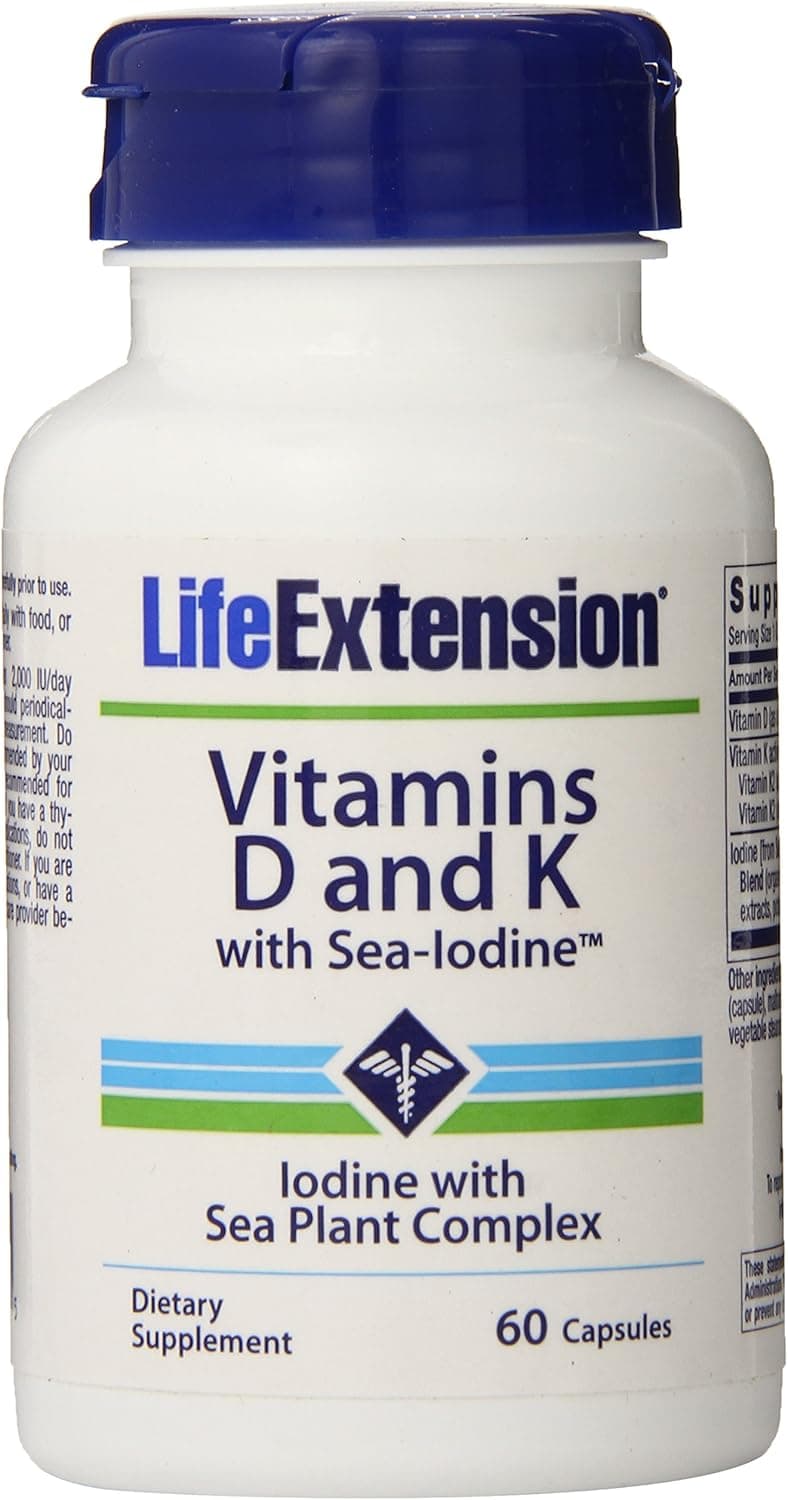
Peer-reviewed analysisIodine is the lead active here, studied most for iodine status. 13 human studies on Iodine back this formula, each one cited. Vitamin K1 is here at a daily maintenance amount, which is what a daily supplement is for. Who it fits: skews toward women, adults.
 Verified by IngredientMD
The panel on the left is the one we evaluated, line by line.
All 4 actives checked against the clinical evidence: dose, form, and what the research actually shows.
Doses, ratios, and how the ingredients work together. That assessment is the verdict above: "Backed by human trials".
The verdict is public and identical whether or not a brand pays. A formula that does not clear the bar gets nothing.
Read by the engine against 2.1 million data points from clinical trials, PubMed and more than a hundred vetted sources. No individual reviewer is named or implied.
Cross-checked against 473 documented interactions for these actives.
Public health figures the engine matched to this formula's ingredients. Reported by their source, cited and dated, never written by the brand.
About 41% of US adults
have blood vitamin D below the level considered sufficient.
Peer-reviewed analysis74% of US adults
take dietary supplements, and 55% are regular users, in the Council for Responsible Nutrition's 2023 consumer survey of 3,192 adults.
Council for Responsible Nutrition and Ipsos, 202392% of US supplement users
agree that dietary supplements are essential to maintaining their health, in the Council for Responsible Nutrition's 2023 consumer survey.
Council for Responsible Nutrition and Ipsos, 202312.3% of US adults
met the fruit intake recommendation and 10.0% the vegetable recommendation in 2019, in the Behavioral Risk Factor Surveillance System across 49 states.
CDC, MMWR, 202215% of US adults
aged 20 and over ate no breakfast on the day of their dietary recall, in the 2017 to March 2020 What We Eat in America survey.
USDA Agricultural Research Service, 202457.6%
During 2017 to 2018, 57.6% of US adults aged 20 and over reported using a dietary supplement in the past 30 days.
CDC National Center for Health Statistics60.2% of US adults aged 20 and over
took a dietary supplement in the past 30 days, and 38.7% took two or more, in the 2021 to 2023 National Health and Nutrition Examination Survey.
CDC National Center for Health Statistics, 202659 to 66 days
was the median time it took adults to make a new daily health habit automatic across the studies a 2024 review pooled, with individuals ranging from 4 to 335 days.
Systematic review and meta-analysis, 202461% to 74%
About 61 to 74 percent of adults refilling a long-term medicine on their own stopped within a year, versus 33 to 44 percent on one set pickup day.
Cohort study, 2015US pregnant women, median 129 micrograms per litre
Between 2005 and 2010, US pregnant women had a median urine iodine level of 129 micrograms per liter, below the range considered adequate in pregnancy.
Peer-reviewed analysisMeta-analysis, 2022
Across nine trials in postmenopausal women, vitamin K2 raised lumbar spine bone density by about 2.2 percent and forearm bone density by about 1.6 percent compared with control.
Journal of Bone and Mineral MetabolismRandomised trial, 2014
Twelve months of phylloquinone (vitamin K1) supplementation improved markers of vitamin K status, including a higher share of carboxylated osteocalcin, with no clear difference detected in bone density measures.
The British journal of nutritionMeta-analysis, 2025
Across six mostly observational studies in 2,327 Japanese adults, habitual natto intake linked to much higher blood MK-7 and modestly greater bone density, a food-intake association, not a measured effect.
Front NutrRandomised trial, 2013
In healthy postmenopausal women, three years of 180 micrograms a day of MK-7 slowed bone density loss at the spine and hip, and improved bone strength.
The paperRandomised trial, 2020
In this trial of a low daily MK-7 amount, bone mineral density changed over the study period in the group given it, an imaging measurement, not a clinical event.
Calcified Tissue InternationalMeta-analysis, 2025
In nine trials of 2,570 older women with low bone mass, vitamin K2 changed blood signals tied to bone turnover, not actual bone strength.
Front EndocrinolRandomised trial, 1997
In iodine-deficient adults, 0.2 mg of iodide daily reduced thyroid gland volume by about 38% over 12 months compared with placebo.
Journal of Clinical Endocrinology and MetabolismMeta-analysis, 2024
Across 10 trials in 318 athletes, vitamin D3 raised blood vitamin D by about 14.8 nmol/L and hinted at better muscle strength, though few trials leave that uncertain.
Frontiers in NutritionMeta-analysis, 2014
Pooling 30 trials of 5,615 adults, vitamin D gave a small rise in overall muscle strength, with no measurable effect on muscle mass or power.
Journal of Clinical Endocrinology and MetabolismRandomised trial, 2025
Vitamin D3 supplementation changed the inflammatory protein CHI3L1 and oxidative stress markers in adults with a chronic demyelinating condition. These are markers, not clinical outcomes.
Neuropsychopharmacology ReportsSystematic review, 2024
Pooling randomised trials in middle-aged and older adults, vitamin K supplementation was linked with small differences in bone mineral density at some skeletal sites and with changes in markers of bone turnover.
Bone & joint researchMeta-analysis, 2024
Across 20 studies, daily vitamin D3 raised blood vitamin D levels by about 10.4 nmol/L more than the same dose of vitamin D2, roughly 40 percent more.
Advances in NutritionSystematic review, 2025
A systematic narrative review of vitamins formed by microorganisms in fermented foods reports that bacteria produce menaquinones rather than phylloquinone, and discusses what that contributes to human vitamin status.
Frontiers in NutritionMeta-analysis, 2012
In trials directly comparing the two forms, vitamin D3 raised blood 25-hydroxyvitamin D more than vitamin D2 did (P = 0.001).
American Journal of Clinical NutritionRandomised trial, 2015
In 82 younger women with above-normal blood sugar, 1000 micrograms of vitamin K1 daily for four weeks left two-hour post-glucose-load blood sugar at about 7.3 mmol/L against 8.6 in the placebo group and raised the insulin sensitivity index, while insulin resistance measured by the authors was unchanged.
European Journal of Clinical NutritionMeta-analysis, 2014
Across 23 trials of 4,082 adults, vitamin D raised bone mineral density at the femoral neck by about 0.8%, with no measurable change at the spine, hip, or other sites.
LancetRandomised trial, 2010
In 42 women past midlife, vitamin K1 daily for 12 months left a bone marker at about 0.9 ng/mL versus 3.1 on placebo, but insulin and blood sugar were unchanged.
American Journal of Clinical NutritionSystematic review, 2026
The authors report that effects on glycaemic measures differ across groups with differing baseline blood sugar status, so results are not uniform across populations. The outcomes assessed are blood markers.
NutrientsMeta-analysis, 2023
200 micrograms of iodine a day raised iodine levels and shifted thyroid hormones in pregnancy across 11 studies.
Journal of Trace Elements in Medicine and BiologyMeta-analysis, 2026
In pregnant women with low iodine status, iodine was linked to lower TSH and thyroglobulin in the blood, both markers rather than health outcomes.
Frontiers in Public HealthSystematic review, 2021
Across pooled studies, iodine supplementation in pregnancy shifted maternal iodine status and thyroid function measures, while effects on offspring endpoints were inconsistent between studies.
European Journal of EndocrinologySystematic review and meta-analysis, 2020
In pregnant women with mild to moderate iodine deficiency, iodine lowered a thyroid marker and curbed the usual pregnancy rise in thyroid size. Infant cognitive, language and motor scores showed no change across trials.
American Journal of Clinical NutritionSystematic review, 2021
In areas with low population iodine intake, supplementation during pregnancy was associated with better neurocognitive development scores in offspring in some but not all included studies.
Archives of Endocrinology and MetabolismRandomised trial, 2008
In 440 women after midlife with lower than usual bone density, 5 mg of vitamin K1 daily for two to four years did not slow the age-related decline in spine or hip bone mineral density, although it raised blood vitamin K1 about tenfold and lowered undercarboxylated osteocalcin.
PLoS MedicinePopulation figures from public health data. Context for the category, not a statement about any individual and not a claim about this product.
Each line below was derived from this formula's own record at the time of verification. Nothing here was written by the brand, and nothing can be added that the evidence does not carry.
One pairing in this formula has been studied as a combination in human trials. Each finding below is what a named study measured, cited and dated, never written by the brand.
In a meta-analysis of eight randomized trials, vitamin K2 taken together with vitamin D raised total bone mineral density and lowered undercarboxylated osteocalcin, a marker of vitamin K status.
Research strength. Research strength says how much work stands behind the combination. It is never a product score.
Fail closed. Where actives were studied on their own rather than together, each shows on its own evidence, never a combined effect no trial measured.
Independent record. Every finding is cited to a named trial, dated, and never written by the brand.
Findings from trials that studied these actives as a combination. Context for how the actives were tested together, not a statement about any individual and not a claim about this product.
Time-to-effect windows the engine read from the trial record. Each is a window a named study measured, cited and dated, never written by the brand.
In the trial record, blood vitamin D rises for about 3 months of daily vitamin D3 and then holds at a plateau, near 69 nmol/L at 1,000 IU a day, from a starting level near 41 nmol/L.
In a stable-isotope study, 10 healthy adults aged 22 to 31 took labelled vitamin K1 for six days and then an intravenous dose to resolve its disposal kinetics. Plasma vitamin K1 cleared with half-times of about 0.22 and 2.66 hours, and absorption of an oral dose was about 13 percent.
A double-blind randomised dose-finding trial gave 60 postmenopausal women aged 50 to 69 either 0, 50, 100 or 200 micrograms of menaquinone-7 daily for four weeks on a controlled diet. The ratio of carboxylated to undercarboxylated osteocalcin rose dose dependently, with significant differences from the 0 microgram group at 100 and 200 micrograms. A companion 12-week trial in 120 people aged 20 to 69 confirmed the change at 100 micrograms daily. Both studies were run by authors affiliated with the R and D division of J-Oil Mills. An independent 8-week double-blind trial in 55 healthy prepubertal children found the same direction at 45 micrograms daily. What was measured is a blood marker of vitamin K status, not bone density and not a sensation.
A double-blind randomised trial gave 244 healthy postmenopausal women either placebo or 180 micrograms of menaquinone-7 daily for three years, with bone mineral density measured by DXA at baseline and after each year. Menaquinone-7 decreased the age-related decline in bone mineral content and bone mineral density at the lumbar spine and femoral neck, but not at the total hip. The effect is a slowed decline rather than a gain, and the trial ran three years rather than weeks.
In a 24 week randomised double-blind placebo-controlled trial in 112 mildly iodine-deficient New Zealand adults aged 18 to 40, 150 micrograms of iodine a day as potassium iodate lowered thyroglobulin, a blood marker of iodine status, by 12 percent at 8 weeks, 20 percent at 16 weeks and 27 percent at 24 weeks compared with placebo. Median urinary iodine reached 168 micrograms per litre against 79 on placebo. TSH and free T4 stayed within normal range and did not change significantly.
Windows measured in the cited trials. Context for how the active behaves over time, not a statement about any individual and not a claim about this product.
Four ingredients, from each one's own page.
25-hydroxyvitamin D climbs over roughly six to twelve weeks of daily dosing before it plateaus. It's a blood level you watch rather than a feeling.
Clotting factor carboxylation responds within days, and circulating phylloquinone tracks what you ate this week. It reads on a lab measure rather than as a feeling.
Days for absorption, weeks for the marker. Undercarboxylated osteocalcin falls across roughly four to twelve weeks of daily intake, and that is a status marker rather than an outcome.
Thyroid hormone turns over slowly, so the change lands on a urinary iodine measure and a thyroid panel before it lands anywhere in your day.
How each ingredient usually behaves over time, from its own page on IngredientMD. General timing for the ingredient, not a measurement of this product.
What each form is, and where it fits in a formula. Measured findings carry the study that reported them.
The animal-sourced form of vitamin D, made in skin under UVB light and produced commercially from lanolin. Fat-soluble, so it travels with dietary fat and is stored in body fat.
In a 12-week double-blind randomised controlled trial in 108 young women in urban Bangalore, most of whom began vitamin D-deficient, daily vitamin D3 at 400, 600 or 800 IU in a fortified wafer raised serum 25-hydroxyvitamin D, parathyroid hormone fell over time, and effects on bone-turnover markers were modest and not dose specific. The 800 IU dose brought 65 percent of participants to sufficiency.
Descriptions of the form itself, read from the cited studies. Not a comparison between products and not a statement about any individual.
It is a capsule, so the amount per serving is fixed and travels without measuring.
Put an earned verification on your own product page.
These statements have not been evaluated by the Food and Drug Administration. This product is not intended to diagnose, treat, cure, or prevent any disease. This record is not medical advice. Always consult your healthcare provider before starting any supplement regimen.