The people it speaks toFieldwork March 2022
24% of US adults
say digestive health is the most important aspect of their overall health, per a 2022 IFIC survey on gut health and probiotics.
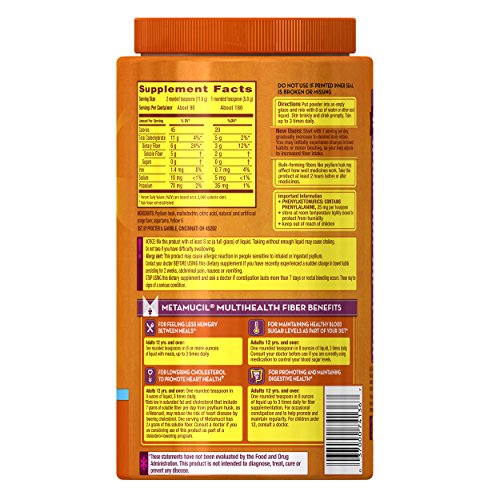
International Food Information Council, 2022Psyllium Husk is the lead active here, studied most for regularity. 10 human studies on Psyllium Husk back this formula, each one cited. Each serving carries 5 g of Psyllium Husk, inside the range the published research used. Who it fits: for everyone, adults.
 Verified by IngredientMD
The panel on the left is the one we evaluated, line by line.
All 4 actives checked against the clinical evidence: dose, form, and what the research actually shows.
Doses, ratios, and how the ingredients work together. That assessment is the verdict above: "Strong evidence, strong dose".
The verdict is public and identical whether or not a brand pays. A formula that does not clear the bar gets nothing.
Read by the engine against 2.1 million data points from clinical trials, PubMed and more than a hundred vetted sources. No individual reviewer is named or implied.
Cross-checked against 583 documented interactions for these actives.
Public health figures the engine matched to this formula's ingredients. Reported by their source, cited and dated, never written by the brand.
24% of US adults
say digestive health is the most important aspect of their overall health, per a 2022 IFIC survey on gut health and probiotics.
International Food Information Council, 202252% of US adults
believe common digestive symptoms such as bloating and abdominal pain are just a normal part of life, per a 2026 Harris Poll conducted for Oshi Health.
The Harris Poll for Oshi Health, 202657.6%
During 2017 to 2018, 57.6% of US adults aged 20 and over reported using a dietary supplement in the past 30 days.
CDC National Center for Health StatisticsAbout 10% of US women of reproductive age
are iron deficient.
Peer-reviewed analysis58% of the recommended fiber intake
was reached on average by US consumers, who ate 8.1 grams of fiber per 1,000 calories in 2017 to 2018 versus the 14 grams recommended, per USDA Economic Research Service analysis of federal food consumption survey data.
USDA Economic Research Service, 202340% of US adults
aged 18 and over report they experience bloating at least a few times a month, with 5% saying they experience it daily, per a 2023 Ipsos poll conducted for MDVIP.
Ipsos, 202334% of US adults
aged 18 and over report they experience abdominal discomfort or pain at least a few times per month, with women about twice as likely as men to report it several times weekly, per a 2023 Ipsos poll conducted for MDVIP.
Ipsos, 202328% of US adults
aged 18 and over say that digestive issues impact the quality of their life, a share that rises to about a third among those aged 18 to 44, per a 2023 Ipsos poll conducted for MDVIP.
Ipsos, 202332% of US adults
say they actively try to consume probiotics, and among them 60% try to do so at least once a day, per a 2022 IFIC survey on gut health.
International Food Information Council, 202259 to 66 days
was the median time it took adults to make a new daily health habit automatic across the studies a 2024 review pooled, with individuals ranging from 4 to 335 days.
Systematic review and meta-analysis, 202461% to 74%
About 61 to 74 percent of adults refilling a long-term medicine on their own stopped within a year, versus 33 to 44 percent on one set pickup day.
Cohort study, 2015Randomised trial, 2021
In women of reproductive age with slow bowel transit, psyllium husk shifted gut microbiota composition and its measured functions alongside changes in stool frequency.
AgingMeta-analysis, 2025
A dose-response pooling of trials found psyllium intake was associated with small reductions in body weight and waist measurements.
Journal of Health, Population and NutritionRandomised trial, 2026
Compared combined beta-alanine plus sodium bicarbonate against each alone on physical capacity measures in trained participants. The design is what makes the comparison informative for stacking decisions.
International Journal of Sports Physiology and PerformanceSystematic review and meta-analysis, 2022
Across 16 trials in adults with sluggish bowel habits, fiber supplements raised stool frequency and improved stool consistency, with psyllium among the fibers showing a clear effect at doses above 10 grams a day.
American Journal of Clinical NutritionSystematic review and meta-analysis, 2018
Across 28 trials a median dose of about 10 grams of psyllium a day lowered LDL cholesterol by roughly 0.33 mmol/L.
American Journal of Clinical NutritionMeta-analysis, 2025
Reviewing trials with a dose-response analysis, psyllium changed blood lipid measures, with the effect varying by dose, though lipid values are lab measures rather than clinical events.
Genes and NutritionSystematic review, 2026
A systematic review catalogued gastrointestinal symptoms reported across sodium bicarbonate dosing protocols and described how symptom burden varies with dose, timing and whether the dose is split or given with food.
European Journal of Sport ScienceSystematic review and meta-analysis, 2024
A rigorously graded review reported effects of psyllium on fasting blood sugar and two other blood sugar markers, all laboratory markers of how the body handles sugar.
BMC Endocrine DisordersRandomised trial, 2026
Microencapsulated sodium butyrate was tested against abdominal symptom scores and carbohydrate metabolism markers in adults with high blood sugar. Again a butyrate trial in which sodium is the carrier salt.
Scientific ReportsRandomised trial, 2020
In a controlled dietary intervention in adults, changing sodium and potassium intake shifted how the body handled calcium and phosphate, indicating that sodium intake affects normal mineral balance.
The Journal of Clinical Endocrinology and MetabolismRandomised trial, 2026
A randomised trial tested an algorithm-driven sodium supplementation protocol against usual care and measured growth in infants born preterm.
Pediatrics Open ScienceRandomised trial, 2025
In a trial of 104 very preterm infants, oral sodium supplementation raised daily weight gain by 3.6 grams per kilogram compared with placebo.
BMJ Paediatrics OpenPopulation figures from public health data. Context for the category, not a statement about any individual and not a claim about this product.
Each line below was derived from this formula's own record at the time of verification. Nothing here was written by the brand, and nothing can be added that the evidence does not carry.
Time-to-effect windows the engine read from the trial record. Each is a window a named study measured, cited and dated, never written by the brand.
In a partially randomised comparative-effectiveness trial in 79 adults with chronic constipation, 12 g per day of psyllium raised the weekly rate of complete spontaneous bowel movements significantly when treatment weeks three and four were compared with baseline, and straining improved. The primary responder endpoint did not separate psyllium from the two comparators. A separate four-week randomised trial in 172 constipated adults found 3.5 g per day of psyllium raised bowel movement frequency by 2.9 movements, which was not different from the 3.7 seen on placebo.
In two randomised, placebo-controlled, double-blinded trials, seven days of psyllium against maltodextrin in 8 healthy volunteers and 16 constipated patients raised stool water content and shifted faecal microbiota composition, with the larger shift in the constipated group and increases in three butyrate-producing genera correlating with the rise in faecal water. Stool water and microbiota were the measurements. Symptoms were not the endpoint.
In the excretion studies the EFSA reference opinion reviews, urinary output closely tracked dietary sodium once intake was held steady: 98% of dietary sodium appeared in 24-hour urine in a 3-day study, and 86% of sodium ingested over 4 weeks was recovered in 24-hour urine collected during the same period.
In the controlled metabolic study the EFSA reference opinion reviews, young men held at constant sodium intakes for 29 days per level showed rising average daily urinary aldosterone excretion as intake was stepped down from 4.9 g/day to 2.5 g/day.
A randomised crossover study in 54 nonanemic young women with plasma ferritin at or below 20 ug/L gave labelled iron sulfate as single fasting morning doses of 40, 60, 80, 160 and 240 mg. Twenty four hours after doses of 60 mg or more, serum hepcidin was raised and fractional iron absorption from the following dose was 35% to 45% lower. Across the dose range a sixfold rise in dose, 40 to 240 mg, produced a threefold rise in iron absorbed, 6.7 to 18.1 mg. Total iron absorbed from three doses inside 24 hours was not significantly greater than from two morning doses. The measure was iron absorption and serum hepcidin, not a symptom.
Windows measured in the cited trials. Context for how the active behaves over time, not a statement about any individual and not a claim about this product.
Four ingredients, from each one's own page.
For stool form to settle. Lipid marker changes run on a slower clock and show up on a blood panel over weeks.
Fast. Sodium shifts fluid within an hour or two, which is why an electrolyte drink lands quickly when you have been sweating.
Before everyday stamina shifts. Ferritin, the storage marker, climbs over months of steady daily intake rather than days.
Cramp steadiness and hydration can shift within a day or two of raising intake. The blood pressure side, within the normal range, reads out over four to six weeks.
How each ingredient usually behaves over time, from its own page on IngredientMD. General timing for the ingredient, not a measurement of this product.
What each form is, and where it fits in a formula. Measured findings carry the study that reported them.
Intact husk flakes separated from the seed by mechanical milling and sieving, high in intact arabinoxylan structure.
Descriptions of the form itself, read from the cited studies. Not a comparison between products and not a statement about any individual.
It is a powder, so the serving scales to the amount you want and mixes into something you already drink.
Where two of this brand's products carry actives the literature has read together, the pairing and its basis are below. The evidence word is the corpus row's own confidence, never a score.
The Na/K ATPase pumps three sodium out for every two potassium in, setting the membrane potential of every cell. Renal sodium reabsorption is coupled to potassium excretion, so raising one changes the handling of the other.
Opposing sides of the sodium-potassium ATPase and of renal handling. No combination trial has tested this exact pairing.
Put an earned verification on your own product page.
These statements have not been evaluated by the Food and Drug Administration. This product is not intended to diagnose, treat, cure, or prevent any disease. This record is not medical advice. Always consult your healthcare provider before starting any supplement regimen.