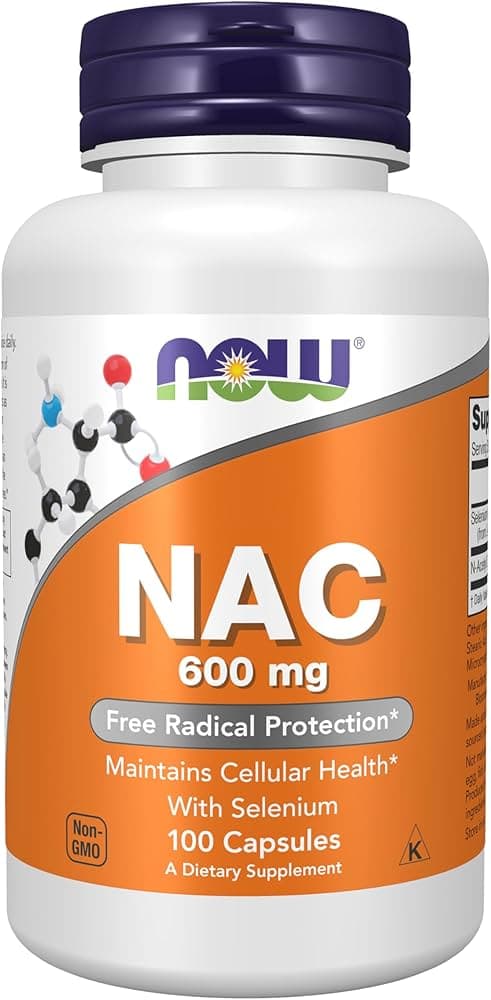
Backed by human trialsNOW Foods, verified Oct 2026Formula verified. Independently reviewed.Independent review. Not commissioned by NOW Foods.
N-Acetyl Cysteine is the lead active here, studied most for glutathione status. Selenium is the most studied active here, with 15 human studies behind it, each one cited. Who it fits: for everyone, adults.
The brand submits the formula. We read the supplement facts panel and weigh dose, form and synergy against the clinical evidence. Labs test. IngredientMD verifies. The fee pays for review time, never for the outcome.
The panel on the left is the one we evaluated, line by line.
02
Every active, separately.
All 2 actives checked against the clinical evidence: dose, form, and what the research actually shows.
03
Then the formula as a whole.
Doses, ratios, and how the ingredients work together. That assessment is the verdict above: "Backed by human trials".
04
Earned, not bought.
The verdict is public and identical whether or not a brand pays. A formula that does not clear the bar gets nothing.
Read by the engine against 2.1 million data points from clinical trials, PubMed and more than a hundred vetted sources. No individual reviewer is named or implied.
The receipts
Well studied
Research base
24
Human studies
600 mg
N-Acetyl Cysteine
25 mcg
Selenium
Cross-checked against 948 documented interactions for these actives.
was the median time it took adults to make a new daily health habit automatic across the studies a 2024 review pooled, with individuals ranging from 4 to 335 days.
In a pilot trial in 165 adults with low vitamin D, adding L-cysteine to vitamin D for 6 months raised usable vitamin D levels and lowered inflammation markers compared with vitamin D alone.
Antioxidant supplementation with N-acetylcysteine was assessed against seminal parameters. The reported outcomes are semen analysis measures rather than clinical endpoints.
In a small crossover trial in 19 healthy men given alcohol, 1,200 mg of L-cysteine was linked to less next-day nausea and headache, and 600 mg to lower stress and anxiety, on correlational analysis.
N-acetylcysteine supplementation was linked to changes in sperm quality, chromatin integrity and oxidative stress markers, laboratory semen and marker measures.
N-acetylcysteine supplementation was associated with changes in functional connectivity measured by neuroimaging within the cingulate cortex. A brain imaging marker, not a symptom or functional outcome.
Selenium, N-acetylcysteine, or both were compared against thyroid hormone marker changes in adults receiving haemodialysis. The endpoints are circulating markers, not clinical outcomes.
Population figures from public health data. Context for the category, not a statement about any individual and not a claim about this product.
What this formula earned
Every one of these is a fact the engine could ground.
Each line below was derived from this formula's own record at the time of verification. Nothing here was written by the brand, and nothing can be added that the evidence does not carry.
Studied in people15 human studies on Selenium back this formula, each one cited.
A mechanism that is settledHow Selenium and N-Acetyl Cysteine work is settled pharmacology.
Studied together, not just separatelyN-Acetyl Cysteine and Selenium have been studied together, not only separately.
Recent work on the recordThe most recent study on this record was published in 2010.
Why this formatIt is a capsule, so the amount per serving is fixed and travels without measuring.
The exact form, describedThe label names its forms exactly: L-selenomethionine, L-cysteine. The record says what each one is and what it suits.
Full label disclosureEvery ingredient on this label carries its own declared amount.
Where it comes from and how it is madeSelenium is made by more than one route.
Positions this formula already qualifies forThis formula already qualifies for positions beyond the one it is sold into, on the evidence it carries.
A position nobody is holding yetSome of those positions are ones almost nobody is selling to yet.
What the trials show
What the trials show about timing.
Time-to-effect windows the engine read from the trial record. Each is a window a named study measured, cited and dated, never written by the brand.
Active and windowResearch strength
Seleniumabout ten weeks of daily useBuilds with daily use
In a 12 week randomised double-blind placebo-controlled trial in 119 healthy UK adults aged 50 to 64, mean plasma selenium rose from 95.7 ng/mL at baseline to steady state by week 10, reaching 118.3, 152.0 and 177.4 ng/mL on 50, 100 and 200 micrograms a day of selenium-enriched yeast. Plasma selenoprotein P rose in every selenium arm. Platelet glutathione peroxidase activity did not change significantly at any dose or form.
Windows measured in the cited trials. Context for how the active behaves over time, not a statement about any individual and not a claim about this product.
General timing
How each ingredient usually behaves over time.
Two ingredients, from each one's own page.
Selenium
No felt onset. Plasma selenium and glutathione peroxidase activity rise over three to six weeks of daily intake and then plateau once the enzyme pool is filled.
How each ingredient usually behaves over time, from its own page on IngredientMD. General timing for the ingredient, not a measurement of this product.
Chemical form
The same ingredient, carried differently.
What each form is, and where it fits in a formula. Measured findings carry the study that reported them.
L-cysteine
The free amino acid with an unprotected thiol group, a white crystalline solid.
Fits
Food processing and formulations where the underivatised amino acid is specified.
Trade-off
The free thiol oxidises to cystine on exposure to air and in solution, so it needs protective packaging and is not stable in liquids.
Descriptions of the form itself, read from the cited studies. Not a comparison between products and not a statement about any individual.
Format
Capsule
It is a capsule, so the amount per serving is fixed and travels without measuring.
Best forMost standard doses, and anywhere a short, clean label is the point.
Questions shoppers ask
Is NOW NAC 600mg independently verified?
Yes. IngredientMD reviewed this formula independently and verified it in Oct 2026. The verdict is earned, not bought: brands can't edit or purchase it.
What's in NOW NAC 600mg?
NOW NAC 600mg is built on Selenium, N-Acetyl Cysteine. Each ingredient links to its own evidence page on IngredientMD.
Were ingredient interactions checked?
Yes. The combination was screened against 948 documented interactions for these actives in IngredientMD's interaction database.
Who is IngredientMD?
IngredientMD is an independent supplement-science platform. We analyze ingredients and formulas against clinical research, and we verify products only when they clear our bar. Labs run the tests. We review the results.
Sell a formula this good?
Put an earned verification on your own product page.
These statements have not been evaluated by the Food and Drug Administration. This product is not intended to diagnose, treat, cure, or prevent any disease. This record is not medical advice. Always consult your healthcare provider before starting any supplement regimen.