
The people it speaks toFieldwork 2020
31.0% of US adults
aged 18 and over met the muscle strengthening physical activity guideline in 2020, in the National Health Interview Survey.
CDC National Center for Health Statistics, 2022Quercetin is the lead active here, studied most for a healthy inflammatory response. 16 human studies on Quercetin back this formula, each one cited. Each serving carries 800 mg of Quercetin, inside the range the published research used. Who it fits: for everyone, adults.
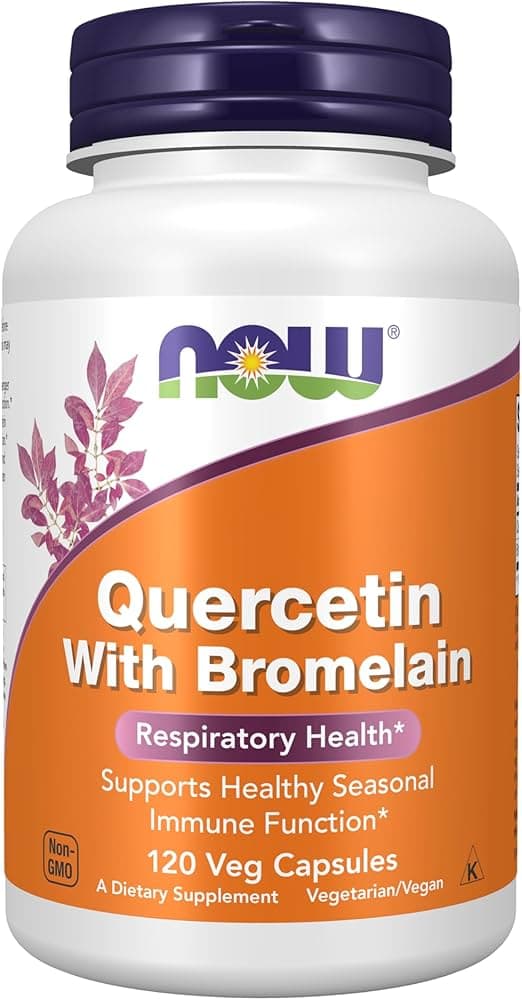 Verified by IngredientMD
The panel on the left is the one we evaluated, line by line.
All 2 actives checked against the clinical evidence: dose, form, and what the research actually shows.
Doses, ratios, and how the ingredients work together. That assessment is the verdict above: "Strong evidence, strong dose".
The verdict is public and identical whether or not a brand pays. A formula that does not clear the bar gets nothing.
Read by the engine against 2.1 million data points from clinical trials, PubMed and more than a hundred vetted sources. No individual reviewer is named or implied.
Cross-checked against 579 documented interactions for these actives.
Public health figures the engine matched to this formula's ingredients. Reported by their source, cited and dated, never written by the brand.
31.0% of US adults
aged 18 and over met the muscle strengthening physical activity guideline in 2020, in the National Health Interview Survey.
CDC National Center for Health Statistics, 202250.3% of US adults
reported frequently exercising in 2020, in the Medical Expenditure Panel Survey, a nationally representative survey of the US civilian noninstitutionalized population.
Agency for Healthcare Research and Quality, Medical Expenditure Panel Survey, 202356% of US adults
said they exercise or play sports at least once weekly by May 2024, up from 45% in January 2023, in Morning Consult survey tracking.
Morning Consult, 202430.5% of US adults
slept less than 7 hours on average in a 24 hour period in 2024, in the National Health Interview Survey.
CDC National Center for Health Statistics, 202657.6%
During 2017 to 2018, 57.6% of US adults aged 20 and over reported using a dietary supplement in the past 30 days.
CDC National Center for Health Statistics13.5% of US adults
aged 18 and over felt very tired or exhausted most days or every day over the past 3 months in 2022, in the National Health Interview Survey, with the share higher among women in every age group.
CDC National Center for Health Statistics, 202359 to 66 days
was the median time it took adults to make a new daily health habit automatic across the studies a 2024 review pooled, with individuals ranging from 4 to 335 days.
Systematic review and meta-analysis, 202461% to 74%
About 61 to 74 percent of adults refilling a long-term medicine on their own stopped within a year, versus 33 to 44 percent on one set pickup day.
Cohort study, 2015Randomised trial, 2016
In a crossover trial of 22 men with borderline-high uric acid, 500 mg of quercetin daily lowered blood uric acid by about 27 micromol versus placebo.
British Journal of NutritionMeta-analysis, 2016
Pooling seven trials in 587 people, quercetin lowered systolic blood pressure by about 3 mmHg and diastolic by about 2.6 mmHg, with a bigger effect at 500 mg daily or more.
Journal of the American Heart AssociationMeta-analysis, 2020
Across 17 trials in 896 adults, quercetin lowered the top blood pressure number by about 3.1 mmHg and the bottom number by about 2.9 mmHg, with no significant change in lipids or glucose.
Nutr RevMeta-analysis, 2023
An umbrella review of five meta-analyses found quercetin lowered systolic blood pressure by about 1.9 mmHg and lowered insulin, with no detectable effect on diastolic pressure, lipids, fasting glucose, inflammation markers or body measurements.
Phytother ResMeta-analysis, 2011
Across 11 trials in 254 people, quercetin produced a statistically significant increase in endurance exercise capacity and VO2max that the authors rate as trivial to small, about 2 percent over placebo.
Medicine and Science in Sports and ExerciseMeta-analysis, 2022
Pooled randomised trials of quercetin supplementation and reported reductions in systolic and diastolic blood pressure readings, most consistently in participants whose starting pressure was elevated.
Current Problems in CardiologyPopulation figures from public health data. Context for the category, not a statement about any individual and not a claim about this product.
Each line below was derived from this formula's own record at the time of verification. Nothing here was written by the brand, and nothing can be added that the evidence does not carry.
Two ingredients, from each one's own page.
Plan on four to eight weeks of daily use. Changes show up first in blood pressure readings and inflammatory markers rather than in how a day feels.
With a meal it acts on that meal, inside an hour. Taken between meals for comfort and recovery, most reports describe several days of steady daily use.
How each ingredient usually behaves over time, from its own page on IngredientMD. General timing for the ingredient, not a measurement of this product.
What each form is, and where it fits in a formula. Measured findings carry the study that reported them.
Quercetin aglycone, the free flavonol with no sugar attached, crystallised with two molecules of water held in the lattice. The raw material is usually extracted from Sophora japonica flower buds or Dimorphandra mollis (fava d'anta) pods.
Descriptions of the form itself, read from the cited studies. Not a comparison between products and not a statement about any individual.
It is a capsule, so the amount per serving is fixed and travels without measuring.
Put an earned verification on your own product page.
These statements have not been evaluated by the Food and Drug Administration. This product is not intended to diagnose, treat, cure, or prevent any disease. This record is not medical advice. Always consult your healthcare provider before starting any supplement regimen.