
The people it speaks toFieldwork 2024
12% of US adults
regularly reported feelings of worry, nervousness, and anxiety in 2024, in the National Health Interview Survey.
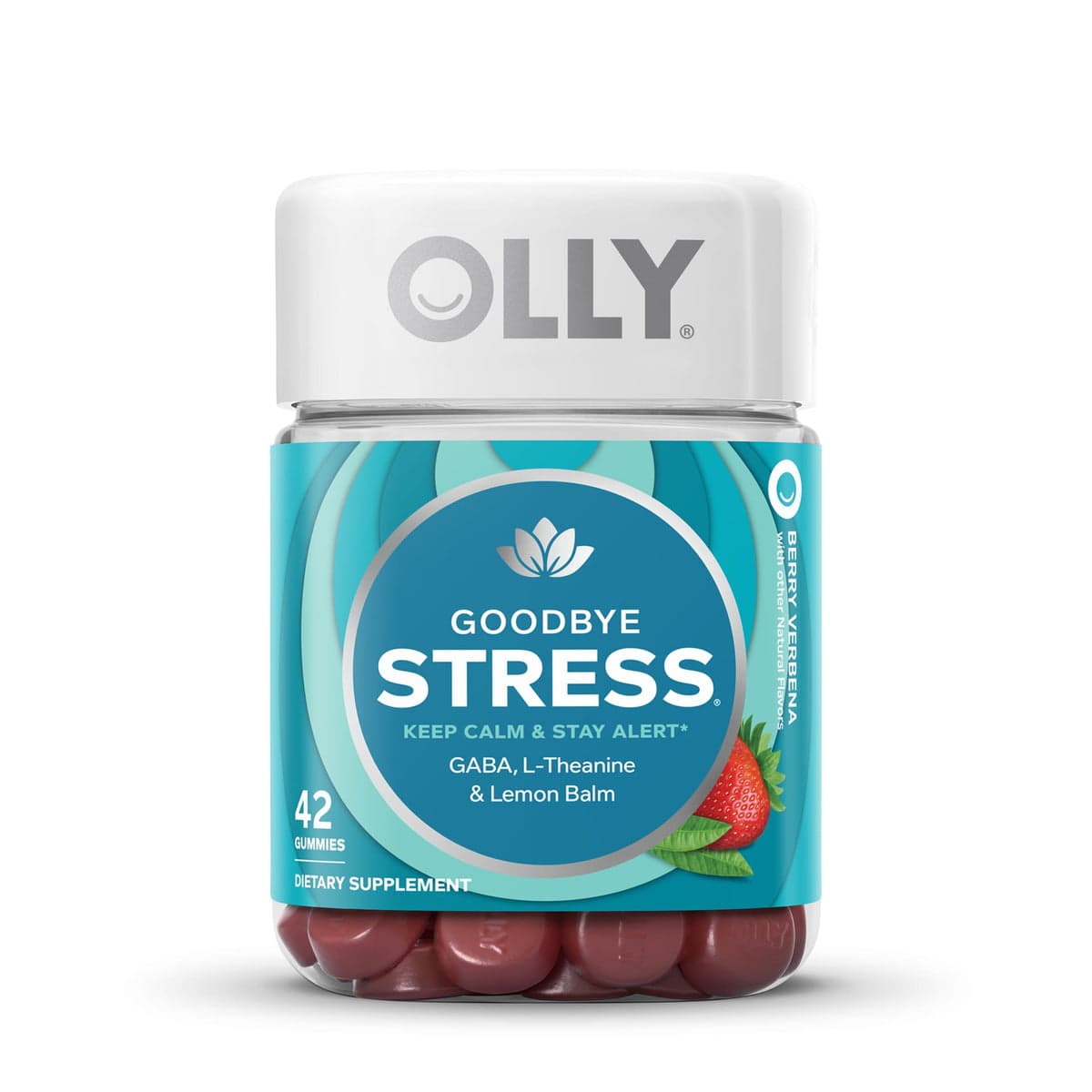
CDC National Center for Health Statistics, 2024GABA is the lead active here, studied most for calm and steady mood. L-Theanine is the most studied active here, with 14 human studies behind it, each one cited. Each serving carries 100 mg of GABA, inside the range the published research used. Who it fits: for everyone, adults.
 Verified by IngredientMD
The panel on the left is the one we evaluated, line by line.
All 3 actives checked against the clinical evidence: dose, form, and what the research actually shows.
Doses, ratios, and how the ingredients work together. That assessment is the verdict above: "Strong evidence, strong dose".
The verdict is public and identical whether or not a brand pays. A formula that does not clear the bar gets nothing.
Read by the engine against 2.1 million data points from clinical trials, PubMed and more than a hundred vetted sources. No individual reviewer is named or implied.
Cross-checked against 77 documented interactions for these actives.
Public health figures the engine matched to this formula's ingredients. Reported by their source, cited and dated, never written by the brand.
12% of US adults
regularly reported feelings of worry, nervousness, and anxiety in 2024, in the National Health Interview Survey.
CDC National Center for Health Statistics, 202439% of adults worldwide
said they worried a lot the previous day, in the Gallup World Poll fielded in 2024 across 144 countries and territories.
Gallup, 202437% of adults worldwide
said they felt stressed the previous day, in the Gallup World Poll fielded in 2024 across 144 countries and territories.
Gallup, 202457.6%
During 2017 to 2018, 57.6% of US adults aged 20 and over reported using a dietary supplement in the past 30 days.
CDC National Center for Health Statistics59 to 66 days
was the median time it took adults to make a new daily health habit automatic across the studies a 2024 review pooled, with individuals ranging from 4 to 335 days.
Systematic review and meta-analysis, 202461% to 74%
About 61 to 74 percent of adults refilling a long-term medicine on their own stopped within a year, versus 33 to 44 percent on one set pickup day.
Cohort study, 2015Meta-analysis, 2021
Pooled trials found lemon balm improved anxiety scores by about 0.98 standardized units and low mood scores by about 0.47 units versus placebo, though the small studies varied widely.
Phytotherapy ResearchSystematic review, 2020
Across 14 placebo-controlled human trials, the review found limited evidence that oral GABA intake eases stress and only very limited evidence that it improves sleep.
Frontiers in NeuroscienceRandomised crossover trial, 2016
In a crossover trial, a single dose of GABA shortened the time to fall asleep and increased total non-REM sleep time measured by EEG.
Food Science and BiotechnologyRandomised trial, 2026
A trial of a specific probiotic strain reported better sleep along with higher urinary GABA, though that marker reflects production, not a sleep outcome itself.
Scientific ReportsControlled clinical trial, 2006
Within 60 minutes of a single oral dose, GABA raised relaxation-linked alpha brain waves and lowered beta waves on EEG, more than water or l-theanine.
BioFactorsRandomised trial, 2024
In 30 sedentary women carrying excess weight who were also exercising, 200 mg of GABA daily for 90 days improved sleep efficiency and reduced negative mood versus placebo.
Journal of Dietary SupplementsRandomised trial, 2023
In adults with raised blood sugar readings and low mood scores, lemon balm extract lowered self-reported anxiety and low-mood questionnaire scores compared with placebo.
BMC complementary medicine and therapiesRandomised trial, 2024
In a placebo-controlled crossover trial, a phospholipid-delivered lemon balm extract lowered the sleep-difficulty index score by about 2.9 points (6.8 versus 9.7) and lengthened slow-wave sleep by around 15 percent.
NutrientsMeta-analysis, 2020
Across seven trials, lemon balm lowered total cholesterol by about 0.26 standardized units and blood pressure by about 0.56 units, with no detectable change in triglycerides, LDL, or blood sugar measures.
Phytotherapy ResearchPopulation figures from public health data. Context for the category, not a statement about any individual and not a claim about this product.
Each line below was derived from this formula's own record at the time of verification. Nothing here was written by the brand, and nothing can be added that the evidence does not carry.
Time-to-effect windows the engine read from the trial record. Each is a window a named study measured, cited and dated, never written by the brand.
Two double-blind placebo-controlled crossover trials measured attention at a fixed interval after one oral dose. In 24 overnight sleep-deprived adults aged 20 to 25, a 200 mg dose tested 45 minutes post-dose reduced false alarms on a traffic-scene recognition task and raised target-distractor discriminability. In 27 healthy young adults tested 50 minutes post-dose, 400 mg shortened the parietal P3b event-related potential latency against placebo, with no significant change at 100 or 200 mg. Both trials measured task and electrophysiological markers, not a subjective feeling.
Windows measured in the cited trials. Context for how the active behaves over time, not a statement about any individual and not a claim about this product.
Three ingredients, from each one's own page.
Responders usually notice something 30 to 60 minutes after a dose. Sleep and stress-marker studies read their results over one to four weeks of daily use.
For most people, with blood levels peaking inside the first hour. Nothing accumulates, so each dose stands on its own.
Calm and alertness ratings have moved within one to three hours of a single dose. Sleep and week-to-week steadiness are a two to four week story on daily use.
How each ingredient usually behaves over time, from its own page on IngredientMD. General timing for the ingredient, not a measurement of this product.
What each form is, and where it fits in a formula. Measured findings carry the study that reported them.
The zwitterionic four-carbon amino acid with no added counter-ion, freely water soluble.
The single L-enantiomer as a free amino acid, the form found in tea leaf and the form used in essentially all human trials.
Descriptions of the form itself, read from the cited studies. Not a comparison between products and not a statement about any individual.
It is a gummy, which is the format people actually keep taking, and adherence decides whether anything else matters.
Put an earned verification on your own product page.
These statements have not been evaluated by the Food and Drug Administration. This product is not intended to diagnose, treat, cure, or prevent any disease. This record is not medical advice. Always consult your healthcare provider before starting any supplement regimen.