1,3-DMAA.
A lab-made stimulant amine. It pushes stored noradrenaline out, raising alertness and drive along with vascular resistance. Regulators have since removed it from the supplement market.
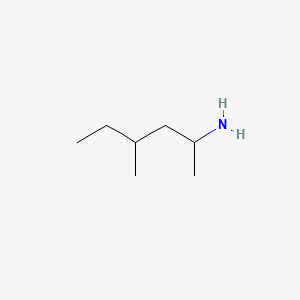 Compound
- Category
- Compound
What 1,3-DMAA is, and what it does.
- Does it work
- It sits outside the current supplement market, so no group is positioned for it as a daily supplement. Athletes should also know it appears on sport banned-substance lists.
- How much to take
- No daily amount is on record and no authority has set one. Figures appeared on old labels, but none came from a study designed to establish a daily intake.
- Time to feel it
- Stimulant effects come on within roughly half an hour to an hour, and the molecule clears slowly, so the effect runs long into the day.
- The first dose
- Day one is stimulant-like: raised alertness, a faster heartbeat and higher blood pressure. Blood pressure is the measure that moves first with this class of amine.
- With regular use
- No long-term human study exists. With 21 records in the published literature, weeks of use are undocumented apart from case reports of serious cardiovascular effects.
- How well tolerated
- Blood pressure rises with this class of amine, and case reports describe serious cardiovascular effects. It's on sport banned-substance lists and off the market in many countries.
- How it feels
- Sharp, hard stimulation. Focus narrows, heart rate climbs and appetite drops. Users describe it as heavier and longer lasting than caffeine.
- The overlooked benefit
- It's often hidden on labels as geranium oil or Pelargonium extract, so those words on a pre-workout are the flag worth checking even now.
The proof, claim by claim.
What these words mean
These words describe the research, not the molecule's worth. Research strength is how much work stands behind one claim, and it is never a product score.
- Acute blood pressure and heart rate responseRandomised trial
- Acute stimulant effect on alertnessRandomised trial
2 more claims
- Presence of the amine in geranium plant materialNarrative review
- Reported serious cardiovascular events in usersNarrative review
Why these belong in the same formula, 4 pairings
Why these belong in the same formula. Each row says what the basis is, from settled biochemistry through to a trial that measured the pair.
DMAA is an indirect sympathomimetic and caffeine is an adenosine antagonist that raises catecholamine tone. The two were studied together in healthy men and the pairing is the one most often seen in pre-workout formulas. Their cardiovascular effects add rather than offset, and blood pressure is the measure that moves. This is a reason for caution, not a reason to combine.
Yohimbine blocks alpha-2 autoreceptors, which removes the brake on noradrenaline release. DMAA pushes the same transmitter out from the other direction. Stacking a releaser with an autoreceptor blocker is a recognised way to amplify pressor effects well beyond either alone. Count this as an anti-synergy.
Nitrate-derived nitric oxide relaxes vessels while an adrenergic amine constricts them. Putting both in one pre-workout gives a blood pressure response that cannot be predicted from either ingredient's data. The interaction is real but its direction is not fixed.
Theanine is added beside stimulants to soften the subjective edge of arousal. It does not reduce the pressor load of a sympathomimetic amine and should not be read as protective. The change is in perceived jitter only.
Nothing specific on file for 1,3-DMAA. Match the label to the daily amount above, and tell your doctor what you take.
Not medical advice. Show the label to your pharmacist.What 1,3-DMAA actually does.
This compound works indirectly by triggering the release of stored noradrenaline, which tightens blood vessels and raises resistance in the bloodstream.
2 more mechanisms
As this tightens blood vessels, it raises the resistance the heart pumps against, which is why blood pressure tends to be the first thing that shifts with this class of compound.
Because its structure isn't a catechol, the body's main enzyme for breaking that type of compound down doesn't process it well, which fits with it sticking around in the body longer than natural catecholamines do.
Where 1,3-DMAA comes from.
A lab-made stimulant. It was sold for years as if it came from geranium plants, but chemists looking for it in the plant kept coming up short.
What this route gives you
Chemically synthesised. The molecule is identical to the one a plant or an animal makes, and building it deliberately means a known purity, a fixed dose and no crop contaminants. For several nutrients this is the only route that reaches a usable amount.
4 steps on record
Built from simple branched aliphatic starting materials rather than from any plant
The ketone precursor is converted to the amine, giving a mixture of stereoisomers
Isolated as the hydrochloride to give a handleable crystalline solid
Milled and blended into powder or capsule products
The forms it comes in.
2 more forms
The essence, in one line each.
- In a 12-week trial in healthy young men, daily use of 1,3-DMAA, alone or with caffeine, did not lead to statistically significant changes in blood pressure or a panel of blood chemistry measures.Randomised trial. Bloomer et al., 2013 (Human and Experimental Toxicology). PMID 23424215 ↗
1 more finding
- In a trial in seven men, a single 25 mg oral dose of 1,3-dimethylamylamine did not meaningfully change resting heart rate, blood pressure, or body temperature.Open-label trial. Schilling et al., 2013 (BMC Pharmacology and Toxicology). PMID 24090077 ↗
Chosen from the 2 we read for 1,3-DMAA.
The studies, linked.
1 source behind our 1,3-DMAA verdict, every one linked to PubMed, the journal or ClinicalTrials.gov.
- StudyCardiac arrest in a 21-year-old man after ingestion of 1,3-DMAA-containing workout supplement.PubMed ↗Clinical journal of sport medicine : official journal of the Canadian Academy of Sport Medicine, 2015, cited 28 times
From clinical trials and PubMed, ranked by study type and citation weight, not cherry-picked.
FDA Disclaimer: These statements have not been evaluated by the Food and Drug Administration. This information is for educational purposes only and is not intended to diagnose, treat, cure, or prevent any disease. Consult your healthcare provider before starting any supplement regimen.