Gingerol.
The hot tasting compound in fresh ginger. It is the part of ginger most studied for digestive comfort after a meal and for muscle soreness in the days after hard training.
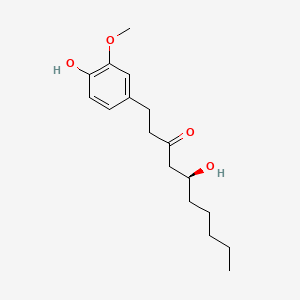 Compound
- Category
- Compound
What Gingerol is, and what it does.
- Does it work
- Worth it if you want ginger's actives in a measured amount rather than guessing from the jar. People who cook with fresh ginger daily already take some in.
- How much to take
- No daily amount is on record here. Start with what the label states, take it with a meal containing some fat, and keep the timing consistent.
- Time to feel it
- The warmth arrives within minutes of swallowing. Anything to do with soreness after training builds across several days of consistent daily use.
- The first dose
- You notice warmth and a faint peppery aftertaste. Beyond that day one is quiet, and the measured changes come with repeated dosing.
- With regular use
- Weeks of daily use are studied mainly for digestive comfort and for soreness after training. It does not accumulate, so the effect tracks daily intake.
- How well tolerated
- Well tolerated. Higher amounts can bring heartburn or a burning aftertaste, and it is worth a word with your clinician if you take a blood thinner.
- How it feels
- A clean warmth spreading through the chest and stomach, close to fresh ginger without the fibre. Many people find it settling after a heavy meal.
- The overlooked benefit
- Drying or heating ginger converts gingerol into shogaol, so a fresh root extract and a dried powder deliver genuinely different compounds from the same plant.
The proof, claim by claim.
What these words mean
These words describe the research, not the molecule's worth. Research strength is how much work stands behind one claim, and it is never a product score.
- digestive comfort and settling of the stomachMeta-analysis
- muscle soreness in the days after hard exerciseRandomised trial
4 more claims
- comfort around the monthly cycleRandomised trial
- cyclooxygenase and lipoxygenase inhibitionIn vitro study
- TRPV1 activation and the warming sensationNarrative review
- first pass conjugation of absorbed gingerolNarrative review
Why these belong in the same formula, 8 pairings
Why these belong in the same formula. Each row says what the basis is, from settled biochemistry through to a trial that measured the pair.
Gingerol and curcumin are both diarylheptanoid-adjacent plant phenolics that show up in the same literature on NF-kB and eicosanoid signalling markers. Products pair them on the assumption that overlapping targets give a broader effect at a lower dose of each. What exists is marker-level work, not outcome trials of the combination in people. Both compounds also have poor oral bioavailability on their own, which limits how much of the theory survives contact with the gut.
Gingerol is heavily conjugated by UDP-glucuronosyltransferases during first pass, which is why plasma levels of the free compound stay low after an oral dose. Piperine inhibits several of those conjugating enzymes and is added to formulas for that reason. The measured evidence for this pairing is strongest for curcumin, and applying it to gingerol is a reasonable extension rather than a demonstrated result. Note that the same enzyme inhibition raises exposure to medications cleared by those pathways.
Gingerol and capsaicin both bind and open the TRPV1 vanilloid receptor, which is the shared reason each produces a warming sensation. Taking them together produces more of that sensation than either alone, and the gastric burning some people report is dose-dependent and predictable from the mechanism. This is a caution as much as a synergy, particularly on an empty stomach. The receptor pharmacology is settled even where the combined clinical work is not.
Ginger constituents inhibit thromboxane synthesis in laboratory work, and long chain omega-3 fatty acids shift eicosanoid production away from the more aggregatory series. Combining substantial doses of both is a plausible additive platelet effect worth flagging, particularly around surgery or alongside anticoagulant medication. The signal comes from mechanism and isolated laboratory measurements, not from a trial of the combination. Anyone on blood thinning medication should raise it with their prescriber before stacking the two.
Gingerol is a poorly water soluble phenol, so how much dissolves in intestinal fluid depends heavily on whether fat is present to form mixed micelles. Suspending it in a medium chain triglyceride carrier, or simply taking it with a meal containing fat, addresses the dissolution step. This is standard formulation physics for lipophilic actives rather than a gingerol-specific finding. It does nothing about the separate problem of first-pass conjugation.
Binding a lipophilic phenol to phosphatidylcholine produces a phytosome-type complex that disperses more readily in the aqueous gut environment. The approach is well documented for curcumin and related plant phenolics and is applied to gingerol on the same physical basis. Whether the improvement in dispersion translates into a different effect in people has not been measured for gingerol specifically. Read it as a formulation step with a clear physical rationale.
The enone group in gingerol makes it an electrophile that conjugates with glutathione, which is one route by which it is cleared and also one route by which it triggers Nrf2-linked antioxidant responses in cell work. High local concentrations can transiently deplete cellular thiol pools. This is well characterised chemistry from laboratory systems and should not be read as a measured effect in people. It does mean glutathione status and gingerol handling are linked.
Gingerol acts partly on gastric emptying and TRPV1 signalling, while menthol acts on TRPM8 and on smooth muscle tone. Products combine them for digestive comfort formulas on the basis that the two mechanisms do not overlap. There is no trial of the pairing that isolates each contribution. This is formulation practice, and the sensory result is a warming and cooling combination that some people find unpleasant.
Nothing specific on file for Gingerol. Match the label to the daily amount above, and tell your doctor what you take.
Not medical advice. Show the label to your pharmacist.What Gingerol actually does.
Gingerol has a reactive chemical group that can form permanent bonds with certain sulfur-containing molecules in cells, including glutathione and specific sites on proteins.
3 more mechanisms
When ginger is dried or heated, gingerol converts into a related compound called shogaol, which is why fresh root, dried powder and steamed ginger all give you a measurably different compound mix from the same plant.
It activates the same channel that responds to capsaicin and to painful heat, which is what gives ginger its warming sensation.
After being absorbed, most gingerol gets quickly tagged by the liver, so what actually circulates in your blood is mostly a modified form rather than the free compound.
Where Gingerol comes from.
Gingerol is the compound that makes fresh ginger taste hot. Dry the root or cook it and part of that gingerol turns into shogaol, a related compound with a sharper bite. That is why fresh ginger and ginger powder do not taste the same and do not contain the same thing. It dissolves in fat, not water, so take it with food that has some fat in it.
What this route gives you
Made from a plant. What ends up in the capsule tracks the harvest, so batch testing and a stated marker matter more here than with a made molecule.
5 steps on record
Fresh ginger rhizome, mainly from India, China, Nigeria and Indonesia, harvested at maturity when pungent compound content is highest.
The rhizome is milled and extracted with ethanol, acetone or supercritical carbon dioxide, all of which pull the lipophilic pungent fraction.
For isolated 6-gingerol the oleoresin is fractionated by column or preparative chromatography to separate the homologues from the shogaols and the volatile oil.
Batches are assayed by high performance liquid chromatography and declared either as percent 6-gingerol or percent total gingerols.
The purified material is dried onto a carrier for capsules, kept as an oleoresin for softgels, or complexed with phosphatidylcholine.
Getting Gingerol from food.
The whole-food sources on file. A supplement closes the gap, it does not replace dinner.
A gram-for-gram figure (how much of each you would eat to match a dose) will appear here once it is sourced and reviewed. This page will not print a number it cannot cite.
The forms it comes in.
3 more forms
The essence, in one line each.
- Adding 6-gingerol to the cryopreservation medium was associated with better measured sperm parameters and less DNA fragmentation than the untreated medium.In vitro study. Zekri S et al., 2025 (Urology journal). PMID 40684272 ↗
5 more findings
- A gingerol-enriched ginger extract altered anxiety-like behaviour in a rodent nerve injury model alongside shifts in colonic microbiome composition.Animal study. Mendoza R et al., 2026 (Molecules). PMID 41515464 ↗
- The review pooled animal studies of ginger extract and alpinetin on pregnancy outcomes and found the underlying literature heterogeneous in dose and design.Systematic review, in animals. Williams JT et al., 2025 (BMC Complementary Medicine and Therapies). PMID 40380319 ↗
- A combination supplement containing gingerol, taken for 8 weeks by 60 adults with a diagnosed headache condition, reduced headache severity compared to a placebo in a randomised trial, but did not detectably change headache frequency or duration.Randomised trial, in patients with migraine. Askari MA et al., 2026 (Nutrition Journal). PMID 42021338 ↗
- Fermenting Zingiberaceae material changed its measured phytochemical profile and its activity in laboratory assays compared with the unfermented plant.In vitro study. Sammulia SF et al., 2026 (Drug Design, Development and Therapy). PMID 42039694 ↗
- Ginger ethanol extract in feed was associated with changes in growth measures, antioxidant capacity and intestinal microbiota composition in broilers.Animal study. Yang K et al., 2026 (Poultry Science). PMID 41352187 ↗
Chosen from the 8 we read for Gingerol.
The studies, linked.
3 sources behind our Gingerol verdict, every one linked to PubMed, the journal or ClinicalTrials.gov.
- Clinical trialEfficacy and Safety of a Food Supplement With Standardized Menthol, Limonene, and Gingerol Content in Patients With Irritable Bowel Syndrome: a Double-blind, Randomized, Placebo-controlled TrialClinicalTrials.gov ↗56 participants, Completed
2 more linked trials
- Clinical trialComparative Evaluation of Clinical and Radiographic Outcomes of Lesion Sterilization and Tissue Repair Using Zinc Oxide/ 6-gingerol Mix Versus Triple Antibiotic Paste in Non-vital Primary Molars: A Randomized Clinical TrialClinicalTrials.gov ↗60 participants, Recruiting
- Clinical trialEfficacy of Ginger Muco-bioadhesive Gel in Management of Oral Lichen Planus: A Randomized Controlled Clinical Trial With Immunohistochemical AnalysisClinicalTrials.gov ↗Phase 4, 28 participants, Unknown
From clinical trials and PubMed, ranked by study type and citation weight, not cherry-picked.
FDA Disclaimer: These statements have not been evaluated by the Food and Drug Administration. This information is for educational purposes only and is not intended to diagnose, treat, cure, or prevent any disease. Consult your healthcare provider before starting any supplement regimen.