Glucono-delta-lactone.
It's a formulation aid rather than a nutrient. In water it slowly turns into a mild acid, which sets tofu evenly, holds pH steady and keeps minerals like calcium and zinc dissolved.
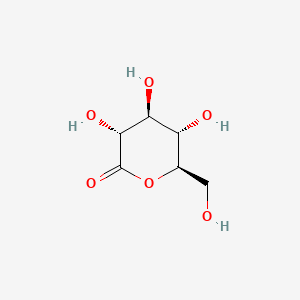 Compound
- Category
- Compound
What Glucono-delta-lactone is, and what it does.
- Does it work
- It matters more to the formulator than the shopper: it's why a gluconate mineral stays in solution. People take it as part of something else, never for itself.
- How much to take
- There's no daily amount on record, and none is needed. You get it as part of a mineral salt or a set food, at whatever level the formula requires.
- Time to feel it
- It hydrolyses to gluconic acid within minutes in water. There's no personal timeline attached, because its job finishes inside the product.
- The first dose
- Nothing changes for you on day one. Its work happened during manufacture, setting pH and keeping the mineral it carries in solution.
- With regular use
- Weeks of a gluconate mineral mean weeks of that mineral staying dissolved and absorbable. The lactone itself is metabolised through normal carbohydrate routes.
- How well tolerated
- Widely used in food with a long uneventful record. Very large amounts can loosen stools, and the mineral it carries is the part worth checking against your total intake.
- How it feels
- Slightly sweet, then mildly sour as it converts, if you taste the powder. In a finished product its effect sits in texture and pH rather than in you.
- The overlooked benefit
- It's why silken tofu sets smooth instead of curdling: the acid is released gradually through the whole volume instead of hitting one spot.
The proof, claim by claim.
What these words mean
These words describe the research, not the molecule's worth. Research strength is how much work stands behind one claim, and it is never a product score.
- slow, even acidification of a food or formulaNarrative review
- protein coagulation in tofu manufactureNarrative review
2 more claims
- chelation keeping calcium, magnesium, zinc and iron in solutionNarrative review
- metabolism via 6-phosphogluconate into the pentose phosphate routeNarrative review
Why these belong in the same formula, 9 pairings
Why these belong in the same formula. Each row says what the basis is, from settled biochemistry through to a trial that measured the pair.
As the lactone hydrolyses it releases gluconic acid, and gluconate is an excellent counterion for calcium. Calcium gluconate is far more soluble than calcium carbonate at the same pH, which is why gradual acidification is used to bring calcium into solution in gels and beverages. The same chemistry is what makes it a tofu coagulant: a slow pH drop rather than a sudden salt shock.
Magnesium gluconate is one of the more soluble magnesium salts and dissolves readily in water at neutral pH. Where the lactone is present in a formulation, the gluconate it generates can pair with magnesium the same way. This is a solubility and mouthfeel matter in formulation, and it is not a statement about how much magnesium crosses the gut wall.
Zinc gluconate is widely used because it dissolves well and is less astringent on the tongue than several alternatives. The gluconate anion is the same species the lactone releases on hydrolysis. Which zinc salt suits a product depends on the format and the taste target.
Ferrous gluconate is one of the long-standing soluble iron salts, chosen where solubility and a milder taste profile matter. Gluconate keeps iron in solution across a wider pH span than some inorganic salts. Every ferrous salt still carries the same gut tolerability considerations at higher elemental doses.
Slow acidification is the standard way to bring a heat-denatured whey solution down through its isoelectric region without local curdling. The lactone hydrolyses over minutes rather than seconds, so the whole volume acidifies evenly and the gel forms with uniform structure. That is why food scientists reach for it instead of adding acid directly.
Casein aggregates as pH approaches about 4.6, and the lactone delivers that drop gradually without a starter culture. It is the standard route for acid-set dairy gels where fermentation flavour is not wanted. The trade-off is a cleaner, blanker taste than a cultured product.
Live bacterial cultures lose viability as pH falls, and chemical acidification with the lactone drives pH down independently of anything the culture is doing. In a product carrying both, the acidulant load and target pH need to be set with the strain's acid tolerance in mind. Bifidobacteria are generally less acid tolerant than lactobacilli here.
The lactone is used as a slow-acting leavening acid opposite bicarbonate, releasing carbon dioxide gradually rather than all at once on mixing. That timing is the whole point in doughs and batters that sit before baking. It is a food-technology function with no nutritional claim attached.
High-methoxyl pectin needs a low pH plus sugar to set, and the lactone supplies that pH drop on a controlled schedule. Low-methoxyl pectin instead needs calcium, which the released gluconate helps keep soluble until it is needed. Either way the acidulant is a process tool rather than an ingredient with its own effect.
Nothing specific on file for Glucono-delta-lactone. Match the label to the daily amount above, and tell your doctor what you take.
Not medical advice. Show the label to your pharmacist.What Glucono-delta-lactone actually does.
Glucono-delta-lactone is a ring-shaped form of gluconic acid that slowly converts back to the acid in water over minutes at room temperature, and faster if it's warmer.
3 more mechanisms
Because it releases acid gradually rather than all at once, it produces a slow, even drop in pH throughout a mixture, which is why it's used as a slow-acting acidifier and coagulant.
The gluconate part of the molecule binds to metal ions and keeps minerals like calcium, magnesium, zinc and iron dissolved across a wide pH range, which is why gluconate mineral salts are common in both food and supplements.
Gluconic acid that you absorb gets fed into normal carbohydrate metabolism through a specific pathway, so it's broken down and used rather than building up in the body.
Where Glucono-delta-lactone comes from.
It is a white powder made by fermenting glucose. Drop it in water and it slowly turns into a mild acid, which is why it sets tofu evenly and why gluconate shows up on the back of so many mineral supplements.
What this route gives you
Built by fermentation, the same way vitamin B12 and many amino acids are made at scale. Controlled conditions, consistent output.
5 steps on record
Starch is hydrolysed enzymatically to a high-glucose syrup, the same feedstock used across fermentation-derived food acids.
Carried out either by submerged fermentation with Aspergillus niger or by enzymatic oxidation using glucose oxidase and catalase. Both routes end at gluconic acid.
Biomass and residual sugars are removed and the acid stream is polished before concentration.
The acid is concentrated and crystallised under conditions that favour the delta-lactone ring rather than the free acid or the gamma-lactone.
Dried and milled to a free-flowing white powder that is stable dry and reactive once wet.
Getting Glucono-delta-lactone from food.
The whole-food sources on file. A supplement closes the gap, it does not replace dinner.
A gram-for-gram figure (how much of each you would eat to match a dose) will appear here once it is sourced and reviewed. This page will not print a number it cannot cite.
The forms it comes in.
4 more forms
The essence, in one line each.
- Enzymatic modification of rice peptides altered the functional properties of alginate hydrogels formed under controlled acidification.In vitro study. Ren X et al., 2026 (Food Chemistry: X). PMID 41847373 ↗
Chosen from the 2 we read for Glucono-delta-lactone.
FDA Disclaimer: These statements have not been evaluated by the Food and Drug Administration. This information is for educational purposes only and is not intended to diagnose, treat, cure, or prevent any disease. Consult your healthcare provider before starting any supplement regimen.