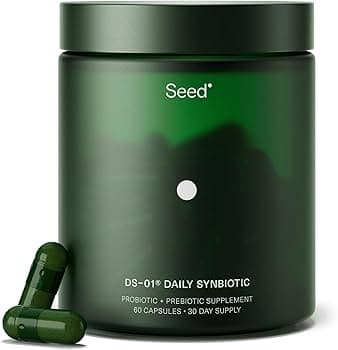
Lacticaseibacillus casei SD-CECT9104-SP.
A characterized L. casei strain from the Spanish Type Culture Collection with digestive and immune benefits. Supports digestive regularity and immune function through gut colonization, lactic acid production, and competition with harmful microbes.
Reviewed March 2026
- Category
- Probiotic
- Also filed under
- Digestive healthImmune supportDiarrhea preventionGut barrier integrity
What Lacticaseibacillus casei SD-CECT9104-SP is, and what it does.
- Does it work
- Solid L. Casei strain with formal CECT deposition. Species-level evidence is respectable, and having a characterized strain number adds quality assurance.
- How much to take
- 1-5 billion CFU daily is the effective range for L. casei strains. Most multi-strain products include this within that range. Higher doses are safe but not necessarily more effective.
- Time to feel it
- Most people notice digestive changes in the first one to two weeks. The steadier bowel pattern usually settles around week three or four.
- The first dose
- Minimal changes. Your gut microbiome starts adjusting, which might mean a slight change in gas patterns or stool consistency. Nothing dramatic.
- With regular use
- Weeks 2-4: digestive comfort improves. Weeks 8-12: immune benefits start showing up as fewer minor colds and infections.
- How well tolerated
- Well tolerated. L. casei species has an excellent track record spanning decades of use. Only caution is for severely immunocompromised individuals.
- How it feels
- Background improvement. You probably won't point to a specific moment and say 'that's the probiotic working.' But your gut just... cooperates more.
- The overlooked benefit
- Its culture collection deposit number means the exact isolate is held on file independently, so what is in the capsule can be identity-checked rather than taken on trust.
1 to 10 CFU a day is where Lacticaseibacillus casei SD-CECT9104-SP works.
Source: L. casei meta-analyses; CECT strain characterization data
The proof, claim by claim.
These words describe the research, not the molecule's worth. Research strength is how much work stands behind one claim, and it is never a product score.
- Improves digestive regularity
- Supports immune health
- Strain is formally characterized
Questions people ask about Lacticaseibacillus casei SD-CECT9104-SP.
- What does CECT9104 mean?
- It's the catalog number in Spain's national culture collection (CECT). Think of it like a library call number for bacteria. It means this exact strain has been formally identified, tested, and preserved.
- Is this better than a generic L. casei?
- Having a strain number is better than not having one. It means the manufacturer can guarantee you're getting the same characterized strain every time, not just any random L. casei.
- Do I need this specific strain or will any probiotic do?
- For general digestive support, many L. casei strains work similarly. The CECT deposition adds quality assurance but doesn't make it dramatically different from other well-characterized L. casei strains.
- How do I know if it's working?
- Track your digestive symptoms for 4-6 weeks. Less bloating, more regular bowel movements, fewer digestive complaints. If nothing changes after 6 weeks, try a different strain.
- Can I take this while pregnant?
- L. casei is generally considered safe during pregnancy. Several studies have used L. casei strains in pregnant women without issues. But always check with your OB first.
Why these belong in the same formula. Each row says what the basis is, from settled biochemistry through to a trial that measured the pair.
Inulin is a fructan that human digestive enzymes do not break down, so it arrives in the colon intact. Lacticaseibacillus casei carries fructan-utilisation machinery and can ferment fructo-oligosaccharide fragments to lactate and acetate. The pairing is the standard synbiotic construction: a live organism plus a carbohydrate it can actually use. Whether a given strain grows on a given inulin chain length is a strain-by-strain question, not a class fact.
Short-chain fructo-oligosaccharides are the fraction of inulin-type fibre most readily fermented by lactobacilli. Supplying them alongside the strain gives it a carbon source that competing proteolytic organisms use less efficiently. This is formulation convention in synbiotic products rather than a claim about any specific outcome.
Galacto-oligosaccharides resist upper-gut digestion and are fermented by beta-galactosidase-positive lactobacilli, an enzyme class L. casei expresses. Co-formulation supplies substrate at the same site the organism lands. The relevant caveat is that GOS also feeds bifidobacteria, so the substrate is shared rather than strain-selective.
Resistant starch escapes amylase digestion and is fermented in the colon, mostly to butyrate by cross-feeding communities. Lactate produced by L. casei is itself a substrate for butyrate-producing organisms, so the two inputs meet in the same cross-feeding chain. The interaction is community-level, not a direct two-organism effect.
Partially hydrolysed guar gum is a soluble, low-viscosity galactomannan fermented slowly along the length of the colon. Pairing a slowly fermented fibre with a lactic acid organism spreads substrate availability past the proximal colon. It is used in synbiotic blends for exactly that reason.
Bifidobacteria run the fructose-6-phosphate phosphoketolase pathway and produce acetate and lactate. Lactobacilli produce lactate. Both acids lower luminal pH, and both are taken up by butyrate producers in a well-described cross-feeding step. Multi-strain blends pair the two genera on this basis. Adding strains does not multiply any single strain's own characterised behaviour.
Both organisms are homofermentative or facultatively heterofermentative lactic acid bacteria that acidify their local environment and compete with other organisms for adhesion sites and nutrients. They are combined in blends because their acid and bile tolerance profiles differ, which widens the window in which at least one survives transit. Each strain's characterisation stands on its own deposit, not on the blend.
S. boulardii is a yeast and is not inhibited by the antibacterial conditions that suppress lactobacilli, so the two occupy different niches in the same product. The yeast also releases nutrients bacteria can use as it lyses. The pairing is common in blends. It is a formulation rationale rather than a measured combination effect for this specific strain.
Glutamine is the preferred oxidative fuel of small-intestinal enterocytes and supports normal turnover of the epithelial layer. A lactic acid organism acts on the luminal side of that same epithelium. The two inputs are combined on complementary reasoning, and neither depends on the other to work.
Butyrate is the primary energy substrate for colonocytes and is generated in the colon partly from lactate by cross-feeding organisms. Supplying butyrate directly and supplying a lactate producer converge on the same endpoint by different routes. Direct butyrate salts are largely absorbed proximally unless the delivery form delays release.
Zinc is a structural and catalytic cofactor in hundreds of enzymes and is required for normal intestinal epithelial turnover and normal immune cell function. It is frequently co-formulated with gut-directed strains for that reason. The two act through entirely separate mechanisms and the pairing is complementary rather than interdependent.
The vitamin D receptor is expressed in intestinal epithelium and in several immune cell lineages, where calcitriol modulates gene transcription. Products that combine a strain with vitamin D3 are stacking two independent supports for normal immune function. No combination measurement is claimed for this strain.
Lactoferrin binds free iron with high affinity, which limits iron availability to organisms that depend on it. Most lactobacilli have unusually low iron requirements, so the sequestration bears on them less than on other gut organisms. That selectivity is the stated rationale for pairing lactoferrin with lactic acid strains.
Bovine colostrum supplies immunoglobulins and milk oligosaccharides, a fraction of which are fermentable by lactic acid bacteria. It is combined with strains in gut-directed formulas on that dual basis. The oligosaccharide content of a colostrum lot varies, so substrate delivery is not standardised the way an isolated prebiotic is.
Oat beta-glucan is a viscous soluble fibre fermented in the colon to short-chain fatty acids. Its viscosity also slows upper-gut transit, which lengthens the time a swallowed organism spends in a less acidic environment. Both effects are properties of the fibre, not of the strain.
Pectin is a galacturonan fermented by colonic organisms to acetate and other short-chain fatty acids. It is used in synbiotic and gut-comfort blends alongside lactic acid strains. Fermentation is community-wide rather than selective for any one strain.
Psyllium is only partially fermented and works mainly by holding water and adding stool bulk, which supports normal bowel regularity. A live strain acts through fermentation and community effects instead. The two mechanisms are separate, which is why they are commonly formulated together.
Betaine hydrochloride is used to lower gastric pH. Lactic acid bacteria lose viability faster as gastric pH falls, so taking an acidifier at the same moment as a live strain works against survival through the stomach. Separating the two by an hour, or using an acid-protected delivery form, is the usual formulation answer.
Activated charcoal adsorbs a wide range of molecules non-selectively in the gut lumen. Taken together with a live culture it can bind the nutrients and metabolites the organism depends on and interferes with anything else swallowed at the same time. Dosing them at separate times is standard.
Bentonite is a swelling aluminosilicate that binds cations and organic molecules in the gut lumen. Co-administration with a live strain risks binding both the organism and its substrates. Spacing doses apart is the conventional handling.
Supplemental proteases act on protein in the stomach and duodenum, the same compartment a swallowed organism must cross. Bacterial cell surfaces are protein-bearing, so a high protease load taken at the same time is a plausible stress on viability. The interaction is mechanistic reasoning, not a measured result for this strain.
Talk to a doctor before taking Lacticaseibacillus casei SD-CECT9104-SP if any of these apply to you: Initial GI adjustment possible. These are flags to check first, not effects Lacticaseibacillus casei SD-CECT9104-SP is known to cause.
Not medical advice. Show the label to your pharmacist.What Lacticaseibacillus casei SD-CECT9104-SP actually does.
The organism turns sugars into lactic acid, which makes its surroundings more acidic.
Other gut bacteria take up the lactic acid and convert it into butyrate, the main fuel for cells lining the colon.
They crowd out other microbes by taking up space and food and by making the environment more acidic.
The organism carries the enzyme that splits milk sugar.
Where Lacticaseibacillus casei SD-CECT9104-SP comes from.
One stored, identified bacterial strain is grown in a controlled tank, washed and concentrated, mixed with sugars that protect it during drying, freeze-dried into a powder, then diluted to hit a set live-cell count per dose.
Built by fermentation, the same way vitamin B12 and many amino acids are made at scale. Controlled conditions, consistent output.
Production starts from a working cell bank drawn from a single characterised isolate held in a culture collection, so every batch traces to one genome rather than to a re-isolated culture.
A dairy-derived or plant peptone medium with a fermentable carbohydrate, mineral salts and growth factors such as B vitamins and nucleotide bases that lactobacilli cannot make in sufficient quantity.
Anaerobic or microaerophilic culture at a held temperature with continuous base addition, because the organism acidifies its own medium and would otherwise arrest its own growth.
Cells are separated from spent medium by centrifugation or membrane filtration and washed to remove residual medium components.
The concentrate is mixed with sugars or polyols that protect membranes during ice crystal formation, then plated to establish the viable count that the final blend is standardised against.
Water is removed by sublimation under vacuum, the dry cake is milled, and the powder is blended with a carrier to a target CFU per gram with an overage set against the expected decline over shelf life.
The specific growth medium composition, the cryoprotectant blend and the size of the shelf-life overage are usually held as manufacturer specifications and are not on a label.
Getting Lacticaseibacillus casei SD-CECT9104-SP from food.
The whole-food sources on file. A supplement closes the gap, it does not replace dinner.
A gram-for-gram figure (how much of each you would eat to match a dose) will appear here once it is sourced and reviewed. This page will not print a number it cannot cite.
The forms it comes in.
FDA Disclaimer: These statements have not been evaluated by the Food and Drug Administration. This information is for educational purposes only and is not intended to diagnose, treat, cure, or prevent any disease. Consult your healthcare provider before starting any supplement regimen.