Rosarin.
Rosarin is one of three rosavins in Rhodiola rosea root. On a label it works as the marker confirming an extract really is rosea rather than a lookalike species.
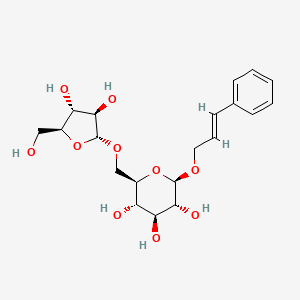 Compound
- Category
- Compound
What Rosarin is, and what it does.
- Does it work
- Matters to anyone choosing a Rhodiola product who wants species identity confirmed on a certificate of analysis. Nobody takes rosarin on its own.
- How much to take
- No amount is on record for rosarin by itself. It arrives as a percentage of a Rhodiola rosea extract, so the extract's own serving is the number to follow.
- Time to feel it
- Nobody has measured a timeline for rosarin alone. Whole Rhodiola root extracts are usually assessed over one to four weeks of daily use.
- The first dose
- Day one belongs to the extract it travels in. Rosarin itself has no described same-day effect in people.
- With regular use
- No long-term study has been run on rosarin alone. Across weeks its practical role is as the standardisation marker keeping one batch of extract like the last.
- How well tolerated
- There's no separate safety record for isolated rosarin. Inside Rhodiola root extract it's generally well tolerated, and stimulant-sensitive people can start low.
- How it feels
- Nothing is attributable to rosarin by itself. What people report comes from the whole Rhodiola extract around it, usually a light lift in drive.
- The overlooked benefit
- The rosavins figure is a species check as much as a potency number. Its absence flags a different Rhodiola species standing in for rosea.
The proof, claim by claim.
What these words mean
These words describe the research, not the molecule's worth. Research strength is how much work stands behind one claim, and it is never a product score.
- Species authentication marker for Rhodiola roseaNarrative review
- Contribution to the activity of standardised Rhodiola rosea extractIn vitro study
1 more claim
- Glycoside cleavage by intestinal and microbial beta-glucosidasesIn vitro study
Why these belong in the same formula, 3 pairings
Why these belong in the same formula. Each row says what the basis is, from settled biochemistry through to a trial that measured the pair.
Rosarin is not a standalone ingredient in most products. It is one of three related cinnamyl alcohol glycosides that are measured together as the rosavins fraction used to standardise Rhodiola rosea extracts. Anyone reading a label that lists three percent rosavins is looking at rosarin plus rosavin plus rosin, not one compound. The three travel together because they share a biosynthetic route in the plant.
Both are commonly taken in the morning for alertness, so they stack in practice whether or not they stack pharmacologically. There is no established shared receptor between the two, and the combination has not been characterised for the isolated glycoside. Someone sensitive to stimulants may find the pairing more activating than either alone. This is a practical caution, not a demonstrated interaction.
The pairing is a formulation convention in nootropic and stress-support blends rather than a characterised biochemical interaction. Nothing in the rosarin literature speaks to the combination. It appears here so a reader sees why the two turn up together on labels. Read it as formulation practice.
Nothing specific on file for Rosarin. Match the label to the daily amount above, and tell your doctor what you take.
Not medical advice. Show the label to your pharmacist.What Rosarin actually does.
Rosarin is a cinnamyl alcohol glycoside from rhodiola root, one of three closely related glycosides that differ only in their attached sugar and get measured together as a single combined marker when standardizing an extract.
3 more mechanisms
This group of compounds shows up in rhodiola rosea specifically but is largely missing from other rhodiola species, so their presence is the standard lab check for confirming the plant is the right species, which is why a certificate reporting them carries weight beyond just dosing.
Rosarin isn't sold or dosed on its own in ordinary practice, it reaches people only as part of a whole rhodiola rosea extract, so any dose figure for rosarin is a fraction of an extract dose, not an amount someone takes directly.
Compounds like this are broken down by gut and bacterial enzymes that cleave off the sugar, and whether the intact compound or the freed piece is what actually circulates in blood is a genuinely open question for this compound, one that affects how a dose should be read.
Where Rosarin comes from.
Rosarin comes from the root of Rhodiola, an alpine plant. It is one of three near-identical compounds that get counted together on a label as rosavins, so you will basically never see rosarin listed on its own. The root is dried, soaked in alcohol and water, concentrated to a powder, then tested to check how much of the group is in there. That same test is how a lab tells real Rhodiola rosea from a cheaper lookalike species.
What this route gives you
Made from a plant. What ends up in the capsule tracks the harvest, so batch testing and a stated marker matter more here than with a made molecule.
6 steps on record
A cold-climate succulent from arctic and alpine regions of Europe, Asia and North America. Roots are harvested from wild stands or from cultivated plots after several years of growth, since marker content builds with plant age.
Roots are cleaned, sliced and dried at controlled temperature, then milled. Drying temperature matters because glycosides degrade with excessive heat.
Milled root is extracted with an ethanol and water mixture, which pulls the cinnamyl glycosides including rosarin along with salidroside and other phenolics.
The extract is concentrated under vacuum and the ethanol removed, then dried to a powder, often onto a carrier such as maltodextrin.
Rosavin, rosarin and rosin are quantified together against reference standards and the batch adjusted to a target percentage. Salidroside is assayed in parallel for dual-standardised grades.
Blended to specification and encapsulated or tabletted. Rosarin is never separated out as a finished ingredient.
Suppliers rarely disclose the rosarin share within the summed rosavins figure, or whether extraction used wild-harvested or cultivated root.
The forms it comes in.
3 more forms
The essence, in one line each.
- Callus culture conditions were optimised to raise biomass and phenolic compound production in Rhodiola rosea, with cinnamyl glycoside content among the compounds tracked.In vitro study. Erst AA et al., 2022 (Plants (Basel, Switzerland)). PMID 35009127 ↗
Chosen from the 1 we read for Rosarin.
FDA Disclaimer: These statements have not been evaluated by the Food and Drug Administration. This information is for educational purposes only and is not intended to diagnose, treat, cure, or prevent any disease. Consult your healthcare provider before starting any supplement regimen.