Simethicone.
It collapses the foam that traps gas in your gut, so small bubbles merge into bigger ones you can pass. That eases pressure and the bloated feeling after a meal.
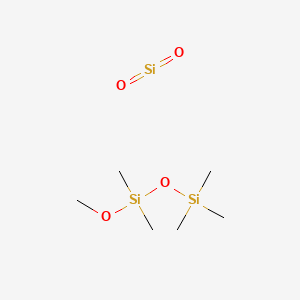 Compound
- Category
- Compound
What Simethicone is, and what it does.
- Does it work
- Suits anyone with occasional trapped wind or post-meal bloating, and it is used in infants and in pregnancy under clinical guidance. It handles gas you already have.
- How much to take
- No daily amount is on record here, so start with what your product's label states. It works inside the gut and is not absorbed, so it is about coverage, not blood levels.
- Time to feel it
- Usually minutes to an hour. The action is physical and starts as soon as it meets the foam, so it is one of the faster gut ingredients.
- The first dose
- Many people notice wind passing more easily and less tightness within a few hours. Others notice only that their stomach feels settled rather than distended.
- With regular use
- Nothing accumulates. It does the same job each time you take it, which is why it is used around meals or symptoms rather than to change something over weeks.
- How well tolerated
- Very well tolerated. It passes through unchanged in the stool, and clinicians use it in infants and in pregnancy. Ask before pairing it with mucosal enzyme preparations.
- How it feels
- Less tight, less swollen, more gurgle moving through. It gives a same-day sensation that most digestive ingredients do not.
- The overlooked benefit
- It is added to bowel prep and imaging drinks because clearing foam gives clinicians a clear view of the gut lining. Same antifoam action, different job.
The proof, claim by claim.
What these words mean
These words describe the research, not the molecule's worth. Research strength is how much work stands behind one claim, and it is never a product score.
- Occasional bloating and trapped gasRandomised trial
- Foam clearance for clearer mucosal visibility during endoscopyMeta-analysis
2 more claims
- Digestive comfort in infantsRandomised trial
- Comfort after a heavy or rich mealRandomised trial
Why these belong in the same formula, 7 pairings
Why these belong in the same formula. Each row says what the basis is, from settled biochemistry through to a trial that measured the pair.
Simethicone is routinely added to polyethylene glycol solutions before endoscopy because it collapses the foam that otherwise obscures the mucosal view. A randomised comparison of low versus high simethicone dose alongside polyethylene glycol found both reduced bubble scores, with the lower dose performing acceptably. The two act by unrelated routes: polyethylene glycol moves fluid through the bowel osmotically, simethicone changes the surface tension of gas bubbles. This is a procedural pairing used under clinical supervision.
A study in infants receiving oral lactase found that concurrent simethicone was associated with a poorer response, and the authors advised against giving the two together. The proposed explanation is that the silicone antifoam interferes with the enzyme at the interface where it works. This is one of the clearer negative pairings in the simethicone literature and it points in the opposite direction to most co-formulation habits. Anyone using an oral lactase product should separate the two.
A pilot study paired simethicone with an inactivated Bacillus coagulans preparation and reported improvement in crying time, though a pilot design with no adequate control cannot separate the two components from the natural course. Simethicone acts physically on gas bubbles while the bacterial preparation acts on the gut environment, so the routes are independent. Systematic reviews of probiotics in infant colic have reached mixed conclusions. Read the pairing as plausible rather than settled.
Adding pancreatic enzymes to a simethicone-containing regimen was tested in adults with high blood sugar and bloating symptoms, on the reasoning that undigested substrate is one source of the gas simethicone acts on. Simethicone deals with the bubbles that exist, enzymes reduce the substrate that generates them. The two therefore address different points in the same sequence. The trial population was specific and the result should not be generalised.
Charcoal and simethicone appear together in gas-relief products, one adsorbing gas molecules and the other collapsing foam. The two mechanisms are genuinely different, which is the formulation argument for combining them. Activated charcoal also adsorbs medicines and nutrients indiscriminately, so it should be separated from other oral products by at least two hours. Evidence for the combination outperforming either alone is thin.
Simethicone is frequently placed in the same capsule as digestive enzyme blends. The infant lactase work raises a question about whether a silicone antifoam interferes with enzymes acting at an interface, and that question has not been resolved for other enzymes. Until it is, co-formulation is an assumption rather than a demonstrated pairing. Separating the two by an hour costs nothing.
Peppermint oil relaxes intestinal smooth muscle through calcium channel effects, while simethicone changes the physical behaviour of gas bubbles. The routes do not overlap, which is the rationale for using them together. Peppermint oil can worsen reflux in some people, which simethicone does not offset. No trial has compared the pair against either alone.
Nothing specific on file for Simethicone. Match the label to the daily amount above, and tell your doctor what you take.
Not medical advice. Show the label to your pharmacist.What Simethicone actually does.
Simethicone is a silicone compound mixed with a small amount of finely divided silica, and the combination works as an antifoam rather than a drug in the usual sense.
3 more mechanisms
It works by lowering the surface tension of the liquid film around gas bubbles in the gut, letting small bubbles merge into bigger ones that can pass through or get absorbed more easily.
Simethicone isn't meaningfully absorbed from the gut and passes unchanged in stool, which is why it's used in infants and during pregnancy under medical guidance.
Because it works physically at the boundary between gas and liquid, simethicone doesn't reduce how much gas gets produced. It just changes how existing gas behaves.
Where Simethicone comes from.
It is a silicone, made in a factory, not from a plant. It does not get absorbed at all: it passes straight through you. What it does is pop the foam, so trapped small bubbles merge into bigger ones you can actually pass. It does not stop your gut from making gas in the first place.
What this route gives you
Chemically synthesised. The molecule is identical to the one a plant or an animal makes, and building it deliberately means a known purity, a fixed dose and no crop contaminants. For several nutrients this is the only route that reaches a usable amount.
5 steps on record
Silicon metal is produced by carbothermic reduction of quartz sand, then reacted with methyl chloride in the direct process.
The chlorosilane is hydrolysed and polymerised into polydimethylsiloxane of controlled chain length and viscosity.
Finely divided silica, typically 4 to 7 percent, is dispersed into the silicone fluid. The silica particles are what destabilise the bubble film.
Low molecular weight cyclics are stripped, and the material is qualified against pharmacopoeial monographs for oral use.
Formulated with suspending agents, sweeteners or capsule shells depending on the delivery route.
The forms it comes in.
4 more forms
The essence, in one line each.
- Low-dose and high-dose simethicone added to polyethylene glycol both reduced intraluminal bubbles during bowel preparation, and the authors concluded the lower dose was sufficient.Randomised trial. Li DF et al., 2020 (Journal of Gastroenterology and Hepatology). PMID 32128877 ↗
2 more findings
- A mixture of simethicone and tyndallised Bacillus coagulans was associated with reduced crying time in a pilot cohort of infants with colic.Open-label trial, in infants with diagnosis of infant colic according to Rome IV criteria. Saviano M et al., 2025 (Italian Journal of Pediatrics). PMID 41225617 ↗
- In a retrospective analysis of treatments for adults with a diagnosed bowel condition, simethicone showed better drug survival (persistence) than several other options, including bulking agents and antispasmodics.Cohort study, in patients aged 18-50 years, diagnosed with IBS or an unspecified functional intestinal disorder. Sandberg-Janzon A et al., 2025 (Neurogastroenterology and Motility). PMID 40275512 ↗
Chosen from the 7 we read for Simethicone.
The studies, linked.
7 sources behind our Simethicone verdict, every one linked to PubMed, the journal or ClinicalTrials.gov.
- Clinical trialFixed Low-dose Simethicone Combined With Macrogol 4000 (PEG) Reduces Colon Bubble Formation in Colonoscopy: Phase 4 Prospective Multicenter Real Life StudyClinicalTrials.gov ↗601 participants, Completed
6 more linked trials
- Clinical trialA Double Blinded Randomized Controlled Trial for the Management of Pediatric Community Acquired Skin Abscesses - To Treat or Not to Treat With AntibioticsClinicalTrials.gov ↗Phase 4, 161 participants, Completed
- Clinical trialComparison Between Asymmetric (Low Dose In The Morning) And Standard Split-Dose Regimen Of Polyethylene Glycol Plus Bisacodyl For Bowel Preparation For Screening And Surveillance Colonoscopy: A Randomized Non-Inferiority Clinical Trial.ClinicalTrials.gov ↗81 participants, Completed
- Clinical trialAn Open-label, Randomized, Fasting, Two-period, Single-dose, Crossover Study to Assess Bioequivalence Between a Combination Caplet With Loperamide Hydrochloride and Simethicone (Janssen-Cilag, France), and Imodium® Express Tablets-lyophilizate (Janssen-Cilag, France) Coadministered With Espumisan® Capsule (Berlin-Chemie AG, Germany), in Healthy VolunteersClinicalTrials.gov ↗Phase 1, 48 participants, Completed
- Clinical trialA Pilot Study to Assess Dimethyl Fumarate (Tecfidera) Related GI Symptom Mitigation Via Food Bolus Alteration and Simethicone/Loperamide AdministrationClinicalTrials.gov ↗Phase 4, 5 participants, Terminated
- Clinical trialEFFICACY, TOLERABILITY, AND SAFETY OF DIFFERENT BOWEL PREPARATIONS FOR COLONOSCOPY IN CHILDRENClinicalTrials.gov ↗Phase 4, 400 participants, Unknown
- Clinical trialEffects of Simethicone and Multilac Baby on Fecal Calprotectin Levels Infantile ColicClinicalTrials.gov ↗100 participants, Unknown
From clinical trials and PubMed, ranked by study type and citation weight, not cherry-picked.
Problems people have reported.
Read this carefully. These are 16,382 voluntary, unverified reactions reported to the FDA (openFDA). The number mostly reflects how popular Simethicone is, not how risky it is. A report is not proof Simethicone caused anything. It is a signal of what to watch for, nothing more.
3 more reported effects
Source: openFDA adverse-event reports. Voluntary reporting, not an incidence rate.
FDA Disclaimer: These statements have not been evaluated by the Food and Drug Administration. This information is for educational purposes only and is not intended to diagnose, treat, cure, or prevent any disease. Consult your healthcare provider before starting any supplement regimen.