Tyramine.
Tyramine is a trace amine you eat rather than take. It prompts nerve endings to release stored noradrenaline, which lifts blood pressure and heart rate.
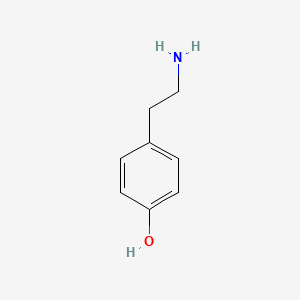 Compound
- Category
- Compound
What Tyramine is, and what it does.
- Does it work
- It isn't sold as a supplement. It matters to people on medicines that block monoamine oxidase, who get a food list, and to anyone watching aged and fermented foods.
- How much to take
- No supplemental amount is on record and none is intended. Ordinary dietary intake is broken down in the gut wall and liver before it reaches circulation.
- Time to feel it
- With that breakdown route intact, a normal meal produces nothing. Where medication blocks it, a rise in blood pressure can appear within an hour or two.
- The first dose
- For most people a day of aged cheese or salami passes unnoticed, because intestinal monoamine oxidase clears it first. The effect shows on a monitor, not in feel.
- With regular use
- There's no long term supplemental use to describe. What shifts over weeks is diet: fermentation time, warmth and storage drive how much builds up in a food.
- How well tolerated
- This is the caution itself. Anyone on a non-selective monoamine oxidase inhibiting medicine should follow their prescriber's dietary advice and check before changing it.
- How it feels
- Nothing at ordinary intake. Where the breakdown route is blocked, people describe a pounding headache and a racing heart, which is a reason to seek medical help.
- The overlooked benefit
- It doubles as a freshness signal. Content climbs with ageing, fermentation time, warmth and microbial load, so how a protein food was stored predicts how much it holds.
The proof, claim by claim.
What these words mean
These words describe the research, not the molecule's worth. Research strength is how much work stands behind one claim, and it is never a product score.
- Indirect release of stored noradrenalineNarrative review
- First pass breakdown by intestinal monoamine oxidaseNarrative review
3 more claims
- Rise in blood pressure when monoamine oxidase is inhibitedNarrative review
- Binding at trace amine-associated receptor 1In vitro study
- Accumulation in aged, cured and fermented foodsNarrative review
Why these belong in the same formula, 9 pairings
Why these belong in the same formula. Each row says what the basis is, from settled biochemistry through to a trial that measured the pair.
Tyramine is formed when the carboxyl group is removed from tyrosine by aromatic amino acid decarboxylase in tissue or by bacterial tyrosine decarboxylase in fermenting food. That relationship is settled biochemistry and is why tyramine accumulates in protein-rich foods as they age. It also means high free tyrosine in a fermenting substrate is what sets the ceiling on tyramine formation.
Aromatic amino acid decarboxylase and the bacterial tyrosine decarboxylases are both PLP-dependent enzymes. Without the active B6 cofactor the decarboxylation step does not run. This is textbook enzymology and applies equally to the human enzyme and the microbial one.
Both MAO-A and MAO-B carry a covalently bound FAD derived from riboflavin. Intestinal and hepatic MAO-A is what degrades most dietary tyramine before it reaches the general circulation. The cofactor requirement is established, though a clinically meaningful effect of riboflavin status on tyramine handling has not been demonstrated in people.
Semicarbazide-sensitive amine oxidase and diamine oxidase are copper-dependent enzymes that oxidise primary amines including tyramine. They act alongside MAO rather than instead of it. The cofactor dependence is established biochemistry, not a reason to take copper for this purpose.
Tyramine in aged cheese, cured meat and fermented soy is produced by bacterial decarboxylation, and strains within the lactobacilli and enterococci differ sharply in whether they carry the gene. This is why starter culture selection is a real lever on tyramine content in fermented food. It cuts both ways, since a decarboxylase-negative culture keeps tyramine low while a positive one raises it.
Tyramine is an indirect sympathomimetic. It is taken up into noradrenergic nerve terminals and displaces stored noradrenaline into the synapse, which raises blood pressure and heart rate. Caffeine pushes in the same direction through a different route. The combination is worth flagging for anyone with elevated blood pressure rather than assumed to be trivial.
If intestinal MAO activity is reduced, dietary tyramine passes into circulation instead of being degraded in the gut wall, which is the mechanism behind the classic pressor reaction seen with MAO-inhibiting drugs. St John's wort shows weak MAO inhibition in laboratory assays but is generally not considered to produce a clinically relevant tyramine reaction at usual intakes. The row is here as a mechanistic caution, not a demonstrated interaction.
Rhodiola extracts inhibit MAO-A and MAO-B in vitro. Whether that translates into reduced intestinal degradation of dietary tyramine in people has not been shown. Read this as mechanistic rather than clinical.
Colonic bacteria decarboxylate residual tyrosine, so the resident community is one determinant of luminal tyramine load independent of what was eaten. Strains differ in whether they carry the decarboxylase, which means a probiotic can shift this in either direction. The practical size of that shift in people has not been established.
Nothing specific on file for Tyramine. Match the label to the daily amount above, and tell your doctor what you take.
Not medical advice. Show the label to your pharmacist.What Tyramine actually does.
Tyramine is a natural trace compound made from an amino acid. It isn't typically taken as a supplement, it's eaten, and it builds up in protein foods that have aged, been cured, fermented or gone off.
3 more mechanisms
Tyramine works indirectly on the nervous system. It gets taken up into nerve endings and pushes out stored noradrenaline, which raises blood pressure and heart rate, rather than acting on receptors much on its own.
Most dietary tyramine gets broken down by an enzyme in the gut wall and liver before it reaches general circulation, which is why normal amounts in food don't raise blood pressure in most people.
When that gut and liver enzyme is blocked, by certain medications, that protective barrier disappears and ordinary dietary tyramine can cause a sharp rise in blood pressure. This is the reason behind the food restrictions attached to those medicines.
Where Tyramine comes from.
A natural substance that builds up in aged cheese, cured meat and other fermented foods as they sit. Your gut normally breaks it down before it does anything. It matters mostly because certain medicines block that breakdown.
What this route gives you
The same molecule is reached more than one way. Which route a given product used is a manufacturing choice, and the finished compound is the same either way.
5 steps on record
All tyramine begins as tyrosine. In food, proteolysis during ageing releases the free amino acid that bacteria then act on.
Bacterial tyrosine decarboxylase in fermenting or ageing food, or PLP-dependent aromatic amino acid decarboxylase in tissue, removes the carboxyl group to give tyramine. Both routes require the active vitamin B6 cofactor.
Engineered bacteria such as Corynebacterium glutamicum and Escherichia coli can be built to run the tyrosine to tyramine step at scale as an intermediate toward other tyrosine-derived molecules.
Research-grade material is isolated as the hydrochloride and crystallised for stability.
Sold as an analytical standard. In everyday exposure it is not a manufactured ingredient at all, it is a constituent that forms in the food.
Getting Tyramine from food.
The whole-food sources on file. A supplement closes the gap, it does not replace dinner.
A gram-for-gram figure (how much of each you would eat to match a dose) will appear here once it is sourced and reviewed. This page will not print a number it cannot cite.
The forms it comes in.
3 more forms
The essence, in one line each.
- Reports that gut-bacteria-derived tyramine contributed to intestinal barrier damage and to metabolic changes involving elevated liver fat in the models studied.Animal study. Wei J et al., 2025 (BMC Medicine). PMID 41299593 ↗
4 more findings
- Establishes a microbial route to N-acetyltyramine by engineering Corynebacterium glutamicum, using tyramine as the pathway intermediate.In vitro study. Poethe SS et al., 2026 (Journal of Biological Engineering). PMID 42316222 ↗
- A metabolomics analysis of post-exercise gut permeability in which tyramine appeared among the amine metabolites tracked after hemp fiber ingestion.Randomised trial. Nieman DC et al., 2025 (Nutrients). PMID 40284247 ↗
- Reports that pharmacological manipulation of trace amine signalling, tyramine and octopamine included, altered isolation-induced social and neurochemical changes in flies.Animal study. Petrović M et al., 2026 (Scientific Reports). PMID 42380397 ↗
- On-farm black seed meal supplementation shifted physiological and metabolite measures in goats, with biogenic amines among the parameters reported.Animal study. Gurrapu P et al., 2025 (Frontiers in Veterinary Science). PMID 41659958 ↗
Chosen from the 7 we read for Tyramine.
The studies, linked.
5 sources behind our Tyramine verdict, every one linked to PubMed, the journal or ClinicalTrials.gov.
- Clinical trialSub-study to Evaluate the Effect of An Oral Dose of Tyramine in Subjects Completing 26 Weeks of Participation in PRESTO (TVP-1012/133)ClinicalTrials.gov ↗Phase 3, 55 participants, Completed
4 more linked trials
- Clinical trialA Phase I Parallel Group Study in Healthy Subjects to Evaluate the Effect of Multiple Oral Doses of BI 1467335 and Phenelzine as Positive Control on Blood Pressure Response to Oral Tyramine (Double-blind, Randomised, Placebo-controlled Design for BI 1467335 Treatment Groups, Open Label for Phenelzine)ClinicalTrials.gov ↗Phase 1, 53 participants, Terminated
- Clinical trialA Phase 1, Blinded, Placebo-Controlled, Crossover TR-701 FA Study of Blood Pressure Response Post-Tyramine ChallengeClinicalTrials.gov ↗Phase 1, 30 participants, Completed
- Clinical trialA Phase I, Multiple-Dose, Randomized, Double-Blind, Oral Tyramine Pressor Response Study Comparing CX157 Tablets to Placebo in Healthy Male VolunteersClinicalTrials.gov ↗Phase 1, 12 participants, Completed
- ClinicalTrials.gov ↗
From clinical trials and PubMed, ranked by study type and citation weight, not cherry-picked.
Problems people have reported.
Read this carefully. These are 192 voluntary, unverified reactions reported to the FDA (openFDA). The number mostly reflects how popular Tyramine is, not how risky it is. A report is not proof Tyramine caused anything. It is a signal of what to watch for, nothing more.
3 more reported effects
Source: openFDA adverse-event reports. Voluntary reporting, not an incidence rate.
FDA Disclaimer: These statements have not been evaluated by the Food and Drug Administration. This information is for educational purposes only and is not intended to diagnose, treat, cure, or prevent any disease. Consult your healthcare provider before starting any supplement regimen.