49.1% of US adults
aged 20 and over tried to lose weight in the past 12 months, in the National Health and Nutrition Examination Survey fielded from 2013 to 2016.
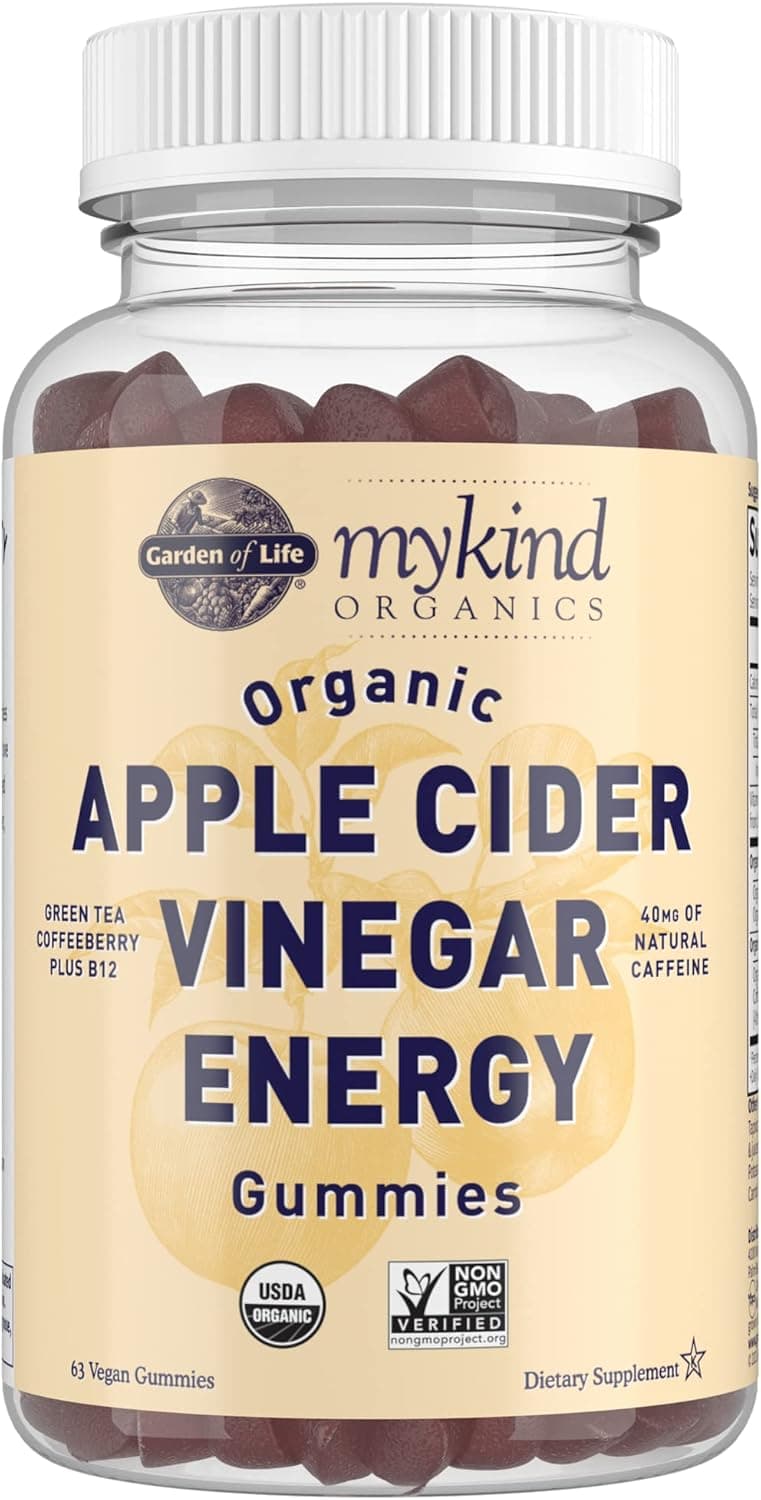
CDC National Center for Health Statistics, 2018Organic Apple Cider Vinegar (5% Acetic Acid) is the lead active here, studied most for steadier blood sugar after meals. In the 500 mg Apple Cider Vinegar Fruit Blend with seven others, listed first. Vitamin B12 is the most studied active here, with 17 human studies behind it, each one cited. Who it fits: for everyone, adults.
Verified by IngredientMDThe panel on the left is the one we evaluated, line by line.
All 10 actives checked against the clinical evidence: dose, form, and what the research actually shows.
Doses, ratios, and how the ingredients work together. That assessment is the verdict above: "Backed by human trials".
The verdict is public and identical whether or not a brand pays. A formula that does not clear the bar gets nothing.
Read by the engine against 2.1 million data points from clinical trials, PubMed and more than a hundred vetted sources. No individual reviewer is named or implied.
Cross-checked against 508 documented interactions for these actives.
Public health figures the engine matched to this formula's ingredients. Reported by their source, cited and dated, never written by the brand.
49.1% of US adults
aged 20 and over tried to lose weight in the past 12 months, in the National Health and Nutrition Examination Survey fielded from 2013 to 2016.
CDC National Center for Health Statistics, 201815% of US adults
reported following a calorie-counting eating pattern in the past year, in the International Food Information Council's 2025 Food and Health Survey.
International Food Information Council, 202675% of US adults
said they were trying to limit or avoid sugar in their diet, in the International Food Information Council's 2025 Food and Health Survey.
International Food Information Council, 202657.6%
During 2017 to 2018, 57.6% of US adults aged 20 and over reported using a dietary supplement in the past 30 days.
CDC National Center for Health Statistics47% of US adults
aged 20 and over kept added sugars under the Dietary Guidelines limit of 10 percent of daily calories, leaving more than half of US adults over that limit, in the What We Eat in America dietary recall component of NHANES 2015-2016.
USDA Agricultural Research Service, Food Surveys Research Group, 201995% of US adults
aged 20 and over ate one or more snacks on the day their diet was recorded, in the What We Eat in America dietary recall component of NHANES 2017 through March 2020.
USDA Agricultural Research Service, Food Surveys Research Group, 202459 to 66 days
was the median time it took adults to make a new daily health habit automatic across the studies a 2024 review pooled, with individuals ranging from 4 to 335 days.
Systematic review and meta-analysis, 202461% to 74%
About 61 to 74 percent of adults refilling a long-term medicine on their own stopped within a year, versus 33 to 44 percent on one set pickup day.
Cohort study, 2015USDA advises fortified foods or supplements after 50
In its national intake tables USDA notes that "it is advised that individuals over 50 meet their B12 requirement with fortified foods or supplements".
NHANESRandomised trial, 2025
In healthy adults, polyphenols from raspberry leaf tea lowered the post-meal glucose and insulin rise compared with control.
NutrientsSystematic review, 2025
Probiotic, prebiotic and synbiotic interventions shifted gut microbiota composition and short-chain fatty acid output, acetate included, with wide variation between studies.
Nutrition JournalRandomised trial, 2025
Daily strawberry intake was associated with modest gains on some cognitive tests and small changes in cardiovascular measures in the older adults studied.
Nutrition, metabolism, and cardiovascular disRandomised trial, 2024
In a crossover trial of 18 overweight adults, one week of elderberry juice lowered post-meal blood glucose and raised fat oxidation during and after a meal test.
NutrientsMeta-analysis, 2019
Across trials in 180 people, elderberry was linked to shorter and milder upper airway symptoms, with a large average effect.
Complementary Therapies in MedicineRandomised trial, 2025
Daily lemon verbena extract was reported to change subjective energy ratings against placebo on questionnaire endpoints. The botanical studied is Aloysia citriodora, not lemon fruit.
Journal of PsychopharmacologySystematic review, 2021
The authors pooled the available elderberry trials for upper respiratory symptoms and concluded the evidence is limited, the trials small and the certainty low, with some reporting shorter symptom duration.
BMC Complementary Medicine and TherapiesRandomised trial, 2026
Thirty days of eating selenium-enriched strawberries shifted blood sugar handling and liver enzyme readings versus a control group, though biofortification means selenium may explain only part of the change.
NutrientsRandomised trial, 2025
A spore-forming probiotic changed stool frequency alongside microbiota and short-chain fatty acid shifts, with acetate reported among the measured metabolites.
MedicineMeta-analysis, 2022
Blueberry supplementation improved some components of metabolic health in pooled trials, with the effect differing by marker.
Food & functionMeta-analysis, 2021
Pooled trials reported lower fasting plasma glucose and small reductions in body mass index with dietary acetic acid intake, with lipid findings inconsistent.
Journal of the Academy of Nutrition and DieteticsMeta-analysis, 2019
Across combined trials, strawberries improved several heart-related blood markers in adults, including lower LDL cholesterol and a blood marker of inflammation.
Food & functionSystematic review, 2025
Pooling human trials of apple cider vinegar, the review found small reductions in body weight and waist measures in adults with raised blood sugar or excess body weight, and described the evidence base as limited.
NutrientsRandomised trial, 2025
In ten adults with excess weight, a week of twice-daily elderberry juice shifted activity in 234 genes versus 59 on placebo, a gene-activity signal rather than a measured outcome.
NutrientsMeta-analysis, 2026
Circulating short-chain fatty acid profiles, acetate among them, differed between groups and were proposed as a biomarker rather than a cause.
Biomedical JournalOpen-label trial, 2025
A small pilot study of black raspberry supplementation in older adults with excess body weight reported changes in the measured markers. The authors present it as preliminary and hypothesis-generating.
npj Science of FoodMeta-analysis, 2025
Across trials, blueberries produced small improvements in memory and executive function measures.
BiogerontologyRandomised trial, 2023
In a controlled trial, daily strawberry powder was linked to better memory test scores and lower self-reported mood symptom scores, both measured test results rather than clinical outcomes.
NutrientsRandomised trial, 2025
Lemon myrtle extract taken alongside low-load bodyweight resistance training was reported to increase muscle size measures in older adults relative to training alone. Lemon myrtle is Backhousia citriodora, a different plant from lemon fruit.
The Journal of Nutrition, Health and AgingSystematic review, 2026
A systematic review of dietary flavonoids and mood that includes berry anthocyanin trials. The authors report mixed results across a heterogeneous set of studies.
Nutrition ReviewsSystematic review, 2025
A systematic review of berry-derived polyphenols and bone, reporting mainly preclinical signals with limited human data on bone density markers.
NutrientsRandomised trial, 2026
A low dose of lemon myrtle supplementation was reported to increase hypertrophy measures during low-load resistance training in older adults. Again Backhousia citriodora, not Citrus limon.
Journal of Aging ResearchRandomised trial, 2016
The authors reported shorter symptom duration and lower symptom scores in the elderberry arm compared with placebo among long-haul air travellers.
NutrientsOpen-label trial, 2025
Black raspberry lozenges were associated with lower benzo[a]pyrene DNA adduct levels in buccal cells of adults who smoke. An exposure biomarker, not a health outcome.
CarcinogenesisRandomised trial, 2021
The trial did not detect a change in resting or exercise energy expenditure or in substrate use with acetic acid supplementation.
International Journal of Exercise ScienceMeta-analysis, 2017
Across randomised trials, blueberry supplementation did not produce a detectable change in systolic or diastolic blood pressure.
The paperRandomised trial, 2020
In this double-blind placebo-controlled trial the investigators did not detect a difference in symptom duration between elderberry extract and placebo. A failure to detect a difference is not a demonstration that none exists.
Journal of General Internal MedicineRandomised trial, 2019
A single wild blueberry drink improved accuracy on cognitive tasks in 7 to 10 year old schoolchildren a few hours after intake.
European journal of nutritionPopulation figures from public health data. Context for the category, not a statement about any individual and not a claim about this product.
Each line below was derived from this formula's own record at the time of verification. Nothing here was written by the brand, and nothing can be added that the evidence does not carry.
Time-to-effect windows the engine read from the trial record. Each is a window a named study measured, cited and dated, never written by the brand.
A randomised, double-blind, parallel-group dose-finding trial in 120 older people with mild vitamin B12 deficiency, defined as serum B12 of 100 to 300 pmol/L with methylmalonic acid at or above 0.26 umol/L, gave daily oral cyanocobalamin at 2.5, 100, 250, 500 or 1000 ug for 16 weeks. Mean plasma methylmalonic acid fell 16%, 16%, 23%, 33% and 33% across those doses. Daily doses of 647 to 1032 ug accounted for 80% to 90% of the estimated maximum reduction. The window was measured on a blood marker of B12 status, not on a symptom.
An open-label randomised single-dose pharmacokinetic study in 20 healthy men aged 20 to 45, conducted and authored by staff of Emisphere Technologies, the developer of the SNAC carrier under test, measured serum vitamin B12 after one 5 mg cyanocobalamin tablet, with six men on the marketed tablet. Time to peak serum B12 was 6.83 hours for the marketed tablet and 0.5 hours for the carrier coformulation. Absolute bioavailability was 2.16% and 5.09% respectively. One trial, six men per arm. Serum concentration was measured, not any symptom.
In a small preliminary study, nine older adults with early age-related memory changes drank wild blueberry juice daily for 12 weeks and improved on paired-associate learning and word-list recall, with scores compared against a demographically matched group given a berry placebo drink. One study of nine people, juice rather than a capsule.
In a kinetic study, 6 healthy volunteers took a single 30 ml oral dose of elderberry extract providing 147.3 mg of anthocyanins. The anthocyanins appeared in plasma and were excreted in urine within 7 hours, with a plasma half-life of about 1.74 hours.
In a randomised crossover trial, adults with overweight consumed anthocyanin-rich elderberry juice twice daily for 1 week. After that week, gut microbiota composition had shifted, post-meal blood glucose was lower and fat oxidation was higher than after placebo.
Windows measured in the cited trials. Context for how the active behaves over time, not a statement about any individual and not a claim about this product.
9 ingredients, from each one's own page.
Markers move first. Methylmalonic acid and homocysteine start shifting within a week or two, while anything you would notice takes several weeks of daily use.
The fibre side acts on the meal it's taken with, so fullness can shift the same day. Regularity settles over two to three weeks, and lipid markers over about a month.
The post-meal glucose effect happens with that same meal, inside a couple of hours. It reads as a flatter curve on a glucose monitor.
Taken with a plant-based meal, the iron-absorption effect happens during that meal. Vitamin C status and urinary citrate shift within a few days of daily use.
Nothing lands as a sensation. The trials that measured anything ran daily for four weeks or more and read the change off a lipid panel or a post-meal glucose curve.
There is no acute effect to time. Urolithin production starts within a day of eating the fruit, and the studied changes are gut and marker measures across weeks of regular intake.
Think in weeks, not days. Cognitive trials read change around eight to twelve weeks, and vascular markers move before anything shows up in how sharp you feel.
Nutrient markers on a blood panel move over weeks to months. Carotenoid and vitamin C status is usually where a change turns up first.
It moves on a scale of days, not minutes. Studies that started daily use at the first sign of a sniffle followed the difference over the next two to four days.
How each ingredient usually behaves over time, from its own page on IngredientMD. General timing for the ingredient, not a measurement of this product.
What each form is, and where it fits in a formula. Measured findings carry the study that reported them.
A naturally occurring cobalamin carrying a hydroxyl group at the cobalt position, water soluble and sensitive to light, so it is normally handled and packed in amber or opaque containers. It is the cobalamin supplied in most sterile injectable B12 solutions and is the pharmacopoeial injectable in much of Europe. Like cyanocobalamin it is not a coenzyme form and is converted inside the cell.
Hydroxocobalamin is the reference injectable comparator in modern deficiency trials. In a randomised controlled trial in 50 Roux-en-Y gastric bypass patients with subnormal serum B12, bimonthly intramuscular hydroxocobalamin (2000 micrograms loading, 1000 micrograms follow-up) normalised serum B12 in all participants, with no significant difference from daily oral methylcobalamin in methylmalonic acid or homocysteine at 6 months. In a human crossover study at physiological oral doses (n=59 low cobalamin status, n=42 normal status), two days of oral dosing produced median holotranscobalamin rises of 6, 7 and 14 pmol/L at 1.5, 3 and 6 micrograms, lower than the 19, 23 and 30 pmol/L measured for cyanocobalamin in the same study. That short-term oral comparison is one trial at microgram doses, and the longer-retention properties often attributed to this form come from parenteral dosing and animal work rather than oral human trials.
Descriptions of the form itself, read from the cited studies. Not a comparison between products and not a statement about any individual.
It is a gummy, which is the format people actually keep taking, and adherence decides whether anything else matters.
Because the effect builds and holds only with continued daily use, a steady recurring supply is the practical way to keep it going.
Put an earned verification on your own product page.
These statements have not been evaluated by the Food and Drug Administration. This product is not intended to diagnose, treat, cure, or prevent any disease. This record is not medical advice. Always consult your healthcare provider before starting any supplement regimen.