49.1% of US adults
aged 20 and over tried to lose weight in the past 12 months, in the National Health and Nutrition Examination Survey fielded from 2013 to 2016.
CDC National Center for Health Statistics, 2018Chromax Chromium Picolinate is the lead active here, studied most for healthy insulin response. 13 human studies on Chromax Chromium Picolinate back this formula, each one cited. Each serving carries 200 mcg of Chromax Chromium Picolinate, inside the range the published research used. Who it fits: for everyone, adults.
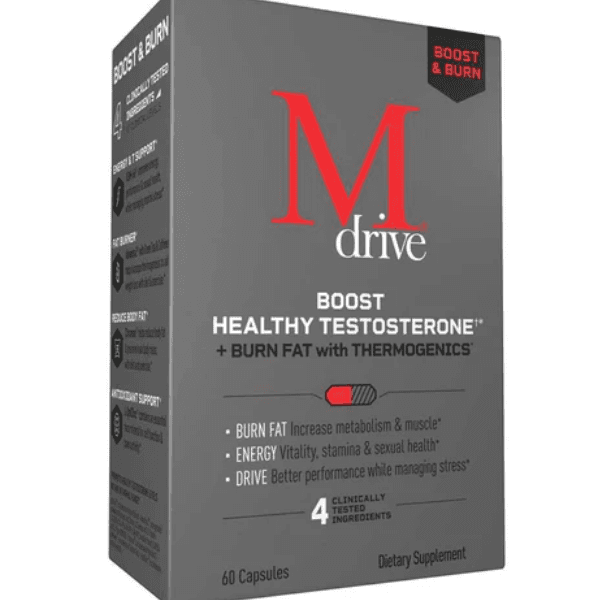
Verified by IngredientMDThe panel on the left is the one we evaluated, line by line.
All 5 actives checked against the clinical evidence: dose, form, and what the research actually shows.
Doses, ratios, and how the ingredients work together. That assessment is the verdict above: "Stronger in a pair".
The verdict is public and identical whether or not a brand pays. A formula that does not clear the bar gets nothing.
Read by the engine against 2.1 million data points from clinical trials, PubMed and more than a hundred vetted sources. No individual reviewer is named or implied.
Cross-checked against 715 documented interactions for these actives.
Public health figures the engine matched to this formula's ingredients. Reported by their source, cited and dated, never written by the brand.
49.1% of US adults
aged 20 and over tried to lose weight in the past 12 months, in the National Health and Nutrition Examination Survey fielded from 2013 to 2016.
CDC National Center for Health Statistics, 201815% of US adults
reported following a calorie-counting eating pattern in the past year, in the International Food Information Council's 2025 Food and Health Survey.
International Food Information Council, 202675% of US adults
said they were trying to limit or avoid sugar in their diet, in the International Food Information Council's 2025 Food and Health Survey.
International Food Information Council, 202657.6%
During 2017 to 2018, 57.6% of US adults aged 20 and over reported using a dietary supplement in the past 30 days.
CDC National Center for Health Statistics47% of US adults
aged 20 and over kept added sugars under the Dietary Guidelines limit of 10 percent of daily calories, leaving more than half of US adults over that limit, in the What We Eat in America dietary recall component of NHANES 2015-2016.
USDA Agricultural Research Service, Food Surveys Research Group, 201995% of US adults
aged 20 and over ate one or more snacks on the day their diet was recorded, in the What We Eat in America dietary recall component of NHANES 2017 through March 2020.
USDA Agricultural Research Service, Food Surveys Research Group, 202459 to 66 days
was the median time it took adults to make a new daily health habit automatic across the studies a 2024 review pooled, with individuals ranging from 4 to 335 days.
Systematic review and meta-analysis, 202461% to 74%
About 61 to 74 percent of adults refilling a long-term medicine on their own stopped within a year, versus 33 to 44 percent on one set pickup day.
Cohort study, 2015Systematic review and meta-analysis, 2018
Across 46 trials, moderate caffeine doses of 3 to 6 mg per kg shortened endurance time-trial times by about 2.2 percent and raised power output by about 3 percent.
Sports MedicineMeta-analysis, 2005
Caffeine lowered the rating of perceived exertion during exercise by about 5.6 percent versus placebo across 21 studies, so a given effort felt easier.
Scandinavian Journal of Medicine & Science in SportsSystematic review, 2021
A Bayesian pooling of 12 trials found ashwagandha did better than placebo on strength and power, cardiorespiratory fitness and fatigue-recovery measures in healthy men and women.
Journal of Functional Morphology and KinesiologyMeta-analysis, 2025
Pooled trials in volleyball players found better performance on jump and sport-specific tests after caffeine than after placebo.
NutrientsMeta-analysis, 2026
Pooled trials in rugby players found that a single caffeine dose improved various physical performance measures specific to the sport.
Frontiers in NutritionRandomised trial, 2015
In resistance-trained adults, p-synephrine taken alone and with caffeine increased the total number of repetitions completed during a resistance exercise session without raising perceived exertion.
Journal of the International Society of SportSystematic review, 2014
An early review of human trials found ashwagandha root extract lowered self-reported stress and tension scores relative to placebo, though the trials were small and varied in method.
Journal of alternative and complementary medicineSystematic review and meta-analysis, 2018
Caffeine produced a small increase in maximal muscle strength (standardized mean difference 0.20) and muscle power (0.17) over placebo, pooled across ten strength trials and ten power trials.
Journal of the International Society of Sports NutritionSystematic review and meta-analysis, 2010
Caffeine improved orientation and attention (standardized mean difference 0.55) and reduced errors on cognitive tests versus placebo, in a Cochrane review of 13 randomized trials in shift workers.
Cochrane Database of Systematic ReviewsReview, 2016
A review of thermogenic ingredients reported that p-synephrine from bitter orange raises resting energy expenditure modestly at commonly used doses, and the human studies reviewed did not report consistent changes in cardiovascular measures.
Phytotherapy research : PTRMeta-analysis, 2020
Pooling controlled trials, ashwagandha supplementation was associated with a higher maximal oxygen uptake in both athletes and healthy adults.
NutrientsSystematic review, 2013
In a Cochrane review of 9 randomized trials in overweight adults, chromium picolinate was associated with a modest average weight reduction of about 1.1 kg over 12 to 16 weeks, an effect the reviewers rated low-certainty and of debatable clinical relevance.
Cochrane Database of Systematic ReviewsMeta-analysis, 2024
Across nine randomised trials in 558 adults, ashwagandha formulations lowered perceived stress scale scores by about 4.7 points and lowered serum cortisol compared with placebo.
ExploreMeta-analysis, 2014
Across 25 trials in adults with high blood sugar, chromium lowered HbA1c, a marker of average blood sugar, by about 0.55 percentage points and fasting glucose by about 1.15.
Journal of Clinical Pharmacy and TherapeuticsMeta-analysis, 2024
Across 14 trials in adults with elevated blood sugar, chromium did not measurably change body weight, BMI, waist size or fat mass overall, with a fat drop only in older adults on picolinate form.
Journal of Trace Element Medicine and BiologyMeta-analysis, 2025
Across 20 trials in adults carrying excess weight, chromium lowered fasting insulin by about 12.6 pmol/L and an insulin resistance marker by about 0.26, without a significant change in fasting glucose.
Journal of Trace Element Medicine and BiologyMeta-analysis, 2025
Pooled trials found chromium lowered inflammatory markers in the blood, markers rather than outcomes.
Biological Trace Element ResearchRandomised trial, 2011
Acute intake of a multi-ingredient herbal preparation was assessed for blood pressure and heart rate response, with the bitter orange component named within the blend rather than tested alone.
International journal of medical sciencesMeta-analysis, 2021
Pooling five randomised trials in 400 adults, ashwagandha extract produced a small improvement in overall sleep (standardised mean difference 0.59), most prominent at 600 mg a day or more taken for at least eight weeks.
PLoS OneSystematic review, 2021
Among the herbs reviewed for effects on testosterone in men, ashwagandha had the most supportive human data, with several trials reporting higher circulating testosterone versus placebo.
Advances in nutritionMeta-analysis, 2021
Pooling 24 randomized trials in adults with high blood sugar, chromium supplementation was linked to small reductions in triglycerides (about 6.5 mg/dL) and total cholesterol (about 7.8 mg/dL) and a small rise in HDL cholesterol (about 2.2 mg/dL), effects the authors described as small and possibly below clinical importance.
Journal of Trace Elements in Medicine and BiologyPopulation figures from public health data. Context for the category, not a statement about any individual and not a claim about this product.
Each line below was derived from this formula's own record at the time of verification. Nothing here was written by the brand, and nothing can be added that the evidence does not carry.
Time-to-effect windows the engine read from the trial record. Each is a window a named study measured, cited and dated, never written by the brand.
In a 60 day randomised, double-blind, placebo-controlled trial, 60 stressed healthy adults took 240 mg of a standardised ashwagandha extract (Shoden) once daily or placebo. The ashwagandha arm showed a larger fall in Hamilton Anxiety Rating Scale scores (p = .040) and in morning cortisol (p < .001) than placebo, with the DASS-21 change near-significant (p = .096). A separate 8 week randomised, double-blind, placebo-controlled dose-ranging trial enrolled 131 adults with self-reported high stress and analysed 98, measuring reduced Perceived Stress Scale scores at 125, 250 and 500 mg per day of an aqueous root and leaf extract. Two trials on two different extracts, both landing in the same eight to nine week band.
In a double-blind placebo-controlled crossover trial, 15 resistance-trained women took 4 mg per kg body mass of caffeine 60 minutes before a strength and power battery. Squat one-repetition maximum rose 4.5 percent and countermovement jump height 7.6 percent against placebo. A separate crossover trial in 11 active adults began its cycling tests 45 minutes after a 3 mg per kg capsule and recorded a peak-power increase of about 4 percent on the first day of ingestion.
One crossover trial mapped the day-to-day time course in 11 healthy active adults taking 3 mg per kg per day for 20 consecutive days. Peak cycling power in the incremental test stayed about 4.0 percent above placebo for the first 15 days and the difference then lessened. Wingate peak power was still raised on days 1, 4, 15 and 18 by about 4.9 percent. The authors describe the shrinking margin as progressive tolerance. This is one trial with 11 participants.
In a randomised, double-blind, placebo-controlled crossover in 12 recreationally active young men, a single 1 g dose of standardised Cordyceps militaris extract taken 30 minutes before a maximal cycling test was followed by faster Stroop reaction times across the session compared with placebo.
Windows measured in the cited trials. Context for how the active behaves over time, not a statement about any individual and not a claim about this product.
Five ingredients, from each one's own page.
Most of the change lands between weeks four and eight of daily use. Some people notice easier evenings inside the first two weeks.
It acts on insulin signalling quietly, so the change shows up on a glucose panel rather than as a moment you could point to.
Of a dose: a little warmth, a small lift in heart rate and less pull toward the next snack. It fades over several hours.
To peak in the blood, and most people notice the shift in alertness inside that first hour. The strongest point lands around ninety minutes.
Give it three to four weeks of daily use. Any change shows up in how a hard session goes rather than as something you notice on the first day.
How each ingredient usually behaves over time, from its own page on IngredientMD. General timing for the ingredient, not a measurement of this product.
What each form is, and where it fits in a formula. Measured findings carry the study that reported them.
A neutral coordination complex of trivalent chromium bound to three picolinic acid ligands. Picolinic acid is the same molecule the body forms from tryptophan, here acting as the carrier around a single chromium centre.
In a six-month double-blind, placebo-controlled pilot trial in 24 overweight adults with binge eating disorder, chromium picolinate at 600 or 1000 micrograms per day was associated with lower fasting glucose than placebo, with a larger reduction in the higher-dose group. Fasting glucose is a metabolic marker, not a clinical endpoint.
Descriptions of the form itself, read from the cited studies. Not a comparison between products and not a statement about any individual.
It is a capsule, so the amount per serving is fixed and travels without measuring.
Put an earned verification on your own product page.
These statements have not been evaluated by the Food and Drug Administration. This product is not intended to diagnose, treat, cure, or prevent any disease. This record is not medical advice. Always consult your healthcare provider before starting any supplement regimen.