25% of employed US adults
reported difficulty focusing at work in the past month, in the American Psychological Association's 2024 Work in America survey.
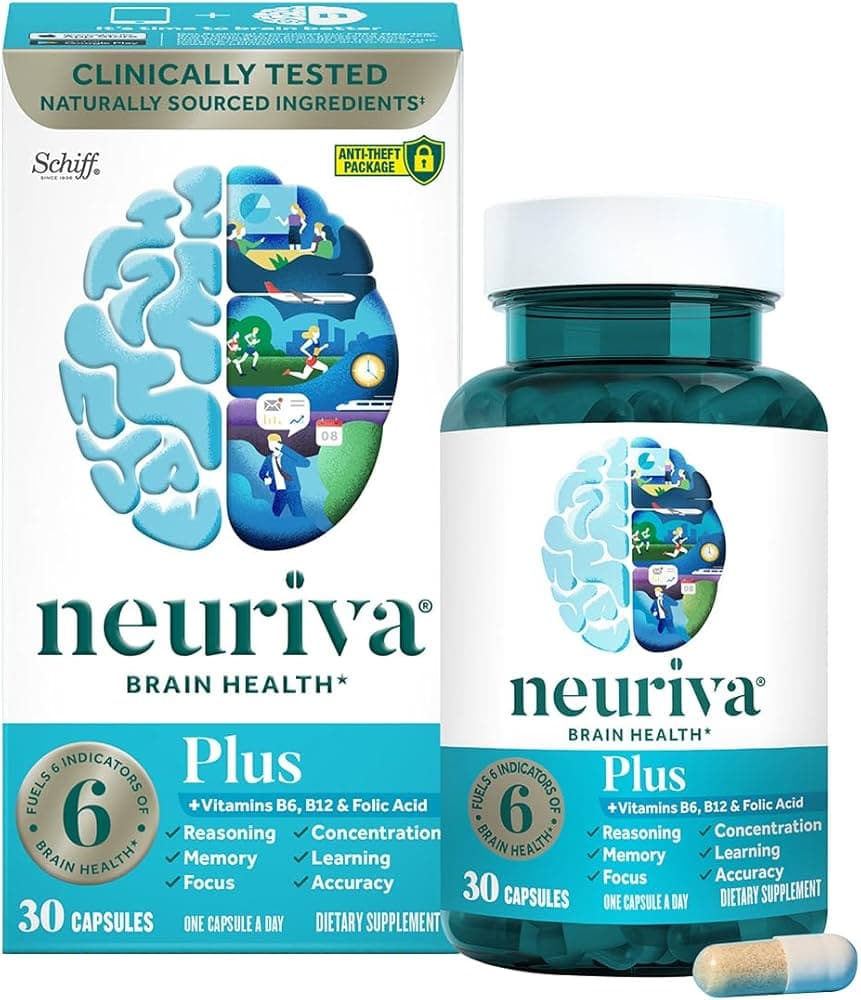
American Psychological Association and The Harris Poll, 2024Phosphatidylserine is the lead active here, studied most for memory and recall. Vitamin B12 is the most studied active here, with 17 human studies behind it, each one cited. Each serving carries 680 mcg of Folate, inside the range the published research used. Who it fits: for everyone, adults.
Verified by IngredientMDThe panel on the left is the one we evaluated, line by line.
All 5 actives checked against the clinical evidence: dose, form, and what the research actually shows.
Doses, ratios, and how the ingredients work together. That assessment is the verdict above: "Stronger in a pair".
The verdict is public and identical whether or not a brand pays. A formula that does not clear the bar gets nothing.
Read by the engine against 2.1 million data points from clinical trials, PubMed and more than a hundred vetted sources. No individual reviewer is named or implied.
Cross-checked against 569 documented interactions for these actives.
Public health figures the engine matched to this formula's ingredients. Reported by their source, cited and dated, never written by the brand.
25% of employed US adults
reported difficulty focusing at work in the past month, in the American Psychological Association's 2024 Work in America survey.
American Psychological Association and The Harris Poll, 202412.7% of US adults aged 60 and over
in 21 states reported increased confusion or memory loss in the preceding 12 months, in the 2011 Behavioral Risk Factor Surveillance System.
CDC, MMWR Surveillance Summaries, 201517% of US adults
reported trouble focusing over the past year, in a 2017 Ipsos poll of 1,008 adults.
Ipsos, 201757.6%
During 2017 to 2018, 57.6% of US adults aged 20 and over reported using a dietary supplement in the past 30 days.
CDC National Center for Health Statistics7.4% of US adults
reported serious difficulty concentrating, remembering or making decisions in 2023, up from 5.3% in 2013, and among adults aged 18 to 39 the share nearly doubled, from 5.1% to 9.7%, in the Behavioral Risk Factor Surveillance System.
Neurology, 2025More than 1 in 4 US adults aged 50 to 73
regularly take a supplement for their brain health, rising to 36% of those over 74, and memory is the reason 71% give, in AARP's 2019 survey.
AARP, 201953% of US adults
say they spend too much time on their smartphone, about 7 in 10 of adults under 30, in a Pew Research Center survey of 9,750 adults in 2026.
Pew Research Center, 202659 to 66 days
was the median time it took adults to make a new daily health habit automatic across the studies a 2024 review pooled, with individuals ranging from 4 to 335 days.
Systematic review and meta-analysis, 202461% to 74%
About 61 to 74 percent of adults refilling a long-term medicine on their own stopped within a year, versus 33 to 44 percent on one set pickup day.
Cohort study, 2015USDA advises fortified foods or supplements after 50
In its national intake tables USDA notes that "it is advised that individuals over 50 meet their B12 requirement with fortified foods or supplements".
NHANESRandomised trial, 2010
Over 15 weeks, older adults with memory complaints taking phosphatidylserine bound to omega-3 improved immediate verbal recall compared with placebo, in a trial of 157 participants.
The paperRandomised trial, 2007
In 818 adults aged 50 to 70 with raised homocysteine, 3 years of daily folic acid at 800 micrograms improved memory and information-processing speed scores compared with placebo.
The LancetRandomised trial, 2026
An extract from whole coffee cherry improved time trial performance, while no change was detected in the other performance measures taken.
Journal of the International Society of Sports NutritionSystematic review and meta-analysis, 2021
Across 22 trials in 41,633 people, folic acid supplements lowered the top blood pressure number by about 1.1 points and the bottom by about 0.2 points.
Critical Reviews in Food Science and NutritionSystematic review and meta-analysis, 2023
Across 21 trials in 2,025 adults, folic acid improved flow-mediated dilation, a measure of how well arteries widen, by about 2.6 percentage points.
Nutrition JournalMeta-analysis, 2018
Pooling 46 placebo-controlled trials, caffeine at 3 to 6 mg per kg of body weight improved endurance time-trial completion time by about 2.2 percent and mean power output by about 3.0 percent, with several individual studies showing no benefit.
Sports MedicineMeta-analysis, 2024
Pooling 10 randomised trials in 563 adults, green coffee bean extract lowered systolic blood pressure by about 2.95 mmHg and diastolic by about 2.15 mmHg, with a larger shift in adults whose starting readings were higher and no difference in heart rate detected.
The paperSystematic review, 2021
Across randomised trials, green coffee extract supplying 180 to 376 mg of chlorogenic acid reduced waist circumference and triglycerides and raised HDL cholesterol, while decaffeinated coffee supplying about 511 mg of chlorogenic acid moved fasting blood glucose by about -0.81, an estimate whose confidence interval still crossed zero.
MedicinaMeta-analysis, 2000
Across 12 randomized trials in 1,114 people, daily folic acid of 0.5 to 5 mg lowered blood homocysteine concentrations by about 25 percent.
Indian Heart JournalAbout 23 percent lower plasma homocysteine at 0.8 mg daily, with 0.2 mg and 0.4 mg reaching roughly 60 and 90 percent of that
Lowers homocysteine, a blood marker tied to heart risk. Measured in adults, standardised to a pretreatment homocysteine of 12 micromol per litre (95% CI 21 to 26 percent).
Meta-analysisMeta-analysis, 2020
Across 19 studies in 222,067 adults, higher coffee intake was linked to lower blood liver enzyme markers, an association from observational data, not proof of cause.
Journal of the American College of NutritionRandomised trial, 2026
Oral phosphatidylserine was reported to change vascular function measures in adults with high blood sugar. These are vascular markers rather than clinical events.
Journal of Applied PhysiologyMeta-analysis, 2023
Pooling randomised trials of coffee supplementation, circulating homocysteine rose while no clear change in leptin was detected.
Current pharmaceutical designRandomised trial, 2025
A trial of sunflower-derived phosphatidylserine measured cognitive test scores in healthy children, using the sunflower form, not the usual soy-based one.
Nutrition JournalSystematic review, 2023
Across 18 studies, pyridoxine on its own and in combinations improved nausea scores in pregnancy on both the Rhode and PUQE scales, a use with a long clinical track record.
Archives of Gynecology and ObstetricsSystematic review and meta-analysis, 2021
Pooling three trials in children, 200 to 300 mg a day produced a small improvement in attention ratings versus placebo (effect size 0.36), while overall and hyperactivity measures did not reach significance.
Journal of Alternative and Complementary MedicineMeta-analysis, 2026
Pooling 26 studies, about 26.9 percent of adolescent girls worldwide had low folate status, rising to 35.5 percent in Africa, with wide variation between settings.
PLoS OneRandomised trial, 2008
In a crossover trial of ten healthy men, 600 mg a day for ten days lowered the peak cortisol rise from moderate cycling by about 39 percent versus placebo.
Journal of the International Society of Sports NutritionPopulation figures from public health data. Context for the category, not a statement about any individual and not a claim about this product.
Each line below was derived from this formula's own record at the time of verification. Nothing here was written by the brand, and nothing can be added that the evidence does not carry.
One pairing in this formula has been studied as a combination in human trials. Each finding below is what a named study measured, cited and dated, never written by the brand.
In a 2025 network meta-analysis of 16 randomized trials in healthy adults, folic acid taken together with vitamins B6 and B12 lowered blood homocysteine more than any single supplement, with the 1 mg folic acid plus 7.2 mg B6 plus 20 micrograms B12 arm ranked most effective versus placebo (mean difference -1.03 micromol/L, 95% CI -1.71 to -0.36).
Research strength. Research strength says how much work stands behind the combination. It is never a product score.
Fail closed. Where actives were studied on their own rather than together, each shows on its own evidence, never a combined effect no trial measured.
Independent record. Every finding is cited to a named trial, dated, and never written by the brand.
Findings from trials that studied these actives as a combination. Context for how the actives were tested together, not a statement about any individual and not a claim about this product.
Time-to-effect windows the engine read from the trial record. Each is a window a named study measured, cited and dated, never written by the brand.
An expert consensus on vitamin B6 use, developed by a six-member Delphi panel with a structured evidence-quality assessment, calculated from pharmacokinetic parameters that complete clearance of vitamin B6 from the body takes a washout period of about 20 to 40 days after intake stops.
A systematic review and Bayesian meta-analysis drew on 108 articles from 14,002 screened records and modelled blood folate against folic acid intake using one-compartment pharmacokinetic models. Red blood cell folate rose 1.78 fold from baseline to steady state at 375 to 570 ug folic acid per day, and reaching that steady state took a median of 36 weeks, 95% credible interval 27 to 52 weeks. Serum or plasma folate rose 11.6% for every 100 ug per day of folic acid intake, 95% credible interval 8.4 to 14.9.
A kinetic study in six healthy men aged 22 to 31 gave 3.6 umol per day, 1.6 mg, of deuterium-labelled folic acid for four weeks, with folate tracked in serum, erythrocytes and urine by microbiological assay and gas chromatography mass spectrometry. Serum folate reached its maximum concentration in about 18 days, while isotopic labelling of erythrocyte folate kept rising across the whole four weeks. After supplementation stopped, red blood cell folate and urinary folate excretion declined linearly, and serum folate fell with a slow-phase half-life of 18.7 days. One study, six men, no control group.
A randomised, double-blind, parallel-group dose-finding trial in 120 older people with mild vitamin B12 deficiency, defined as serum B12 of 100 to 300 pmol/L with methylmalonic acid at or above 0.26 umol/L, gave daily oral cyanocobalamin at 2.5, 100, 250, 500 or 1000 ug for 16 weeks. Mean plasma methylmalonic acid fell 16%, 16%, 23%, 33% and 33% across those doses. Daily doses of 647 to 1032 ug accounted for 80% to 90% of the estimated maximum reduction. The window was measured on a blood marker of B12 status, not on a symptom.
An open-label randomised single-dose pharmacokinetic study in 20 healthy men aged 20 to 45, conducted and authored by staff of Emisphere Technologies, the developer of the SNAC carrier under test, measured serum vitamin B12 after one 5 mg cyanocobalamin tablet, with six men on the marketed tablet. Time to peak serum B12 was 6.83 hours for the marketed tablet and 0.5 hours for the carrier coformulation. Absolute bioavailability was 2.16% and 5.09% respectively. One trial, six men per arm. Serum concentration was measured, not any symptom.
Phosphatidylserine with DHA was safe and well tolerated in a double-blind placebo-controlled trial of 157 non-demented elderly adults at 300 mg per day for 15 weeks, and at 100 mg per day through a 30-week open-label extension.
Windows measured in the cited trials. Context for how the active behaves over time, not a statement about any individual and not a claim about this product.
Five ingredients, from each one's own page.
Nothing quick. Conversion to the active coenzyme happens within hours, but plasma pyridoxal 5-phosphate takes a couple of weeks to settle at a new level.
Red cell folate climbs over roughly four to eight weeks. It's a blood panel change rather than a sensation.
Markers move first. Methylmalonic acid and homocysteine start shifting within a week or two, while anything you would notice takes several weeks of daily use.
Caffeine peaks in the blood 30 to 60 minutes after a cup, and most people notice alertness lifting within about 20 minutes.
Trials measuring recall and the stress hormone response took readings around that point, and the change builds gradually.
How each ingredient usually behaves over time, from its own page on IngredientMD. General timing for the ingredient, not a measurement of this product.
It is a capsule, so the amount per serving is fixed and travels without measuring.
Because the effect builds and holds only with continued daily use, a steady recurring supply is the practical way to keep it going.
Put an earned verification on your own product page.
These statements have not been evaluated by the Food and Drug Administration. This product is not intended to diagnose, treat, cure, or prevent any disease. This record is not medical advice. Always consult your healthcare provider before starting any supplement regimen.