
Vitamin D3NHANES 2005 to 2006
About 41% of US adults
have blood vitamin D below the level considered sufficient.
Peer-reviewed analysisVitamin K2 is the lead active here, studied most for bone strength. 13 human studies on Vitamin K2 back this formula, each one cited. Each serving carries 45 mcg of Vitamin K2, inside the range the published research used. Who it fits: skews toward women, adults.
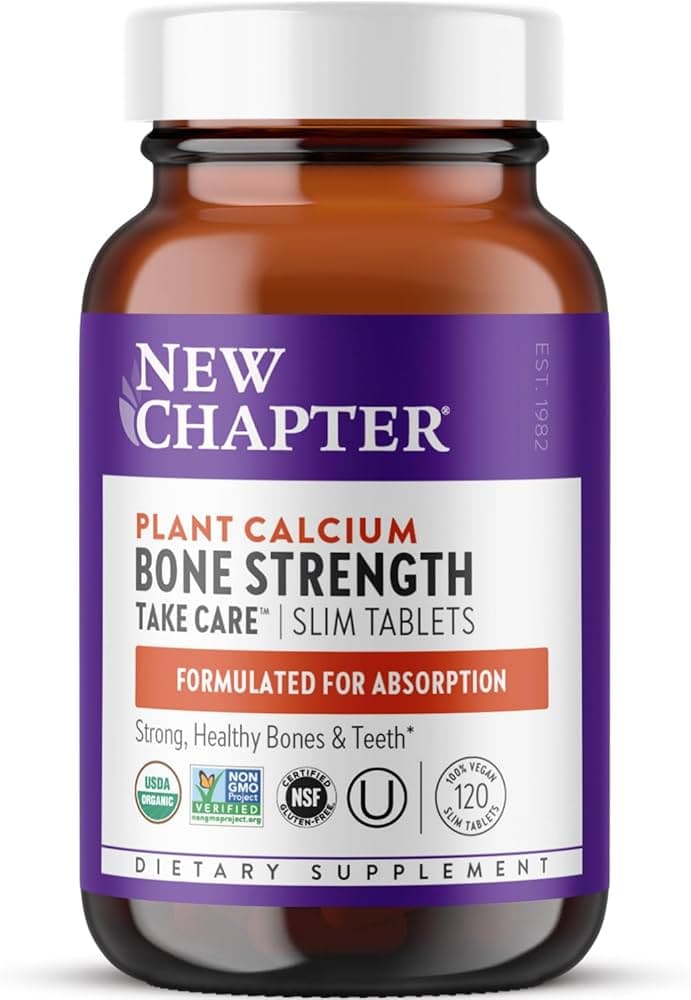 Verified by IngredientMD
The panel on the left is the one we evaluated, line by line.
All 8 actives checked against the clinical evidence: dose, form, and what the research actually shows.
Doses, ratios, and how the ingredients work together. That assessment is the verdict above: "Strong evidence, strong dose".
The verdict is public and identical whether or not a brand pays. A formula that does not clear the bar gets nothing.
Read by the engine against 2.1 million data points from clinical trials, PubMed and more than a hundred vetted sources. No individual reviewer is named or implied.
Cross-checked against 1,943 documented interactions for these actives.
Public health figures the engine matched to this formula's ingredients. Reported by their source, cited and dated, never written by the brand.
About 41% of US adults
have blood vitamin D below the level considered sufficient.
Peer-reviewed analysisAbout 42% of Americans
take in less calcium than the estimated average requirement.
NHANESAbout 48% of Americans
take in less magnesium than recommended from food and drink.
NIH Office of Dietary SupplementsMore than 1 in 3 US adults
regularly sleep less than the recommended seven hours a night.
Peer-reviewed analysis36.5% of US adults
aged 18 and over had pain in a hip, knee, or foot in the past 3 months, in the 2019 National Health Interview Survey.
CDC National Center for Health Statistics, 202030.7% of US adults
aged 18 and over had pain in a shoulder, elbow, wrist, or hand in the past 3 months, in the 2019 National Health Interview Survey.
CDC National Center for Health Statistics, 202057.6%
During 2017 to 2018, 57.6% of US adults aged 20 and over reported using a dietary supplement in the past 30 days.
CDC National Center for Health Statistics30.2% of non-Hispanic white women
aged 18 and over reported pain, aching, or stiffness in or around a joint lasting more than 3 months, in the 2013 to 2014 National Health Interview Survey.
CDC National Center for Health Statistics, 201628.4% of non-Hispanic white men
aged 18 and over reported pain, aching, or stiffness in or around a joint lasting more than 3 months, in the 2013 to 2014 National Health Interview Survey.
CDC National Center for Health Statistics, 201695% of US adults
aged 19 and over had vitamin D intake from food and beverages below the Estimated Average Requirement, in National Health and Nutrition Examination Survey data from 2005 to 2016.
National Health and Nutrition Examination Survey analysis, 202018.8% of US adults aged 75 and over
needed the help of another person to carry out routine daily tasks outside the home, and 10.6% needed help with basic daily tasks like bathing or dressing, in the 2014 National Health Interview Survey.
CDC National Center for Health Statistics, 201659 to 66 days
was the median time it took adults to make a new daily health habit automatic across the studies a 2024 review pooled, with individuals ranging from 4 to 335 days.
Systematic review and meta-analysis, 202461% to 74%
About 61 to 74 percent of adults refilling a long-term medicine on their own stopped within a year, versus 33 to 44 percent on one set pickup day.
Cohort study, 2015Meta-analysis, 2022
Across nine trials in postmenopausal women, vitamin K2 raised lumbar spine bone density by about 2.2 percent and forearm bone density by about 1.6 percent compared with control.
Journal of Bone and Mineral MetabolismMeta-analysis, 2007
In adults 50 and older, calcium with or without vitamin D slowed bone density loss by about 0.5% at the hip and 1.2% at the spine.
The LancetMeta-analysis, 2025
Across six mostly observational studies in 2,327 Japanese adults, habitual natto intake linked to much higher blood MK-7 and modestly greater bone density, a food-intake association, not a measured effect.
Front NutrRandomised trial, 2020
In this trial of a low daily MK-7 amount, bone mineral density changed over the study period in the group given it, an imaging measurement, not a clinical event.
Calcified Tissue InternationalRandomised trial, 2025
Calcium taken around prolonged load carriage lowered blood markers of bone calcium loss compared with placebo. These are markers, not measured bone outcomes.
Randomised trialMeta-analysis, 2025
In nine trials of 2,570 older women with low bone mass, vitamin K2 changed blood signals tied to bone turnover, not actual bone strength.
Front EndocrinolMeta-analysis, 2020
Across 125 trials in 12,541 people, strontium toothpaste reduced tooth sensitivity to touch more than fluoride toothpaste, a moderate-certainty result.
Journal of Dental ResearchMeta-analysis, 2017
Pooling nine trials, strontium acetate toothpaste lowered tooth sensitivity scores more than placebo at every time point and stimulus tested, while strontium chloride performed the same as placebo.
American Journal of DentistryMeta-analysis, 2024
In adults with excess body weight, calcium supplementation produced small reductions in body weight and body fat compared with placebo.
Meta-analysisMeta-analysis, 2024
Across 10 trials in 318 athletes, vitamin D3 raised blood vitamin D by about 14.8 nmol/L and hinted at better muscle strength, though few trials leave that uncertain.
Frontiers in NutritionRandomised trial, 1998
Taking 1,200 mg of calcium a day reduced overall premenstrual symptom scores by 48% from baseline by the third cycle, compared with a 30% drop on placebo.
American Journal of Obstetrics and GynecologyMeta-analysis, 2014
Pooling 30 trials of 5,615 adults, vitamin D gave a small rise in overall muscle strength, with no measurable effect on muscle mass or power.
Journal of Clinical Endocrinology and MetabolismRandomised trial, 2025
Vitamin D3 supplementation changed the inflammatory protein CHI3L1 and oxidative stress markers in adults with a chronic demyelinating condition. These are markers, not clinical outcomes.
Neuropsychopharmacology ReportsRandomised trial, 2017
Over one year in women after midlife with lower than normal bone density, a nightly combination of melatonin, strontium citrate, vitamin D3 and vitamin K2 raised lumbar spine bone mineral density by 4.3% and left femoral neck by 2.2% compared with placebo, so the effect belongs to the blend rather than to strontium alone.
AgingMeta-analysis, 2024
Across 20 studies, daily vitamin D3 raised blood vitamin D levels by about 10.4 nmol/L more than the same dose of vitamin D2, roughly 40 percent more.
Advances in NutritionMeta-analysis, 2012
In trials directly comparing the two forms, vitamin D3 raised blood 25-hydroxyvitamin D more than vitamin D2 did (P = 0.001).
American Journal of Clinical NutritionMeta-analysis, 2014
Across 23 trials of 4,082 adults, vitamin D raised bone mineral density at the femoral neck by about 0.8%, with no measurable change at the spine, hip, or other sites.
LancetMeta-analysis, 2019
Across 30 randomised trials, no difference was detected between strontium, potassium and calcium sodium phosphosilicate toothpastes for tooth sensitivity at 2, 4 and 8 weeks, and the placebo response itself was large.
Journal of DentistrySystematic review, 2026
The authors report that effects on glycaemic measures differ across groups with differing baseline blood sugar status, so results are not uniform across populations. The outcomes assessed are blood markers.
NutrientsRandomised trial, 1996
In 31 weight-training adults, 12 weeks of vanadyl sulfate at 0.5 mg per kg per day produced no detectable change in body composition or in bench press or leg extension gains versus placebo.
International Journal of Sport NutritionCohort study, 2025
Seminal fluid phosphate concentration was linked with semen quality measures but did not track with supplement intake. An association between two measurements, not a cause.
European Journal of EndocrinologyCohort study, 2025
Maternal levels of several trace elements and metals, including tin, were examined against repeated measures of fetal and early growth, an observational association and not proof that any element caused a change.
Occupational and Environmental MedicineRandomised trial, 2024
Two randomised trials compared a lower daily calcium dose with the higher standard dose in pregnancy. The lower dose met the prespecified non-inferiority margin for one outcome but not for every outcome tested, which is a statement about margins and not a demonstration of equivalence.
The New England Journal of MedicineRandomised trial, 2013
In healthy postmenopausal women, three years of 180 micrograms a day of MK-7 slowed bone density loss at the spine and hip, and improved bone strength.
The paperCohort study, 2004
In 2,847 Framingham Offspring participants, higher dietary silicon intake tracked with higher hip bone mineral density in men and younger women, with differences of up to about 10 percent between the highest intake group (over 40 mg a day) and the lowest (under 14 mg a day), and no association in women after midlife.
Journal of Bone and Mineral ResearchRandomised trial, 2005
In 50 women with sun-aged facial skin taking 10 mg silicon a day as choline-stabilised orthosilicic acid for 20 weeks, forearm skin roughness fell (Rt down about 16 percent versus up 8 percent on placebo) and self-rated hair and nail brittleness scores dropped from baseline.
Archives of Dermatological ResearchRandomised trial, 2008
Over 12 months in 136 women with lower than average bone density, choline-stabilised orthosilicic acid added to calcium and vitamin D raised the bone collagen formation marker PINP at 12 months on the 6 and 12 mg silicon doses, without a clear dose response, while spine bone mineral density did not change.
BMC Musculoskeletal DisordersRandomised trial, 1996
Three weeks of oral vanadyl sulfate at 100 mg per day raised the insulin-stimulated glucose infusion rate by about 82 percent in seven adults with high blood sugar, while six adults with excess body weight and normal blood sugar showed no change.
The paperRandomised trial, 2023
In 44 adults with excess weight and high blood sugar, 12 weeks of vanadium-enriched yeast at 0.9 mg a day lowered body measurements and blood sugar markers and raised insulin sensitivity versus placebo.
Biological Trace Element ResearchRandomised trial, 2000
Across 16 adults with high blood sugar, six weeks of vanadyl sulfate lowered fasting blood sugar and a longer-term sugar marker.
MetabolismRandomised trial, 2013
Twenty-two women taking 10.5 mg silicon a day as monomethylsilanetriol for 4 weeks had significantly higher fasting serum and urinary silicon than on placebo, with no reported adverse effects or serum biochemistry changes.
Nutrition and MetabolismPopulation figures from public health data. Context for the category, not a statement about any individual and not a claim about this product.
Each line below was derived from this formula's own record at the time of verification. Nothing here was written by the brand, and nothing can be added that the evidence does not carry.
Two pairings in this formula have been studied as combinations in human trials. Each finding below is what a named study measured, cited and dated, never written by the brand.
In a meta-analysis of eight randomized trials, vitamin K2 taken together with vitamin D raised total bone mineral density and lowered undercarboxylated osteocalcin, a marker of vitamin K status.
In a 12-month randomised, double-blind trial, 98 adults aged 50 and over drank a litre a day of either a naturally calcium- and magnesium-rich mineral water or a low-mineral water. The mineral-rich group had fewer falls at the 6-month assessment and higher appendicular muscle mass, with the minerals delivered as drinking water rather than a capsule.
Research strength. Research strength says how much work stands behind the combination. It is never a product score.
Fail closed. Where actives were studied on their own rather than together, each shows on its own evidence, never a combined effect no trial measured.
Independent record. Every finding is cited to a named trial, dated, and never written by the brand.
Findings from trials that studied these actives as a combination. Context for how the actives were tested together, not a statement about any individual and not a claim about this product.
Time-to-effect windows the engine read from the trial record. Each is a window a named study measured, cited and dated, never written by the brand.
In the trial record, blood vitamin D rises for about 3 months of daily vitamin D3 and then holds at a plateau, near 69 nmol/L at 1,000 IU a day, from a starting level near 41 nmol/L.
In a stable-isotope study, 10 healthy adults aged 22 to 31 took labelled vitamin K1 for six days and then an intravenous dose to resolve its disposal kinetics. Plasma vitamin K1 cleared with half-times of about 0.22 and 2.66 hours, and absorption of an oral dose was about 13 percent.
A double-blind randomised dose-finding trial gave 60 postmenopausal women aged 50 to 69 either 0, 50, 100 or 200 micrograms of menaquinone-7 daily for four weeks on a controlled diet. The ratio of carboxylated to undercarboxylated osteocalcin rose dose dependently, with significant differences from the 0 microgram group at 100 and 200 micrograms. A companion 12-week trial in 120 people aged 20 to 69 confirmed the change at 100 micrograms daily. Both studies were run by authors affiliated with the R and D division of J-Oil Mills. An independent 8-week double-blind trial in 55 healthy prepubertal children found the same direction at 45 micrograms daily. What was measured is a blood marker of vitamin K status, not bone density and not a sensation.
A double-blind randomised trial gave 244 healthy postmenopausal women either placebo or 180 micrograms of menaquinone-7 daily for three years, with bone mineral density measured by DXA at baseline and after each year. Menaquinone-7 decreased the age-related decline in bone mineral content and bone mineral density at the lumbar spine and femoral neck, but not at the total hip. The effect is a slowed decline rather than a gain, and the trial ran three years rather than weeks.
A randomised cross-over trial in ten women of mean age 69 gave a single 500 mg dose of calcium as citrate fasting, citrate with a meal, fortified juice or a dairy product meal, with blood drawn before and at 1, 2, 4 and 6 hours. Serum ionised and total calcium increased significantly from baseline over six hours, with the rise similar after fortified juice, delayed when citrate was taken with a meal and smaller after the dairy meal. A separate double-blind cross-over trial in 25 postmenopausal women measured parathyroid hormone and a bone resorption marker 12 hours after a single calcium dose. Ten participants is a small sample, and what moved was blood chemistry, not a sensation.
In a randomised double blind placebo controlled trial, 50 women with photodamaged facial skin took 10 mg of silicon a day as choline stabilised orthosilicic acid, or placebo, for 20 weeks. Skin roughness rose in the placebo group and fell in the supplemented group, with the change from baseline significantly different between groups for two of the roughness parameters, and self rated brittleness of hair and nails was lower at 20 weeks than at baseline in the supplemented group. Serum silicon was higher in the supplemented group at 20 weeks. The nail and hair readings were visual analogue self ratings, not instrument measurements. The window is recorded for soluble orthosilicic acid, which is the form the trial fed.
In a randomised double blind placebo controlled trial, 48 women with fine hair took 10 mg of silicon a day as choline stabilised orthosilicic acid, or placebo, for 9 months. Hair cross sectional area rose significantly against baseline in the supplemented group and not in the placebo group, and the fall in elastic gradient was smaller in the supplemented group, minus 4.52 percent against minus 11.9 percent. The effects are modest, they come from one trial, and the measurement was made on hair fibres rather than on how hair looked.
Windows measured in the cited trials. Context for how the active behaves over time, not a statement about any individual and not a claim about this product.
8 ingredients, from each one's own page.
25-hydroxyvitamin D climbs over roughly six to twelve weeks of daily dosing before it plateaus. It's a blood level you watch rather than a feeling.
Clotting factor carboxylation responds within days, and circulating phylloquinone tracks what you ate this week. It reads on a lab measure rather than as a feeling.
Days for absorption, weeks for the marker. Undercarboxylated osteocalcin falls across roughly four to twelve weeks of daily intake, and that is a status marker rather than an outcome.
No acute sensation. Parathyroid hormone responds within hours, while bone density shifts over a year or more of steady intake, so this reads on a panel and a scan.
A looser stool can turn up the same day at the higher end. Sleep and cramp changes usually settle in across two to four weeks, because it is refilling a body-wide store.
This works on a months to years timescale. The change is read on a bone density scan rather than noticed, and even then the reading needs correcting first.
Blood and urine silicon respond within hours of a dose. Nail, hair and skin measures took three to six months of daily intake in the studies that tracked them.
There's nothing acute to time. Human studies have run for weeks and read blood markers rather than sensations, so any change is something a panel picks up.
How each ingredient usually behaves over time, from its own page on IngredientMD. General timing for the ingredient, not a measurement of this product.
What each form is, and where it fits in a formula. Measured findings carry the study that reported them.
The animal-sourced form of vitamin D, made in skin under UVB light and produced commercially from lanolin. Fat-soluble, so it travels with dietary fat and is stored in body fat.
In a 12-week double-blind randomised controlled trial in 108 young women in urban Bangalore, most of whom began vitamin D-deficient, daily vitamin D3 at 400, 600 or 800 IU in a fortified wafer raised serum 25-hydroxyvitamin D, parathyroid hormone fell over time, and effects on bone-turnover markers were modest and not dose specific. The 800 IU dose brought 65 percent of participants to sufficiency.
Descriptions of the form itself, read from the cited studies. Not a comparison between products and not a statement about any individual.
It is a tablet, so the amount per serving is fixed and it stores well.
Where two of this brand's products carry actives the literature has read together, the pairing and its basis are below. The evidence word is the corpus row's own confidence, never a score.
D3 absorbs calcium, K2 directs it to bones, Mg activates D3. The complete calcium optimization system.
Active vitamin D switches on the calcium-binding proteins and channels in the gut lining that carry calcium across the intestinal wall, so the body absorbs far more of the calcium it takes in. With too little vitamin D, much of a calcium dose passes straight through unabsorbed.
Established biochemistry. No combination trial has tested this exact pairing.
Put an earned verification on your own product page.
These statements have not been evaluated by the Food and Drug Administration. This product is not intended to diagnose, treat, cure, or prevent any disease. This record is not medical advice. Always consult your healthcare provider before starting any supplement regimen.