
ZincNHANES 2005 to 2016
About 15% of US adults
take in less zinc than the estimated average requirement.
Peer-reviewed analysisBiotin is the lead active here, studied most for skin health. Zinc is the most studied active here, with 22 human studies behind it, each one cited. Each serving carries 320 mg of Saw Palmetto, inside the range the published research used. Who it fits: made for men, adults.
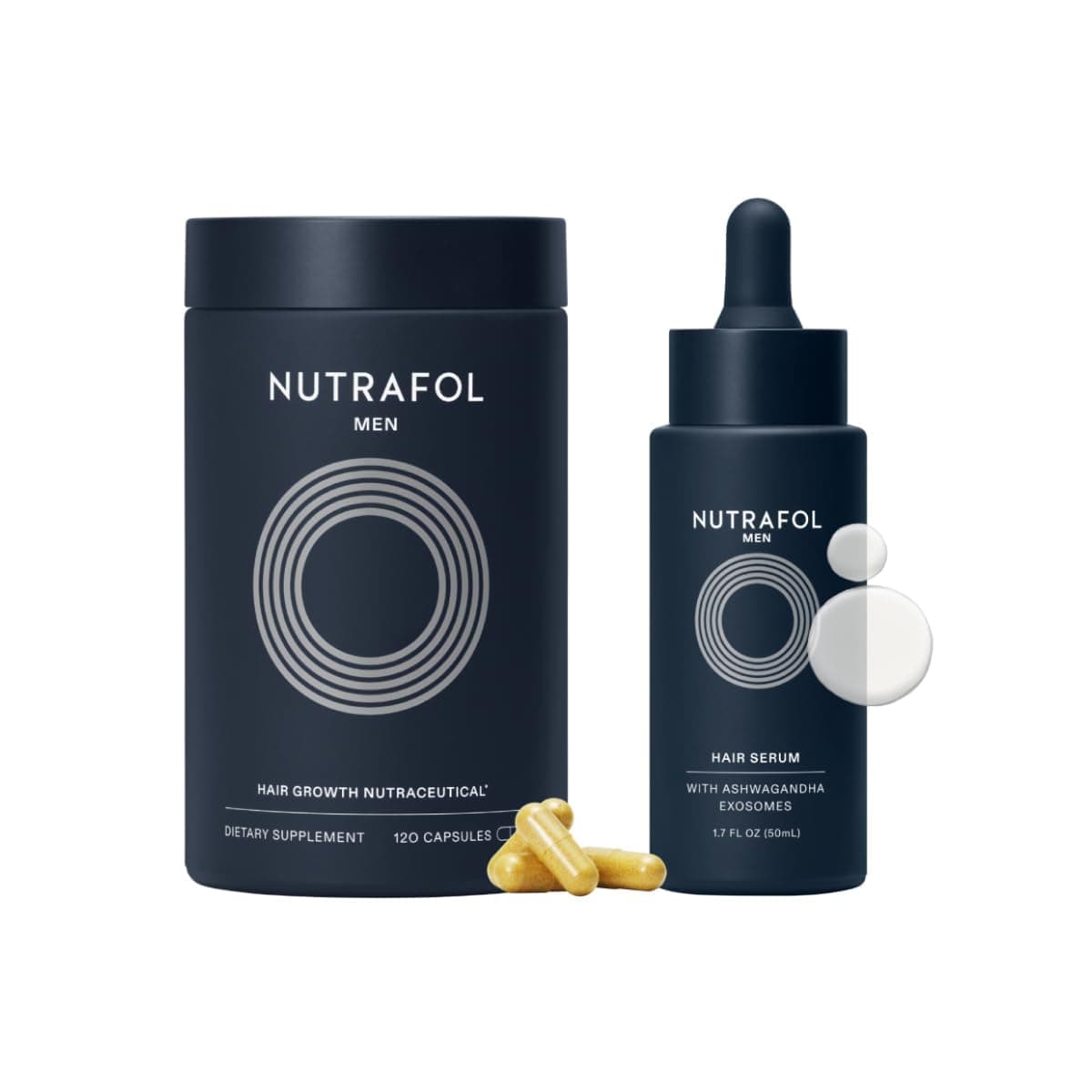 Verified by IngredientMD
The panel on the left is the one we evaluated, line by line.
All 7 actives checked against the clinical evidence: dose, form, and what the research actually shows.
Doses, ratios, and how the ingredients work together. That assessment is the verdict above: "Strong evidence, strong dose".
The verdict is public and identical whether or not a brand pays. A formula that does not clear the bar gets nothing.
Read by the engine against 2.1 million data points from clinical trials, PubMed and more than a hundred vetted sources. No individual reviewer is named or implied.
Cross-checked against 440 documented interactions for these actives.
Public health figures the engine matched to this formula's ingredients. Reported by their source, cited and dated, never written by the brand.
About 15% of US adults
take in less zinc than the estimated average requirement.
Peer-reviewed analysis35.1% of US adults
had at least one sunburn during the previous 12 months, in the 2024 National Health Interview Survey.
CDC National Center for Health Statistics, 202650% of US adults
said they have a very or somewhat consistent skin care routine, in a YouGov survey fielded in April 2024.
YouGov, 202446% of US women
said they use moisturizer at least once a day, in a YouGov survey fielded in April 2024.
YouGov, 20249% of US women
said they would spend more than $60 on a single skin care product, in a YouGov survey fielded in April 2024.
YouGov, 202457.6%
During 2017 to 2018, 57.6% of US adults aged 20 and over reported using a dietary supplement in the past 30 days.
CDC National Center for Health Statistics29.0% of US women
aged 18 and older said they always use sunscreen when outside for more than one hour on a sunny day, in the 2020 National Health Interview Survey.
CDC National Center for Health Statistics, 202259 to 66 days
was the median time it took adults to make a new daily health habit automatic across the studies a 2024 review pooled, with individuals ranging from 4 to 335 days.
Systematic review and meta-analysis, 202461% to 74%
About 61 to 74 percent of adults refilling a long-term medicine on their own stopped within a year, versus 33 to 44 percent on one set pickup day.
Cohort study, 2015Randomised trial, 2012
In a two-year open-label study, about 38% of men taking saw palmetto 320 mg a day showed increased hair growth, versus 68% of those taking finasteride.
International Journal of Immunopathology and PharmacologyMeta-analysis, 2022
Across 10 randomised trials, curcumin taken around hard exercise lowered creatine kinase by about 66 IU/L, reduced muscle soreness ratings and widened joint range of motion by about 6.5 degrees.
Phytotherapy ResearchMeta-analysis, 2023
Pooling 26 trials in 1,721 people, hydrolysed collagen improved skin hydration and elasticity compared with placebo, with the hydration effect varying by collagen source and how long it was taken.
NutrientsClinical trial, 1990
In people with weak, splitting nails, oral biotin increased nail thickness by about 25 percent under scanning electron microscopy and the nail surface became more regular.
Journal of the American Academy of DermatologyRandomised trial, 2025
Healthy adults taking low-molecular-weight collagen peptides showed higher skin moisture and reduced wrinkle depth measurements than placebo over the trial period.
Journal of microbiology and biotechnologyMeta-analysis, 2022
Pooling trials, ashwagandha lowered self-reported anxiety and stress scores compared with placebo.
Phytotherapy researchSystematic review, 2026
An umbrella review found curcumin formulas eased knee pain and improved function scores in adults, most often using absorption-boosted versions.
Frontiers in medicineMeta-analysis, 2025
In a network meta-analysis of 19 trials with 1,658 participants, biotin-containing preparations were among the supplements linked to greater hair density, though most individual trials were small.
Frontiers in nutritionSystematic review, 2017
Across 18 reported cases, all involving an existing deficiency or related condition, hair and nail growth improved after biotin, with limited evidence of benefit in people who are not deficient.
Skin Appendage DisordersMeta-analysis, 2025
Pooling trials, curcumin supplementation was linked to small improvements in overall cognitive performance in adults.
Frontiers in nutritionMeta-analysis, 2025
In a pooled analysis of supplement trials, ashwagandha was among the interventions linked with better self-reported sleep quality.
NutrientsMeta-analysis, 2024
Pooling nine randomized trials in 558 adults, ashwagandha lowered perceived stress scores by about 4.7 points and serum cortisol by about 2.6 micrograms per deciliter compared with placebo.
ExploreMeta-analysis, 2021
Pooling 19 randomised double-blind trials in 1,125 people aged 20 to 70, about 90 days of hydrolysed collagen improved skin hydration and elasticity and reduced wrinkles compared with placebo.
International Journal of DermatologyRandomised trial, 2025
In 60 adults with self-perceived thinning hair, 90 days of a bioactive fatty acid extract from saw palmetto raised terminal and total hair counts in both front and back scalp areas compared with placebo and reduced shedding, with no adverse events reported.
Journal of Cosmetic DermatologyMeta-analysis, 2026
Pooling randomised trials, oral peptide supplements including collagen peptides improved skin hydration and elasticity measures compared with placebo, with small to moderate effect sizes.
Frontiers in medicineMeta-analysis, 2025
A network meta-analysis comparing nutritional supplements used for knee joint comfort, with curcumin among the compared entries and ranking uncertainty acknowledged by the authors.
NutrientsMeta-analysis, 2021
Across five randomized trials in 400 adults, ashwagandha extract improved overall sleep with a small pooled effect (standardized mean difference -0.59), most noticeable at doses of 600 mg or more per day taken for at least eight weeks.
PLoS OneRandomised trial, 2025
A tocotrienol-enriched beverage was examined for psychological wellbeing scores, antioxidant defence measures and genomic stability markers in older participants.
NutrientsMeta-analysis, 2018
Across 27 studies, the hexanic extract of saw palmetto was associated with about 0.64 fewer nighttime urinations and a 2.75 mL/s higher peak urinary flow rate compared with placebo.
BJU InternationalSystematic review, 2026
Standardised saw palmetto extracts were linked to better urinary symptom scores across recent trials, though the extracts studied varied widely.
Drugs in ContextMeta-analysis, 2020
Pooling four randomized trials in 142 athletes and healthy adults, ashwagandha raised maximal oxygen uptake (VO2max) by about 3.0 mL/kg/min compared with placebo.
NutrientsMeta-analysis, 2023
Pooling 66 randomised trials, curcumin or turmeric lowered C-reactive protein by about 0.58 mg/L, TNF-alpha by about 3.48 pg/mL and IL-6 by about 1.31 pg/mL, while IL-1 beta showed no detectable change.
CytokineMeta-analysis, 2026
Across randomised trials, ashwagandha supplementation was associated with small gains in exercise performance measures such as strength and oxygen uptake.
NutrientsRandomised trial, 2021
A trial of delta-tocotrienol measured blood sugar, oxidative stress, inflammation and gene-activity markers, all markers rather than clinical outcomes.
Phytotherapy ResearchOpen-label trial, 2025
A human study of a fibre rather than of biotin, where biotin surfaces only through the gut microbiome readout.
European journal of nutritionSystematic review, 2025
The authors pooled randomised controlled trials of palm tocotrienol-rich fraction and summarised the reported effects across the trial set.
Nutrition ReviewsSystematic review, 2023
The review collates human and preclinical reports of tocotrienol supplementation and liver fat measures and describes the evidence base as limited in size.
NutrientsMeta-analysis, 2023
Pooled trial data on tocotrienol-rich fraction supplementation were summarised for glycaemic and lipid markers. The authors report on markers, not on clinical endpoints.
Advances in NutritionMeta-analysis, 2025
In adults with raised blood sugar, turmeric or curcumin supplementation was linked to small reductions in body weight and waist circumference.
The paperRandomised trial, 2022
Delta-tocotrienol supplementation was assessed against placebo for glycaemic control markers in participants with raised fasting blood sugar.
JPMAMeta-analysis, 2012
In a pooled analysis of three high-quality trials, saw palmetto at 320 mg a day did not differ from placebo in men's urinary symptom scores (mean difference about 0.16 points) or peak urinary flow rate.
BJU InternationalSystematic review, 2025
An umbrella review of water-soluble vitamins, biotin among them, found only small and inconsistent changes in blood sugar and insulin sensitivity measures in adults with raised glucose.
Asia Pacific journal of clinical nutritionRandomised trial, 2020
In women aged 45 to 60, 12 weeks of hydrolysed marine collagen cut the wrinkle score by about 35% from baseline, about 24% more reduction than placebo on the right side of the face.
Journal of Cosmetic DermatologyRandomised trial, 2026
In 114 women aged 20 to 50 taking 1,000 mg a day of low-molecular-weight fish skin collagen peptides for 24 weeks, skin elasticity and roughness improved from week 12 and hair shaft diameter increased by week 24 versus placebo.
Journal of Medicinal FoodRandomised trial, 2022
In adult Japanese women followed for 12 weeks across several centres, saw palmetto fruit extract lowered daytime urination frequency scores compared with placebo, with night-time frequency also lower in a subgroup.
NutrientsRandomised trial, 2023
Across several centres, infant formula supplemented with biotin raised infants' blood biotin levels into the range seen with adequate intake.
Pediatrics internationalPopulation figures from public health data. Context for the category, not a statement about any individual and not a claim about this product.
Each line below was derived from this formula's own record at the time of verification. Nothing here was written by the brand, and nothing can be added that the evidence does not carry.
Time-to-effect windows the engine read from the trial record. Each is a window a named study measured, cited and dated, never written by the brand.
In a randomised, placebo-controlled trial, 68 healthy Japanese adults aged 50 and over, without a diagnosed prostate or bladder condition, took 320 mg of saw palmetto extract daily for 12 weeks. The bother of frequent daytime urination improved significantly against placebo, and logged daytime urination frequency decreased.
In a 60 day randomised, double-blind, placebo-controlled trial, 60 stressed healthy adults took 240 mg of a standardised ashwagandha extract (Shoden) once daily or placebo. The ashwagandha arm showed a larger fall in Hamilton Anxiety Rating Scale scores (p = .040) and in morning cortisol (p < .001) than placebo, with the DASS-21 change near-significant (p = .096). A separate 8 week randomised, double-blind, placebo-controlled dose-ranging trial enrolled 131 adults with self-reported high stress and analysed 98, measuring reduced Perceived Stress Scale scores at 125, 250 and 500 mg per day of an aqueous root and leaf extract. Two trials on two different extracts, both landing in the same eight to nine week band.
A meta-analysis of randomised trials pooled nine trials for C reactive protein and 23 for high sensitivity C reactive protein in proinflammatory conditions. Pooled CRP fell by a weighted mean of 3.67 mg/L against placebo, and the subgroup analysis placed that fall in interventions running longer than ten weeks, with the high sensitivity CRP effect appearing in trials of ten weeks or less and at doses at or under 1,000 mg a day. An earlier meta-analysis of 19 trials in chronic inflammatory disease, with follow up of 4 to 16 weeks, found no significant change in CRP, hsCRP, IL-6 or TNF alpha. Heterogeneity was high across both reviews, and the measure is a blood marker rather than a symptom.
In a randomised double blind placebo controlled trial, 77 healthy women took 5,000 mg a day of bioactive collagen peptides or placebo for 12 weeks with measurements at weeks 8, 12 and 16. Dermal density and hydration rose and transepidermal water loss fell against placebo at week 12, and those changes were still present after a 4 week washout rather than returning toward baseline. A second trial in 72 women separated from placebo at 8 weeks on hydration, elasticity and density, and retained the change 2 weeks after stopping. Both trials were run by or with the peptide manufacturers. A 2025 meta analysis of 23 randomised trials and 1,474 participants found these skin effects present in industry funded trials and absent in trials without industry funding, which is why the grade here is D.
In an open trial with no placebo arm, 71 patients with brittle or splitting fingernails took 2.5 mg of biotin a day. Of the 45 cases that could be evaluated, 41 were rated as having firmer and harder nails after an average of 5.5 months of treatment, standard deviation 2.3 months. The rating was clinical judgement rather than an instrument reading, and there was no control group, so the window describes when the raters recorded change, not a placebo adjusted effect.
Across three randomised placebo-controlled trials pooled as individual patient data (199 adults with naturally acquired colds, 80 to 92 mg of elemental zinc a day as acetate lozenges), 70 percent of the zinc group had recovered by day 5 against 27 percent on placebo, and colds ran 2.73 days shorter against a 7 day average duration. A separate meta-analysis of seven lozenge trials (575 participants, doses above 75 mg a day, zinc acetate or zinc gluconate) measured cold duration 33 percent shorter, with no significant difference between the two salts.
In a controlled feeding study in nine healthy men, six weeks of restricted zinc intake raised DNA strand breaks in peripheral blood cells, and four weeks of repletion at 11 mg a day, with 20 mg of supplemental zinc for the first seven days, reversed the rise. In a separate randomised placebo-controlled trial in 40 Ethiopian women eating a high-phytate diet, 20 mg a day of zinc sulfate for 17 days lowered mean comet tail moment from 39.7 to 30.0 while plasma zinc did not change significantly. Both windows were measured on a DNA damage marker in blood cells, not on a symptom.
Windows measured in the cited trials. Context for how the active behaves over time, not a statement about any individual and not a claim about this product.
7 ingredients, from each one's own page.
Trials read their outcomes at four to eight weeks. Most of what is going to change has changed by around twelve weeks of daily use.
Give it two to four weeks. Morning cortisol shifts on a blood draw before a calmer week is something you'd describe out loud.
Joint comfort and inflammatory markers are where the change is measured, so it shows up as a slow shift rather than a same-day effect.
Blood levels rise within hours of a fat containing meal. The markers people take it for are read on a lipid or inflammatory panel at eight to twelve weeks.
Skin elasticity and hydration measures move at around eight weeks. Joint comfort in active people tends to read out over three to five months of daily use.
Fingernails grow around 3mm a month, so it takes roughly 8 to 12 weeks before enough new plate has grown out to judge the difference by eye.
Blood zinc moves within days. The parts you would notice, skin behaviour and immune resilience, take four to twelve weeks of steady daily intake.
How each ingredient usually behaves over time, from its own page on IngredientMD. General timing for the ingredient, not a measurement of this product.
It is a capsule, so the amount per serving is fixed and travels without measuring.
Where two of this brand's products carry actives the literature has read together, the pairing and its basis are below. The evidence word is the corpus row's own confidence, never a score.
Curcumin has <1% bioavailability alone. Piperine increases absorption 2000%.
Because the effect builds and holds only with continued daily use, a steady recurring supply is the practical way to keep it going.
Put an earned verification on your own product page.
These statements have not been evaluated by the Food and Drug Administration. This product is not intended to diagnose, treat, cure, or prevent any disease. This record is not medical advice. Always consult your healthcare provider before starting any supplement regimen.