
The people it speaks toFieldwork 2024
30.5% of US adults
slept less than 7 hours on average in a 24-hour period in 2024, in the National Health Interview Survey.
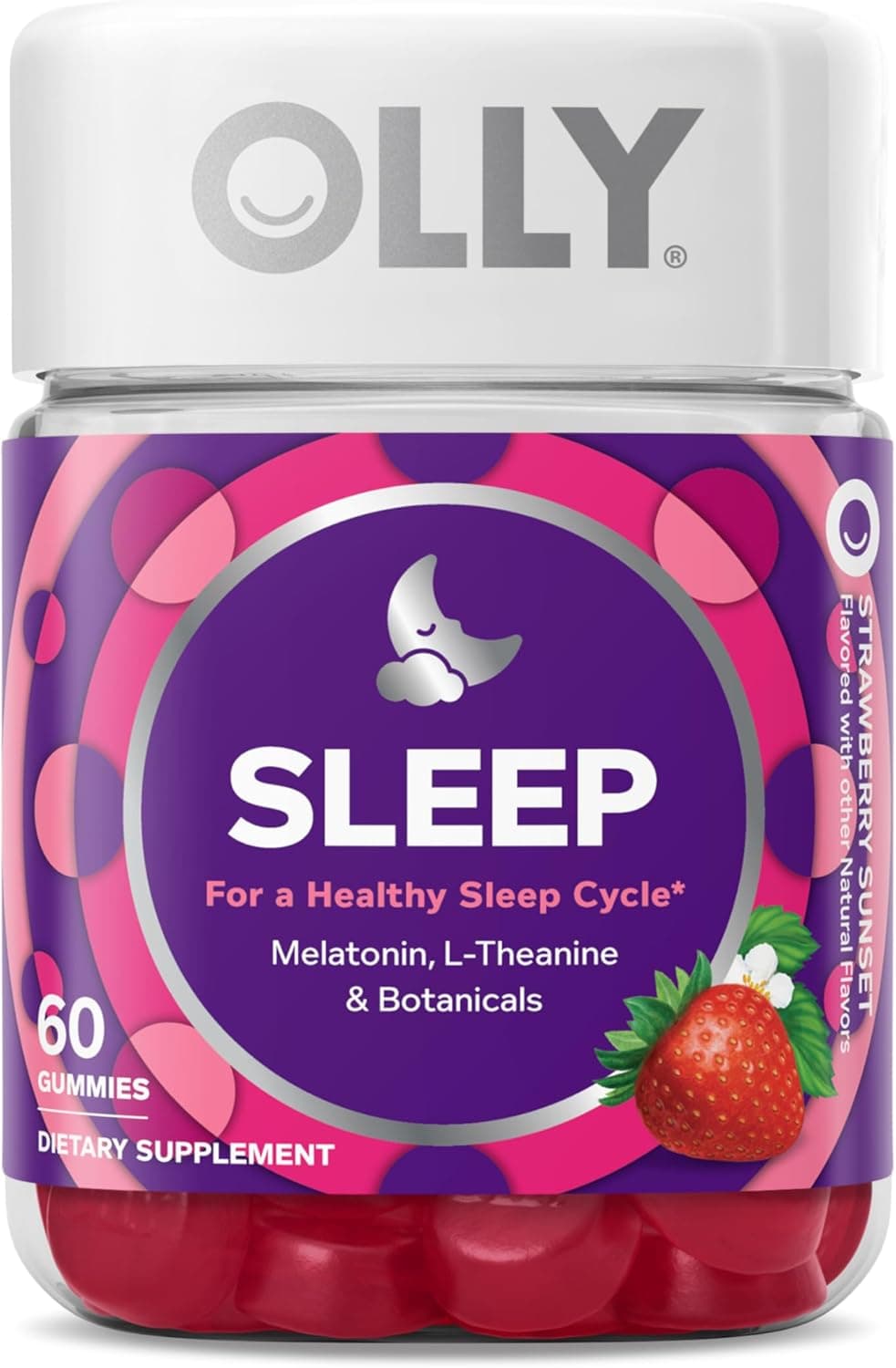
CDC National Center for Health Statistics, 2026Melatonin is the lead active here, studied most for body clock alignment. 18 human studies on Melatonin back this formula, each one cited. Each serving carries 100 mg of L-Theanine, inside the range the published research used. Who it fits: for everyone, adults.
 Verified by IngredientMD
The panel on the left is the one we evaluated, line by line.
All 5 actives checked against the clinical evidence: dose, form, and what the research actually shows.
Doses, ratios, and how the ingredients work together. That assessment is the verdict above: "Strong evidence, strong dose".
The verdict is public and identical whether or not a brand pays. A formula that does not clear the bar gets nothing.
Read by the engine against 2.1 million data points from clinical trials, PubMed and more than a hundred vetted sources. No individual reviewer is named or implied.
Cross-checked against 700 documented interactions for these actives.
Public health figures the engine matched to this formula's ingredients. Reported by their source, cited and dated, never written by the brand.
30.5% of US adults
slept less than 7 hours on average in a 24-hour period in 2024, in the National Health Interview Survey.
CDC National Center for Health Statistics, 202654.8% of US adults
woke up feeling well-rested every day or most days in the past 30 days in 2024, in the National Health Interview Survey.
CDC National Center for Health Statistics, 202663% of US adults who want more sleep
say they frequently experience stress, against 31% of those who get the sleep they need, in a December 2023 Gallup poll.
Gallup, 202474% of US adults
report their sleep is sometimes, often or always disrupted by stress, in a 2024 survey commissioned by the American Academy of Sleep Medicine.
American Academy of Sleep Medicine, 20242.1% of US adults
reported using melatonin in 2017 to 2018, up from 0.4% in 1999 to 2000, across ten cycles of the National Health and Nutrition Examination Survey.
JAMA, 202257.6%
During 2017 to 2018, 57.6% of US adults aged 20 and over reported using a dietary supplement in the past 30 days.
CDC National Center for Health Statistics15.4% of US adults
had trouble falling asleep, and 18.1% trouble staying asleep, every day or most days in the past 30 days in 2024, in the National Health Interview Survey.
CDC National Center for Health Statistics, 202612.9% of US adults
used a sleep aid most days or every day in the past 30 days to help them fall or stay asleep in 2024, in the National Health Interview Survey.
CDC National Center for Health Statistics, 202642% of US adults
say they get as much sleep as they need, the first time since Gallup began asking in 2001 that fewer than half did, in a December 2023 poll.
Gallup, 202459 to 66 days
was the median time it took adults to make a new daily health habit automatic across the studies a 2024 review pooled, with individuals ranging from 4 to 335 days.
Systematic review and meta-analysis, 202461% to 74%
About 61 to 74 percent of adults refilling a long-term medicine on their own stopped within a year, versus 33 to 44 percent on one set pickup day.
Cohort study, 2015Randomised trial, 2025
Over five days, 15 young women with menstrual discomfort drinking a chamomile and theanine beverage had self-reported pain ratings fall 57.17%, with mood and sleep ratings also changing.
Journal of Food and Drug AnalysisMeta-analysis, 2021
Pooled trials found lemon balm improved anxiety scores by about 0.98 standardized units and low mood scores by about 0.47 units versus placebo, though the small studies varied widely.
Phytotherapy ResearchRandomised trial, 2024
Over 28 days, 15 healthy adults with moderate stress taking a branded L-theanine ingredient had perceived-stress scores fall 17.98%, alongside routine safety monitoring.
Neurology and TherapyMeta-analysis, 2024
Across 26 trials, melatonin's benefit for falling asleep faster and sleeping longer both peaked at a 4 mg dose taken about 3 hours before bedtime.
Journal of Pineal ResearchSystematic review, 2002
In 9 of 10 randomized trials, travelers given melatonin near their destination bedtime reported easier recovery from jet lag after flights crossing five or more time zones.
Cochrane Database of Systematic ReviewsSystematic review, 2020
Across 9 trials, 200 to 400 mg a day of L-theanine may help lower stress and anxious feelings in people facing stressful situations.
Plant Foods for Human NutritionSystematic review, 2025
Reviewing botanical trials in older women, chamomile was among the extracts with supporting trial evidence for mood and sleep complaints, on small studies of mixed quality.
Frontiers in pharmacologyRandomised trial, 2019
In a 4-week trial in 30 healthy adults, 200 mg a day of L-theanine improved sleep quality scores, with faster sleep onset and less disturbance.
NutrientsMeta-analysis, 2025
In healthy adults, across trials, L-theanine with caffeine modestly improved accuracy on an attention-switching task, and L-theanine alone modestly sped up choice reaction time.
Nutrition ReviewsRandomised trial, 2023
In adults with raised blood sugar readings and low mood scores, lemon balm extract lowered self-reported anxiety and low-mood questionnaire scores compared with placebo.
BMC complementary medicine and therapiesMeta-analysis, 2024
Pooling five trials, chamomile lowered the Pittsburgh Sleep Quality Index score by about 1.9 points, mainly through fewer night-time awakenings, while sleep duration, sleep efficiency and daytime functioning did not change.
Complementary Therapies in MedicineMeta-analysis, 2019
Across 12 randomised and quasi-randomised trials, chamomile improved sleep quality with a standardised mean difference of -0.73, while the three trials measuring short-term anxiety scores did not detect a difference from control.
Phytotherapy ResearchRandomised trial, 2024
In a placebo-controlled crossover trial, a phospholipid-delivered lemon balm extract lowered the sleep-difficulty index score by about 2.9 points (6.8 versus 9.7) and lengthened slow-wave sleep by around 15 percent.
NutrientsMeta-analysis, 2025
Pooling the randomised trials, L-theanine was linked to small improvements in self-reported sleep quality, while objective sleep measures showed no detectable difference.
Meta-analysisOpen-label trial, 2026
Repeated dosing of a fixed myrrh, chamomile extract and coffee charcoal preparation was reported to show potentially beneficial effects in the patients studied. The effect belongs to the three-part combination.
PLoS OneMeta-analysis, 2026
Melatonin improved insulin resistance markers in the pooled trials, while fasting blood sugar showed no detectable change.
Meta-analysisMeta-analysis, 2025
A comparison of topical treatments for mouth discomfort included chamomile as one of several compared options.
BMC Oral HealthMeta-analysis, 2020
Across seven trials, lemon balm lowered total cholesterol by about 0.26 standardized units and blood pressure by about 0.56 units, with no detectable change in triglycerides, LDL, or blood sugar measures.
Phytotherapy ResearchMeta-analysis, 2025
Across cardiometabolic outcomes, melatonin was linked to small reductions in blood pressure and in blood lipid levels.
Meta-analysisMeta-analysis, 2026
Across pooled trials, critically ill adults given melatonin had fewer episodes of acute confusion than those not given it, though results varied a lot between studies.
Frontiers in PharmacologyPopulation figures from public health data. Context for the category, not a statement about any individual and not a claim about this product.
Each line below was derived from this formula's own record at the time of verification. Nothing here was written by the brand, and nothing can be added that the evidence does not carry.
Where a trial measured an actual number, we show it next to the claim. It is the average across the trials, never a promise about one person.
About 7 minutes shorter time to fall asleep, on average across the trials.
Read at the source. The magnitude sits beside the same trial the claim already cites. It describes what the trials measured, never what any one person will feel.
Time-to-effect windows the engine read from the trial record. Each is a window a named study measured, cited and dated, never written by the brand.
In a crossover pharmacokinetic study, 12 healthy male volunteers received 10 mg of oral melatonin and 10 mg intravenously on separate days. Oral melatonin reached mean peak plasma concentration 40.8 minutes after ingestion, with a mean elimination half-life of 53.7 minutes and absolute bioavailability of about 3 percent. A separate randomised double-blind crossover trial in 18 healthy adults aged 18 to 65 measured time to peak concentration of 0.6 hours for 4 mg immediate-release melatonin and 1.56 hours for a 4 mg extended-release form. Both studies measured blood concentration, not sleep. The second was run by employees of Pharmavite, a supplement manufacturer.
Two double-blind placebo-controlled crossover trials measured attention at a fixed interval after one oral dose. In 24 overnight sleep-deprived adults aged 20 to 25, a 200 mg dose tested 45 minutes post-dose reduced false alarms on a traffic-scene recognition task and raised target-distractor discriminability. In 27 healthy young adults tested 50 minutes post-dose, 400 mg shortened the parietal P3b event-related potential latency against placebo, with no significant change at 100 or 200 mg. Both trials measured task and electrophysiological markers, not a subjective feeling.
Windows measured in the cited trials. Context for how the active behaves over time, not a statement about any individual and not a claim about this product.
Five ingredients, from each one's own page.
Drowsiness usually arrives 30 to 60 minutes after a dose. The body-clock shift builds over a few nights of taking it at the same hour.
For most people, with blood levels peaking inside the first hour. Nothing accumulates, so each dose stands on its own.
A mild settling usually lands within an hour of a dose. Sleep and daytime calm keep building over two to four weeks of daily use.
Often 30 to 60 minutes for the settled feeling after a dose. Calm that holds across a whole day builds over about two weeks of taking it daily.
Calm and alertness ratings have moved within one to three hours of a single dose. Sleep and week-to-week steadiness are a two to four week story on daily use.
How each ingredient usually behaves over time, from its own page on IngredientMD. General timing for the ingredient, not a measurement of this product.
What each form is, and where it fits in a formula. Measured findings carry the study that reported them.
The single L-enantiomer as a free amino acid, the form found in tea leaf and the form used in essentially all human trials.
Descriptions of the form itself, read from the cited studies. Not a comparison between products and not a statement about any individual.
It is a gummy, which is the format people actually keep taking, and adherence decides whether anything else matters.
Put an earned verification on your own product page.
These statements have not been evaluated by the Food and Drug Administration. This product is not intended to diagnose, treat, cure, or prevent any disease. This record is not medical advice. Always consult your healthcare provider before starting any supplement regimen.