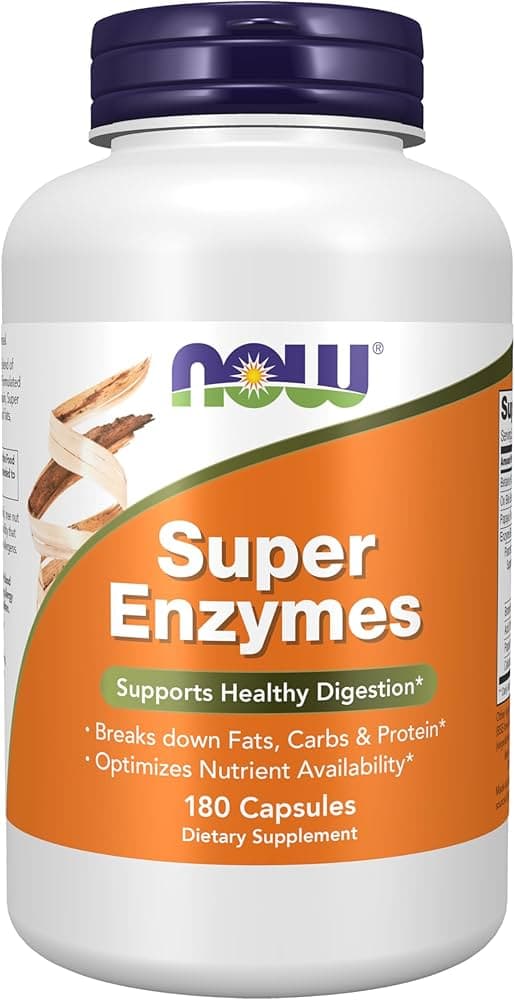
Acid Stable Protease (Aspergillopepsin).
A fungal protease enzyme that works in acidic stomach conditions to help break down dietary proteins. Breaks down dietary proteins in your stomach's acidic environment. It's the specialist enzyme that handles protein digestion when your own pepsin isn't cutting it.
Reviewed March 2026
- Category
- Enzyme
- Also filed under
- Works in acidic stomach environmentHelps break down dietary proteinsSupports people with low stomach acidReduces bloating from protein heavy meals
What Acid Stable Protease (Aspergillopepsin) is, and what it does.
- Does it work
- Suits people eating protein-heavy meals and anyone whose own stomach acid output has eased with age. It does its work inside a blend, next to enzymes that handle starch and fat.
- How much to take
- Look for activity units (SAPU or HUT), not milligrams. Typical effective range is 25,000-50,000 HUT per meal. Weight in milligrams is nearly meaningless for enzymes.
- Time to feel it
- The same meal. It works in the acid of the stomach in the hour after you swallow it, so any change in post-meal heaviness turns up straight away.
- The first dose
- If you have protein digestion issues, you may notice less post-meal bloating and heaviness after your first high-protein meal. Effects are most obvious in people who actually need it.
- With regular use
- Consistent use over 2-4 weeks often leads to generally more comfortable digestion. Some people with age-related digestive decline report significant improvements.
- How well tolerated
- Well tolerated. FDA GRAS status. Derived from Aspergillus fungi (same family used to make soy sauce and miso). Rarely causes issues unless you have a fungal allergy.
- How it feels
- You won't feel the enzyme itself. What you'll feel is the absence of digestive discomfort. Less bloating, less gas, less of that 'brick in your stomach' feeling after a big meal.
- The overlooked benefit
- Its strength is declared in activity units such as SAPU or HUT, not milligrams, because a weight tells you nothing about how much protein an enzyme can actually break down.
25,000 to 75,000mg a day is where Acid Stable Protease (Aspergillopepsin) works.
Source: Digestive enzyme studies, FDA GRAS status
The proof, claim by claim.
These words describe the research, not the molecule's worth. Research strength is how much work stands behind one claim, and it is never a product score.
- Aids protein digestion
- Works in stomach acid
- Better than other protease supplements
Questions people ask about Acid Stable Protease (Aspergillopepsin).
- Why are activity units more important than milligrams?
- Because enzyme potency depends on how active it is, not how much it weighs. A tiny amount of highly active enzyme beats a large amount of weak enzyme. Always check HUT or SAPU numbers.
- Will this help with gluten digestion?
- It breaks down proteins generally, but it's not specifically designed for gluten. DPP-IV enzymes are more targeted for gluten peptides. Don't rely on this if you have celiac disease.
- Can enzyme supplements make my body produce less of its own enzymes?
- No. This is a common myth. Supplemental enzymes don't suppress your body's own enzyme production. They work alongside your natural enzymes.
- Is it safe if I'm allergic to mold?
- The final product is purified and shouldn't contain mold allergens. But if you have severe mold allergies, start with a small dose and monitor for reactions. Talk to your allergist.
- How is this different from pepsin supplements?
- Pepsin is the human stomach enzyme. Aspergillopepsin is the fungal version. Both work in acid, but the fungal version is vegetarian-friendly and works across a broader pH range.
- Do I need to take it with every meal?
- Only if you eat protein at that meal and have digestive issues. If you're having a fruit salad, you probably don't need a protease enzyme. Use it strategically with protein-heavy meals.
Why these belong in the same formula. Each row says what the basis is, from settled biochemistry through to a trial that measured the pair.
Aspergillopepsin is an aspartic protease with its catalytic optimum in the acidic range, roughly pH 2.5 to 4. Betaine hydrochloride releases hydrochloric acid in the stomach and lowers gastric pH toward that window. The pairing is aimed at people whose gastric acid output is reduced. Where output is normal it adds nothing the stomach was not already doing.
Pepsin is the body's own gastric aspartic protease and works in the same acidic range on the same substrate. The two cleave at overlapping but not identical sites, so together they produce a more fragmented peptide mixture entering the duodenum. Both are inactivated as pH rises past the pylorus.
Pancreatin supplies trypsin, chymotrypsin, amylase and lipase, all of which work at the near-neutral pH of the small intestine. Aspergillopepsin does its work upstream, in the stomach, before those enzymes are reached. The two occupy different compartments rather than competing, which is why blends carry both.
Bromelain is a cysteine protease from pineapple with a broader working pH range, staying active from mildly acidic to neutral conditions. Pairing it with an acid-stable fungal protease covers both the gastric and the early intestinal phase. Their cleavage specificities differ, which widens the peptide profile produced.
Papain, also a cysteine protease, cleaves at basic and hydrophobic residues and holds activity across a wide pH span. It is a standard companion to fungal proteases in digestive blends. As with bromelain, the value is complementary specificity rather than more of the same activity.
Acid-stable protease is a routine component of multi-enzyme digestive blends precisely because most other proteases lose activity in gastric conditions. The blend covers protein, starch and fat across the pH gradient of the tract. Activity units, not milligrams, are what tell you how much enzyme is present.
Amylase acts on starch while the protease acts on protein, so the two address different macronutrients in the same meal. Fungal amylases from the same Aspergillus fermentation platform are commonly co-produced. There is no direct interaction between the two enzymes.
Lipase hydrolyses triglycerides while the protease works on protein, covering two of the three macronutrients in a mixed meal. Fungal lipases retain some activity at lower pH than the pancreatic enzyme. The two are combined for coverage, not because either helps the other.
Lactase splits lactose into glucose and galactose and is added to digestive blends for dairy-containing meals. It is a different substrate class entirely from a protease. Both are fungal fermentation products and are formulated together for that convenience as much as anything.
Whey is the substrate an acid-stable protease acts on, cleaving intact protein into shorter peptides before it leaves the stomach. Di- and tripeptides are taken up by the PepT1 transporter, a route intact protein cannot use until it has been broken down. The practical question is whether whey, already rapidly digested, needs the help.
Casein clots in gastric acid, which is exactly the environment where this protease keeps working while neutral-pH proteases do not. Cleaving the clot earlier changes how fast amino acids appear downstream. Anyone using casein for its slow-release profile should note that adding a gastric protease works against that design.
Native collagen resists most proteases because of its tight triple helix and high imino acid content, which is why supplemental collagen is sold pre-hydrolysed. An added protease has little left to do on an already hydrolysed peptide. The pairing matters more for intact collagen in food than for the supplement.
Tannins bind proteins through hydrogen bonding and hydrophobic contacts and precipitate them out of solution, and a protease is itself a protein. High-tannin foods and extracts reduce measured protease activity in vitro for this reason. Taking a strong tannin source in the same mouthful works against the enzyme.
Catechins such as EGCG bind digestive enzymes and lower their measured activity in laboratory assays, an effect described for amylase, lipase and proteases. Whether a supplemental dose does this meaningfully in a full stomach is not settled. It is a laboratory observation worth knowing rather than a demonstrated clinical interaction.
Bicarbonate neutralises gastric acid and raises stomach pH out of the acidic window where this enzyme is catalytically active. The interaction is about the environment, not about binding the enzyme. Taking the two in the same window works against the reason an acid-stable protease was chosen.
Calcium carbonate consumes gastric acid as it dissolves, raising stomach pH. The size of the shift depends on the dose and on whether it was taken with food. Where an acid-stable protease is the point of the formula, separating a large carbonate dose from it is the reasonable step.
Talk to a doctor before taking Acid Stable Protease (Aspergillopepsin) if any of these apply to you: Not needed if digestion is normal, Enzyme activity measured in HUT or SAPU, not mg, Quality varies between manufacturers. These are flags to check first, not effects Acid Stable Protease (Aspergillopepsin) is known to cause.
Not medical advice. Show the label to your pharmacist.What Acid Stable Protease (Aspergillopepsin) actually does.
Aspergillopepsin is a protein-cutting enzyme made by Aspergillus moulds. It uses two aspartate residues in its active site, plus a water molecule, to snip peptide bonds apart.
It hits its peak in acid, roughly pH 2.5 to 4, so it keeps cutting in stomach conditions where plant and bacterial proteases that prefer neutral ground go quiet.
It prefers to cut peptide bonds next to bulky greasy residues, which gives it a target pattern that overlaps with pepsin without being identical to it.
Activity drops off as pH climbs toward neutral, so the enzyme's working window closes once stomach contents move into the duodenum and meet pancreatic bicarbonate.
Where Acid Stable Protease (Aspergillopepsin) comes from.
A mould that naturally makes this enzyme is grown in a tank on a sugar and protein feed. The mould is filtered out, the liquid it left behind is concentrated, and the result is dried and adjusted so every batch has the same working strength.
Built by fermentation, the same way vitamin B12 and many amino acids are made at scale. Controlled conditions, consistent output.
A sterilised medium of starch or glucose with a nitrogen source such as soy or corn steep liquor feeds the production strain.
A production strain of Aspergillus niger is grown under controlled temperature, pH and aeration, secreting aspergillopepsin into the broth over several days.
Fungal mycelium is separated by filtration or centrifugation, leaving the enzyme in the clarified broth.
The broth is concentrated by ultrafiltration, which retains the enzyme and removes salts and small molecules, then polished to reduce colour and odour.
Activity is measured against a defined substrate at set pH and temperature, then the concentrate is cut with a carrier to hit a declared SAPU or HUT figure.
The standardised material is dried and packed under low humidity, because enzyme activity declines with moisture and heat during storage.
Getting Acid Stable Protease (Aspergillopepsin) from food.
The whole-food sources on file. A supplement closes the gap, it does not replace dinner.
A gram-for-gram figure (how much of each you would eat to match a dose) will appear here once it is sourced and reviewed. This page will not print a number it cannot cite.
The forms it comes in.
FDA Disclaimer: These statements have not been evaluated by the Food and Drug Administration. This information is for educational purposes only and is not intended to diagnose, treat, cure, or prevent any disease. Consult your healthcare provider before starting any supplement regimen.