Actinidin.
A kiwifruit enzyme that helps break dietary protein apart in the stomach. It keeps working in stomach acid, where many plant enzymes stop.
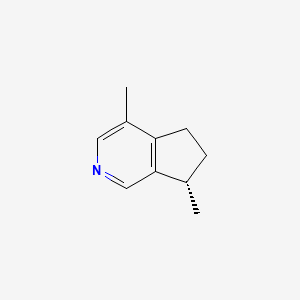 Compound
- Category
- Compound
What Actinidin is, and what it does.
- Does it work
- Useful if a big protein meal or a large shake sits heavily. Less relevant for people whose digestion already handles protein comfortably.
- How much to take
- No dose figure is on record. These products are measured in enzyme activity units rather than milligrams, so start with the label serving and take it with the meal.
- Time to feel it
- It acts during the meal it is taken with, so any comfort difference lands within an hour or two of eating rather than after weeks.
- The first dose
- Day one is representative. Taken with a large protein meal, a lighter feeling afterwards is the change to watch for that same evening.
- With regular use
- There is no build-up. Weeks of use is repeated meal-by-meal help with protein breakdown, and nobody has measured longer-term outcomes in people.
- How well tolerated
- Well tolerated for most people. Anyone with kiwifruit or latex sensitivity should avoid it, since actinidin is itself one of the recognised kiwifruit allergens.
- How it feels
- Nothing dramatic. Where it shows, it is less heaviness and less gurgling after a protein-heavy meal rather than a sensation of its own.
- The overlooked benefit
- Heat destroys it, so a cooked or pasteurised kiwifruit powder carries little enzyme activity however much fruit went in. Drying method matters more than fruit content.
The proof, claim by claim.
What these words mean
These words describe the research, not the molecule's worth. Research strength is how much work stands behind one claim, and it is never a product score.
- gastric breakdown of dietary proteinsIn vitro study
- upper digestive comfort after protein mealsRandomised trial
2 more claims
- digestive comfort and regularity with green kiwifruit preparationsRandomised trial
- kiwifruit protein sensitivity and latex cross-reactivityNarrative review
Why these belong in the same formula, 11 pairings
Why these belong in the same formula. Each row says what the basis is, from settled biochemistry through to a trial that measured the pair.
In simulated gastric digestion, adding kiwifruit actinidin speeds the breakdown of whey and casein proteins into smaller peptides. Faster gastric proteolysis plausibly means earlier delivery of peptides to the small intestine. The measured work is mostly in vitro digestion models, and whether it changes amino acid appearance in blood in people is a separate question that these models do not answer.
Casein is the slow protein precisely because it curdles in stomach acid and empties gradually. Actinidin hydrolyses casein readily in vitro, which loosens that clot structure. Someone using casein deliberately for slow release may not want that, so the pairing is a choice rather than an upgrade. Read it as mechanistic rather than clinical.
Pepsin is the stomach's own acid protease and actinidin stays active in the same acid range, which is unusual for a plant enzyme. Their cleavage preferences differ, so together they open more sites on a protein than either alone. This is enzymology, not an outcome finding.
Bromelain from pineapple and actinidin from kiwifruit are both cysteine proteases, and both cleave dietary protein. Their pH optima and residue preferences do not fully overlap, so a blend covers more of the gastric-to-intestinal transit than one alone. Blends are common commercially for exactly this reason.
Actinidin sits in the papain family and shares its catalytic cysteine and histidine pair. Combining them adds protease activity across a broader pH window rather than adding a new mechanism. Anyone sensitive to one plant protease should be aware the family shares structural features that matter for allergy cross-reactivity.
The catalytic cysteine of actinidin loses activity when oxidised. In laboratory assays a reducing agent such as cysteine is added to keep the enzyme working, which is why activity numbers on a certificate of analysis are assay-condition dependent. Whether adding cysteine to a capsule does anything useful in a real stomach has not been shown. The relationship is established at the bench.
Actinidin is unusual among plant proteases in tolerating gastric acidity, and its proteolysis in digestion models is pH sensitive. Betaine hydrochloride is used to lower gastric pH in people with low acid output. The pairing is mechanistically coherent but has not been tested as a combination, and betaine HCl carries its own cautions with acid-suppressing medication.
Hydrolysed collagen has already been cut into short peptides during manufacture, which is the point of the ingredient. Adding a protease to it has far less to work on than adding one to intact protein. The pairing is not harmful, it is mostly redundant. Match the protease to intact protein instead.
Any active protease in the same capsule can digest other enzymes packed beside it, since those enzymes are proteins too. Formulators handle this with separate beadlets, coatings or moisture control rather than by simply blending powders. In a dry, low-water-activity blend the risk is small. Once moisture rises, it is not.
Whole green kiwifruit has human data for stool frequency and consistency, though that fruit carries fibre, water and polysaccharides alongside actinidin, so the enzyme is not obviously the acting part. Psyllium works by holding water and adding bulk. The two do not compete. Attributing kiwifruit's bowel effects to actinidin alone would be going past the evidence.
Metal ions that bind sulfhydryl groups inhibit cysteine proteases in the test tube, which is standard enzymology and part of how these enzymes are characterised. Whether a zinc capsule taken at the same time meaningfully reduces actinidin activity in a stomach has not been measured. Separate them if the enzyme activity is the reason for taking the product.
Nothing specific on file for Actinidin. Match the label to the daily amount above, and tell your doctor what you take.
Not medical advice. Show the label to your pharmacist.What Actinidin actually does.
Actinidin is a protein-cutting enzyme from green kiwifruit.
3 more mechanisms
Unlike most plant enzymes, it keeps working in stomach acid instead of being switched off by it.
The enzyme has a fragile working part. Heat, oxygen and certain metals shut it down.
Cook the fruit and the enzyme is gone. Processing method decides whether you get anything.
Where Actinidin comes from.
It comes from green kiwifruit and nothing else. Heat kills it, so how the fruit was dried matters more than how much fruit went in.
What this route gives you
Made from a plant. What ends up in the capsule tracks the harvest, so batch testing and a stated marker matter more here than with a made molecule.
5 steps on record
Fruit of Actinidia deliciosa, the green kiwifruit, grown commercially in New Zealand, Italy, Chile, Greece and China. Actinidin can reach a substantial share of total soluble fruit protein.
Fruit is pulped or juiced. Because the enzyme is heat-labile, temperature control from this point onward decides how much activity survives.
Solids are removed and the liquid concentrated at low temperature. Some processes go further to a partially purified protein fraction.
Activity is measured against a protein substrate under defined pH and reducing conditions, and declared in activity units rather than by weight.
Freeze-dried or spray-dried onto a carrier and encapsulated, often blended with other proteases.
Getting Actinidin from food.
The whole-food sources on file. A supplement closes the gap, it does not replace dinner.
A gram-for-gram figure (how much of each you would eat to match a dose) will appear here once it is sourced and reviewed. This page will not print a number it cannot cite.
The forms it comes in.
4 more forms
FDA Disclaimer: These statements have not been evaluated by the Food and Drug Administration. This information is for educational purposes only and is not intended to diagnose, treat, cure, or prevent any disease. Consult your healthcare provider before starting any supplement regimen.