Beta-Methylphenethylamine.
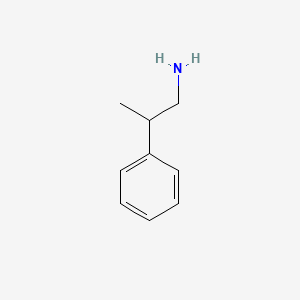
BMPEA is a lab-made stimulant molecule, a positional isomer of amphetamine. Compounds in this class push noradrenaline out of nerve endings, which lifts heart rate and blood pressure.
 Compound
- Category
- Compound
What Beta-Methylphenethylamine is, and what it does.
- Does it work
- It's on the World Anti-Doping Agency prohibited list, so anyone tested in sport needs to recognise it by every name it travels under. No human study has measured a performance effect.
- How much to take
- No dose is on record for human use, and none should be inferred from the 12 published records. Products carrying it usually print a plant name instead of an amount.
- Time to feel it
- Oral stimulants of this class typically act inside half an hour to an hour. Nobody has measured that timing for this compound in people.
- The first dose
- The class pharmacology points to a faster heart rate and a rise in blood pressure on day one. No human study has documented the first 24 hours directly.
- With regular use
- Nobody has measured weeks of daily intake in people. What is known is the class effect: continued adrenergic stimulation keeps a load on heart rate and blood pressure.
- How well tolerated
- This is the central issue with it. The class raises heart rate and blood pressure, and it often sits undeclared inside blends, so speak to a clinician before any exposure.
- How it feels
- People describe amphetamine-like stimulants as alerting, with a racing heart and jitters. The subjective experience of this one has not been recorded in a formal study.
- The overlooked benefit
- The useful thing to know is a labelling fact: it appears as beta-methylphenethylamine, as BMPEA, or as an Acacia rigidula listing, so one product can carry it three ways.
The proof, claim by claim.
What these words mean
These words describe the research, not the molecule's worth. Research strength is how much work stands behind one claim, and it is never a product score.
- Indirect sympathomimetic release of noradrenalineNarrative review
- Raised heart rate and blood pressure as a class effectAnimal study
2 more claims
- Presence in sports and weight products labelled as a plant extractNarrative review
- Prohibited in sport under the stimulant classNarrative review
Why these belong in the same formula, 4 pairings
Why these belong in the same formula. Each row says what the basis is, from settled biochemistry through to a trial that measured the pair.
Caffeine raises circulating catecholamines and blocks adenosine receptors while BMPEA drives noradrenaline release directly. Stacked, the effect on heart rate and blood pressure adds up rather than cancelling. Nearly every product carrying BMPEA also carries caffeine, usually inside the same undeclared blend, so the stack happens whether the buyer intends it or not.
Yohimbine blocks the presynaptic autoreceptor that normally brakes noradrenaline release, and BMPEA pushes release. The combination amplifies sympathetic tone more than either alone. Anxiety and palpitations are the predictable result and both compounds frequently appear in the same blends.
Theanine is often added to blunt the jitter from stimulants and it does shift the subjective texture of caffeine. It does nothing to the peripheral pressor effect of a releasing amine. Smoothing the feel while leaving the cardiovascular load intact is a poor bargain here.
St John's wort has weak monoamine reuptake activity across several transmitters. Combining it with an amine that drives noradrenaline release stacks two inputs onto the same system. The interaction is mechanistic reasoning rather than measured, and it points toward avoidance rather than pairing.
Nothing specific on file for Beta-Methylphenethylamine. Match the label to the daily amount above, and tell your doctor what you take.
Not medical advice. Show the label to your pharmacist.What Beta-Methylphenethylamine actually does.
BMPEA is structurally almost identical to amphetamine, just with a group in a different spot, and compounds like it work by pushing the body to release more noradrenaline and blocking its reabsorption.
3 more mechanisms
This class of compounds raises heart rate and blood pressure through their action on stress-hormone receptors, that's the expected effect of the chemical structure, not a surprise finding.
Sports anti-doping rules prohibit this compound as a stimulant, so an athlete using a product that contains it can fail a drug test no matter what the label says.
The body normally breaks down simple compounds in this family quickly, so BMPEA isn't handled the same way as its close relative despite the similar name.
Where Beta-Methylphenethylamine comes from.
This is a lab-made stimulant molecule that looks a lot like amphetamine. It turned up in sports and weight products labelled as if it came from a desert shrub.
What this route gives you
Chemically synthesised. The molecule is identical to the one a plant or an animal makes, and building it deliberately means a known purity, a fixed dose and no crop contaminants. For several nutrients this is the only route that reaches a usable amount.
4 steps on record
Synthesised from simple aromatic precursors. There is no commercial botanical route at the amounts found in finished products.
The methyl group is placed on the beta carbon, giving an amphetamine isomer with different steric properties and a different metabolic fate.
Typically isolated as the hydrochloride for handling and stability.
Almost always appears inside a proprietary stimulant blend rather than as a standalone stated dose.
Products carrying it usually declare an Acacia rigidula extract rather than the compound. Doses are hidden inside proprietary blends.
The forms it comes in.
1 more form
FDA Disclaimer: These statements have not been evaluated by the Food and Drug Administration. This information is for educational purposes only and is not intended to diagnose, treat, cure, or prevent any disease. Consult your healthcare provider before starting any supplement regimen.