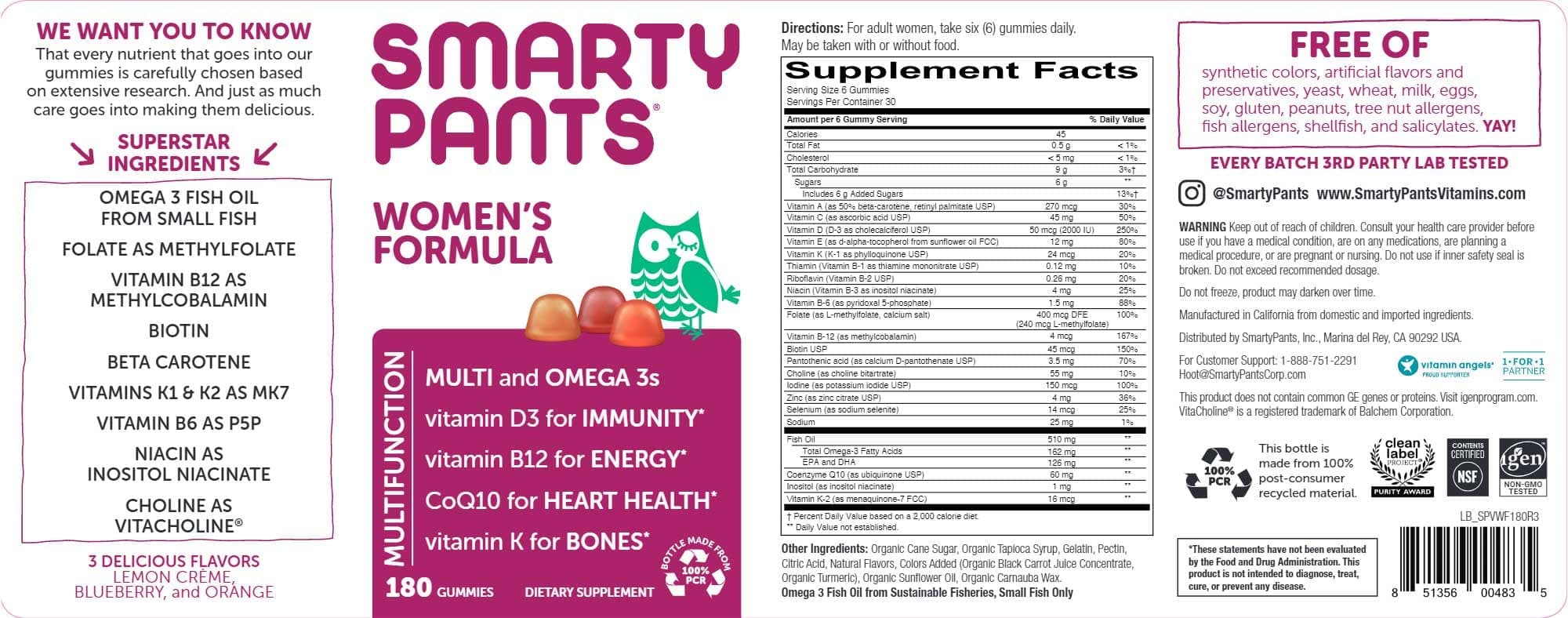
Carnauba Wax.
A plant-based wax coating that gives your tablets a smooth finish and protects them from moisture. Polishes tablets and provides a moisture-resistant coating.
Reviewed March 2026
- Category
- General
- Also filed under
- Protects tablets from moistureGives smooth, easy to swallow coating
What Carnauba Wax is, and what it does.
- Does it work
- Matters to anyone who wants a tablet that stays glossy and separate through a hot delivery. It's a coating, so it works for the product rather than in your body.
- How much to take
- There's no daily amount to take and none is on record. It's used at a fraction of a percent of tablet weight as a polish, so the formulator sets it.
- Time to feel it
- The polish sits on the tablet, not in you. It is a fraction of a percent of tablet weight, passes through largely intact, and has no onset because it isn't an active.
- The first dose
- Day one is a smooth tablet that goes down easily. The wax passes through largely intact, so its contribution is to the swallow rather than to anything inside you.
- With regular use
- It doesn't accumulate. Over months its work shows as tablets that look and swallow the same at the end of a bottle as they did on the first day.
- How well tolerated
- Long used in food glazes and tablet coatings and well tolerated at these amounts. Human enzymes act very slowly on long-chain wax esters, so it passes through largely unchanged.
- How it feels
- A smooth, slightly slippery tablet that doesn't catch in the throat. Past the swallow there's no taste or sensation from it.
- The overlooked benefit
- Its melting range near 82 to 86 degrees Celsius is the highest of the natural waxes, so tablets stay glossy and separate in a hot delivery van or a summer post box.
The proof, claim by claim.
These words describe the research, not the molecule's worth. Research strength is how much work stands behind one claim, and it is never a product score.
- Protects tablets from moisture
Questions people ask about Carnauba Wax.
- Is carnauba wax safe to eat?
- Yes. FDA GRAS. You eat it on fruit, candy, and gum regularly. It passes through undigested.
- Is it the same wax used on cars?
- Yes. Carnauba wax is used in car wax, dental floss, floor polish, and supplement tablets. Versatile stuff.
- Is it vegan?
- Yes. It comes from palm leaves, not animals.
Why these belong in the same formula. Each row says what the basis is, from settled biochemistry through to a trial that measured the pair.
Carnauba wax and beeswax are combined as the polishing layer over a finished tablet or softgel, where the harder carnauba gives gloss and the softer beeswax gives the film flexibility. Neither is absorbed in any meaningful amount. The pairing is a surface finish that reduces tackiness and moisture pickup.
Carnauba wax is buffed over an HPMC film coat as the final polish, because the cellulose film carries the barrier and the wax carries the gloss and slip. The wax layer also lowers friction so coated tablets do not bind against each other in the bottle.
Magnesium stearate lubricates the powder blend inside the die while carnauba wax finishes the outside of the compressed tablet. Both are hydrophobic, so a formula heavy in each can slow water ingress and lengthen disintegration time. Dissolution testing is what settles whether that matters for a given tablet.
Colloidal silicon dioxide keeps a powder blend flowing into the die, and carnauba wax is applied after compression as the polish. Powdered carnauba is itself sometimes co-blended with silica to stay free flowing in the coating pan. The pairing is purely about handling.
A hypromellose film coat carries the colour and the barrier, then carnauba wax is polished onto that film for gloss and to reduce friction in the bottle. The wax layer is thin enough that it does not by itself define the release profile. This is standard finishing practice.
Microcrystalline cellulose provides the compressible bulk of most tablets and wicks water in to help the tablet break apart. A hydrophobic wax finish works against that wicking at the surface. The two are balanced against each other during disintegration testing rather than being synergistic in any biological sense.
Stearic acid works as a lubricant and a hydrophobic matrix former, sitting in the same functional family as carnauba wax. Both raise the melting profile of a formulation and both resist moisture. Neither is absorbed in any meaningful amount at excipient levels.
Carnauba wax has been tested as a microencapsulation shell for arginine, with the wax shielding the amino acid from degradation before its intended release point. The published work is in animal feeding, not in people. The relationship is delivery engineering, not a nutritional interaction.
Wax-protected lysine has been fed to ruminants specifically so the amino acid survives the rumen and reaches the small intestine intact. That is a non-human digestive problem with no direct human parallel. It is cited here as evidence that the wax functions as a protective matrix, nothing more.
Carnauba wax forms a continuous hydrophobic film with very low oxygen and moisture permeability, which is why lipid waxes are used to encapsulate carotenoids and other oxidation-prone actives. The wax slows contact between the active and atmospheric oxygen during shelf life. It affects stability of the ingredient, not its absorption once released.
Nothing specific on file for Carnauba Wax. Match the label to the daily amount above, and tell your doctor what you take.
Not medical advice. Show the label to your pharmacist.What Carnauba Wax actually does.
Carnauba wax is a blend of fatty compounds secreted by a Brazilian palm's leaves, where on the living plant it helps limit water loss.
It melts at a higher temperature than other common natural waxes, which is why a tablet coated with it keeps its shine and doesn't get sticky in a warm storage space.
Because its molecules are essentially non-polar, an even layer of carnauba wax lets very little water vapor through, acting as a moisture barrier on a coated tablet or particle.
Our digestive enzymes break down fats efficiently but work very slowly on wax esters like this, so the small amount used as a coating passes through the gut mostly unchanged and adds no meaningful calories or nutrients.
Where Carnauba Wax comes from.
Workers cut the fronds of a palm tree in north-east Brazil and dry them in the sun until the natural waxy coating flakes off. That flake is melted, strained clean and sorted by how pale it is, then flaked, ground or mixed into water for use as a tablet polish.
Made from a plant. What ends up in the capsule tracks the harvest, so batch testing and a stated marker matter more here than with a made molecule.
The carnauba palm grows in the semi-arid north-east of Brazil and coats its fronds with wax to conserve water. Leaves are cut by hand during the dry season, typically September to February.
Cut leaves are sun-dried until the wax layer cracks, then beaten or mechanically threshed so the wax separates as a loose powder from the leaf fibre.
The crude powder is melted, usually with hot water or steam, and strained to remove leaf fragments, giving a raw wax cake.
The melted wax is filtered through diatomaceous earth or clay and, for the paler grades, treated with adsorbents or peroxide to lift residual pigment. Grade is assigned at this step from colour and ester content.
Batches are checked against melting point, acid value, saponification value and ash specifications from the food-grade and pharmacopoeial monographs.
The refined wax is cast into flakes or pastilles, micronised to a polishing powder, or emulsified into a sprayable aqueous dispersion.
Getting Carnauba Wax from food.
The whole-food sources on file. A supplement closes the gap, it does not replace dinner.
A gram-for-gram figure (how much of each you would eat to match a dose) will appear here once it is sourced and reviewed. This page will not print a number it cannot cite.
The forms it comes in.
The essence, in one line each.
- Carnauba wax coatings, with or without added essential oils or fruit by-products, reduced decay and preserved quality measures in stored produce, which demonstrates the wax's barrier function.In vitro study. Martínez-Zamora et al., 2025 (Foods). PMID 40807553 ↗
- Arginine microencapsulated in carnauba wax was produced and fed successfully, showing the wax works as a protective encapsulation matrix for a water-soluble active.Animal study. Contreras-Lopez et al., 2024 (Animals). PMID 38997969 ↗
- Wax-protected lysine fed alongside tannins changed meat quality and fatty acid profile in lambs. The relevance here is the protective wax matrix, not the nutritional endpoint.Animal study. Almeida Inô et al., 2025 (Foods). PMID 41517115 ↗
- A rumen-protected fat preparation was characterised and its effect on ruminal function and blood measures described, illustrating how a wax or lipid coat delays release in the digestive tract.Animal study. de Lima et al., 2023 (Tropical Animal Health and Production). PMID 37016138 ↗
These are the studies our verdict leans on, chosen from the 4 we read for Carnauba Wax. The full linked list is below.
FDA Disclaimer: These statements have not been evaluated by the Food and Drug Administration. This information is for educational purposes only and is not intended to diagnose, treat, cure, or prevent any disease. Consult your healthcare provider before starting any supplement regimen.