Beeswax.
Natural wax from honeybees used as a coating, thickener, and moisture barrier in softgels and topical supplements. Coats, thickens, and protects supplement formulations from moisture.
Reviewed March 2026
- Category
- General
- Also filed under
- Natural coating and thickenerMoisture barrier for softgelsSlows ingredient degradation
What Beeswax is, and what it does.
- Does it work
- This is a formulation material rather than something you buy on its own. It matters to anyone wanting an oil fill that stays uniform, and to anyone avoiding animal-derived ingredients.
- How much to take
- There is no daily amount for beeswax. It sits at a few percent of an oil fill, an amount the formulator picks to hold that fill together rather than one you choose.
- Time to feel it
- There is no onset to wait for. Beeswax does its work inside the product, holding an oil fill together, and passes through the gut largely unabsorbed.
- The first dose
- In the product it keeps the oil fill uniform from the first capsule. In you, the long-chain esters pass through largely unabsorbed, so there is no day-one action to track.
- With regular use
- Over months its work stays inside the bottle, keeping softgels from separating or leaking. It is not absorbed to any meaningful degree, so it accumulates nothing in your tissue.
- How well tolerated
- Well tolerated unless you're allergic to bee products.
- How it feels
- You don't taste or feel it inside a capsule. On skin, a balm that contains it feels waxy and slightly occlusive, which is the film that slows water loss.
- The overlooked benefit
- A few percent of it turns liquid oil into a gel that holds powders in suspension. That is what keeps the tenth softgel in a bottle matching the first.
The proof, claim by claim.
These words describe the research, not the molecule's worth. Research strength is how much work stands behind one claim, and it is never a product score.
- Natural preservative
Questions people ask about Beeswax.
- Is beeswax vegan?
- No. It's produced by bees. Look for plant-based alternatives if that matters.
- Can I be allergic to beeswax?
- Yes, if you're allergic to bee products. But it's rare and different from bee venom allergy.
- Does it have any nutritional value?
- Essentially none at supplement doses. It passes through your system undigested.
Why these belong in the same formula. Each row says what the basis is, from settled biochemistry through to a trial that measured the pair.
Policosanol is a mixture of long-chain aliphatic alcohols, and beeswax is one of the two commercial sources it is isolated from alongside sugar cane wax. The wax is the raw material the actives are drawn from.
Octacosanol is the principal 28-carbon alcohol within the policosanol fraction of beeswax. Isolating it concentrates a single component of the same wax alcohol family.
Beeswax thickens the oil phase of a softgel fill while lecithin disperses the solid actives within it, so the two are used together to keep a suspension uniform. This is encapsulation practice rather than a physiological effect.
Sunflower lecithin serves the same wetting and dispersing role as soy lecithin in a beeswax-thickened oil fill, for formulas avoiding soy. The wax sets the viscosity and the phospholipid keeps particles suspended.
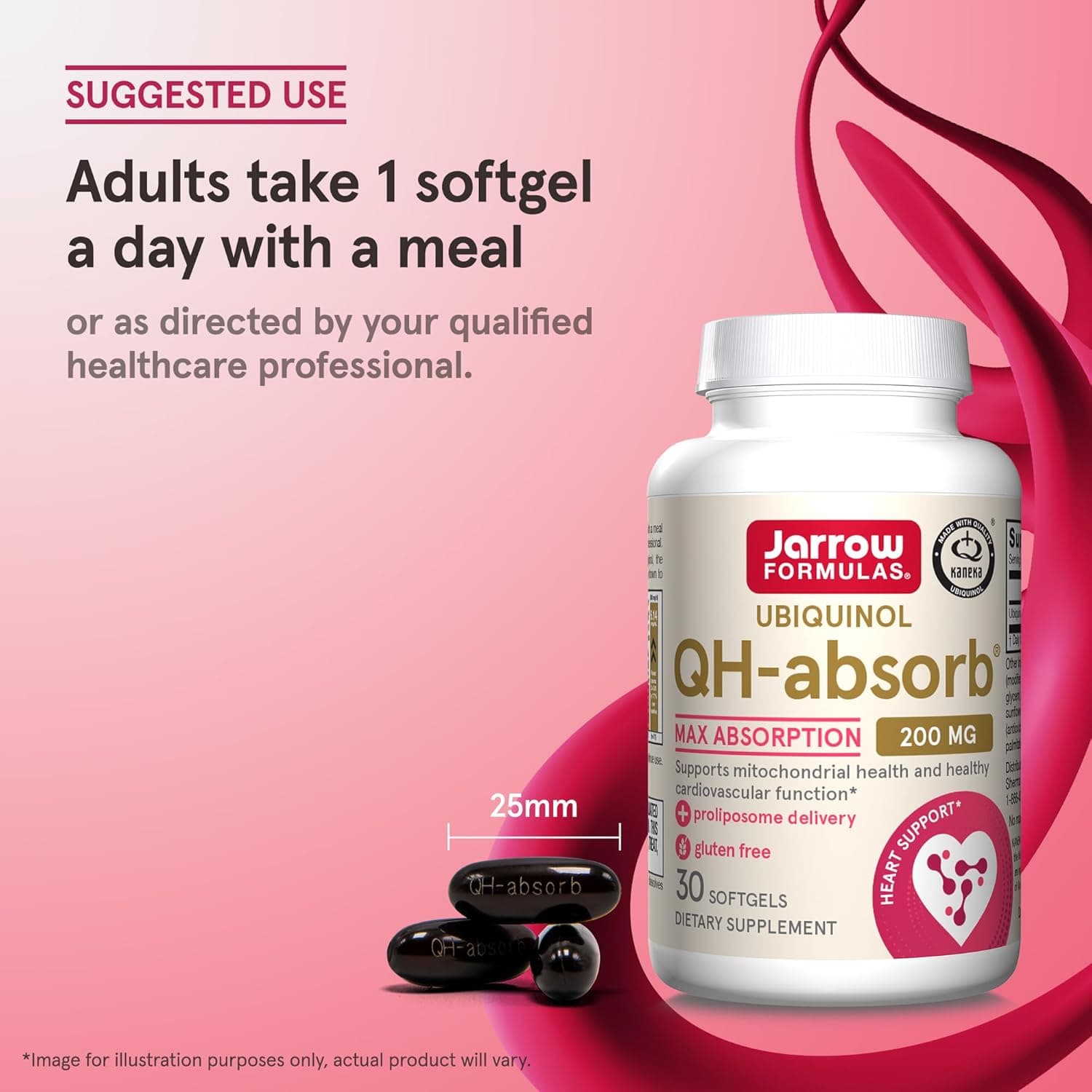
Ubiquinol softgels use a beeswax and lecithin oil matrix to hold the active dispersed and to slow crystallisation in the capsule. The wax is the structuring agent, not an active partner.
Beeswax crystallises into a fine network inside a liquid oil and turns it into a semi-solid, which is how softgel and capsule suspensions stop their oil phase from separating. MCT oil is a common carrier for that job. The pairing is structural, not nutritional.
Beeswax is added at low percentage to omega-3 fills to hold powders and crystals in suspension and to stop phase separation during storage. It does nothing to the fatty acids themselves. Its role is keeping the dose uniform from the first capsule to the last.
Coenzyme Q10 is a crystalline solid with poor oil solubility, so softgel fills use a wax-structured oil to keep the crystals dispersed rather than settled at the bottom of the shell. Beeswax is the usual structuring agent for that. It changes uniformity of the fill, not what is absorbed.
Astaxanthin is supplied as an oleoresin or crystalline powder that settles out of a thin oil, so wax-structured carriers hold it in place. The wax matrix also limits oxygen mobility within the fill. Neither effect changes the carotenoid's own chemistry.
Lutein softgels commonly list beeswax among excipients because the carotenoid is dosed as a suspension in oil rather than a solution. The wax keeps the suspension even across the batch. It is an excipient role, and the trial that names it measured the carotenoid, not the wax.
Beeswax was among the food-grade coating materials assessed for shielding dietary glutamine from breakdown before it reached the lower gut in ruminants. The endpoint was how much survived the rumen, measured in animals with a very different digestive anatomy from ours. It grounds a coating mechanism, not a human absorption claim.
Beeswax slows oxygen diffusion through a lipid matrix while tocopherols intercept the chain-carrying radicals that do form. The two protect an oil phase by different means, one physical and one chemical. Both are routine in oil-filled capsules and balms.
Propolis and beeswax are both hive products and appear together in balms, salves and lip preparations, where the wax supplies the occlusive body and propolis the resin fraction. The combination is traditional and commercial. Extract composition varies enormously by region, so no fixed profile applies.
Squalane spreads easily and sinks in, beeswax sits on the surface and slows water loss. Combining them gives a barrier film that is not waxy to the touch. The pair is standard in balms and stick formats.
Ceramides are structural lipids of the outer skin layer while beeswax forms an occlusive film over it. One supplies barrier material, the other slows evaporation while it settles in. The pairing is formulation logic and the two act at different depths.
Retinol degrades on contact with oxygen and light, and a wax-structured anhydrous base limits both by restricting diffusion. Beeswax appears in anhydrous retinol balms for that reason. Stability in the jar is what changes, not the activity on skin.
Beeswax has been used as a matrix material in slow-release melatonin preparations, where the wax slows the rate at which the molecule leaves the dosage form. Work of this kind is release-rate formulation science measured in the laboratory. It does not establish an effect in people.
Cholecalciferol is dosed in microgram amounts, so uniform distribution through the fill matters more than for a bulk ingredient. A wax-structured oil keeps the vitamin evenly dispersed and resists settling. The wax carries the dose. It does not change the vitamin's handling in the body.
Talk to a doctor before taking Beeswax if any of these apply to you: Not vegan, Rare bee product allergy risk. These are flags to check first, not effects Beeswax is known to cause.
Not medical advice. Show the label to your pharmacist.What Beeswax actually does.
Beeswax is produced by worker honeybees from glands in their abdomen, and chemically it's a mix of several different wax components rather than one single compound.
Beeswax melts at a temperature well above body heat, which is why it stays solid in a stick or balm and why it needs to be warmed to mix into a capsule fill.
Beeswax isn't digested or absorbed to any meaningful extent. It mostly just passes through, so it adds structure to a product rather than any nutrition.
On skin, beeswax forms a water-repelling film that slows moisture loss from the skin, without adding any moisture itself.
Where Beeswax comes from.
Beekeepers melt down honeycomb, skim off the wax that floats, and filter out the bits of pollen and propolis. For the white grade the colour is taken out as well. It is then cast into blocks or small beads and tested to make sure it melts and behaves the way the specification says.
Made from an animal material. Species and tissue are the things worth knowing, and both belong on a label.
Wax is collected from the cappings sliced off during honey extraction, which gives the cleanest wax, and from retired brood comb, which is darker and carries more residue.
Comb is melted with steam, hot water or solar heat so the wax separates and floats above the water and debris.
The molten wax is held above its melting point so propolis, pollen and slumgum settle out, then filtered. Pharmaceutical grades are filtered more finely and may pass over activated carbon.
Lots are checked against pharmacopoeial parameters including melting range, acid value, ester value and saponification value, and screened for hydrocarbon or paraffin adulteration.
Cast into blocks for bulk use or formed into pastilles and flakes that melt evenly and are easier to weigh.
Getting Beeswax from food.
The whole-food sources on file. A supplement closes the gap, it does not replace dinner.
A gram-for-gram figure (how much of each you would eat to match a dose) will appear here once it is sourced and reviewed. This page will not print a number it cannot cite.
The forms it comes in.
The essence, in one line each.
- Beeswax supplementation was associated with changes in growth and productive performance measures in the lambs studied.Animal study. Gaafar et al., 2023 (Veterinary Sciences). PMID 37756096 ↗
- Food-grade coating substances including beeswax were assessed for their ability to shield dietary glutamine from breakdown in the rumen, with differing degrees of protection between materials.Animal study. Carlyon et al., 2026 (Journal of Animal Physiology and Animal Nutrition). PMID 41855398 ↗
- The review surveys hive products including beeswax and describes their reported compositions and uses, noting that human evidence is uneven across the group.Narrative review. Sanlier et al., 2026 (Food Science and Nutrition). PMID 41640994 ↗
- The review of topical barrier preparations used on the skin of breastfeeding women includes wax- and lipid-based products among the options assessed, and reports the trial evidence as limited and heterogeneous.Systematic review. Kirimlidou et al., 2026 (Healthcare). PMID 42278799 ↗
- The trial measured a carotenoid supplement whose softgel formulation names beeswax as an excipient. The wax itself was not an intervention and no conclusion about it can be drawn.Randomised trial. Sawa et al., 2020 (Scientific Reports). PMID 32249850 ↗
These are the studies our verdict leans on, chosen from the 5 we read for Beeswax. The full linked list is below.
Problems people have reported.
Read this carefully. These are 364 voluntary, unverified reactions reported to the FDA (openFDA). The number mostly reflects how popular Beeswax is, not how risky it is. A report is not proof Beeswax caused anything. It is a signal of what to watch for, nothing more.
Source: openFDA adverse-event reports. Voluntary reporting, not an incidence rate.
FDA Disclaimer: These statements have not been evaluated by the Food and Drug Administration. This information is for educational purposes only and is not intended to diagnose, treat, cure, or prevent any disease. Consult your healthcare provider before starting any supplement regimen.