D-phenylalanine.
D-phenylalanine is the mirror image of the phenylalanine in food. Part of a dose converts to the usable L form, and the rest is studied for its effect on enkephalin-breaking enzymes.
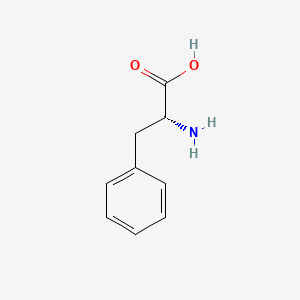 Amino acid
- Category
- Amino acid
What D-phenylalanine is, and what it does.
- Does it work
- Suits people who already know why they want the D form rather than plain phenylalanine or tyrosine. For protein building it is the L form your body puts to work.
- How much to take
- No daily amount is on record for D-phenylalanine. Start at the low end of whatever a preparation states, and take it away from a protein meal since they share one transporter.
- Time to feel it
- Nobody has measured a reliable time course in people. The older human work used single doses, so anything beyond that window is unmeasured.
- The first dose
- Day one is usually uneventful. Part of the dose is oxidised in kidney and liver and routed toward the L form within hours, which is chemistry rather than sensation.
- With regular use
- Weeks of daily use have not been mapped in modern trials, so nobody has measured what sustained intake does.
- How well tolerated
- Anyone with an inherited inability to metabolise phenylalanine must avoid all phenylalanine. Check with your clinician if you're pregnant, breastfeeding or taking medication.
- How it feels
- Reports are mixed and mostly anecdotal. Some people describe a mild lift in mood or drive, and controlled work has not confirmed a consistent sensation.
- The overlooked benefit
- It rides the same carrier into the brain as tyrosine and tryptophan, so spacing it away from a protein meal changes how much actually crosses.
The proof, claim by claim.
What these words mean
These words describe the research, not the molecule's worth. Research strength is how much work stands behind one claim, and it is never a product score.
- Partial conversion to L-phenylalanine through D-amino acid oxidaseNarrative review
- Inhibition of enkephalin-degrading peptidasesAnimal study
2 more claims
- Mood and drive supportRandomised trial
- Shared transport with other large neutral amino acidsNarrative review
Why these belong in the same formula, 8 pairings
Why these belong in the same formula. Each row says what the basis is, from settled biochemistry through to a trial that measured the pair.
Most products on the market are the racemic DL mixture rather than either pure enantiomer, because the two forms do entirely different things. The L form enters protein synthesis and the catecholamine pathway. The D form does not. Anyone reading a label needs to know which they have, since a DL product delivers roughly half of each and the dose comparisons in the literature are rarely stated on that basis.
Tyrosine and phenylalanine both cross the intestinal wall and the blood brain barrier on the LAT1 carrier, so a dose of one reduces the entry of the other. Taking them together does not add up the way a label stack implies. Whether the D enantiomer competes as strongly as the L form is less well characterised.
Tryptophan brain entry depends on its ratio to the other large neutral amino acids, and phenylalanine in either enantiomeric form is one of those competitors. A phenylalanine dose taken alongside a tryptophan dose lowers what reaches the brain. Separating them by several hours avoids the conflict.
Leucine is among the strongest competitors on the shared neutral amino acid transporter. A protein shake or a branched-chain amino acid dose will blunt phenylalanine entry into the brain. This matters for anyone taking D-phenylalanine at a specific time for a specific reason.
The enzyme that handles D-amino acids in humans, D-amino acid oxidase, uses FAD as its cofactor, and FAD is made from riboflavin. Adequate riboflavin status is therefore part of the pathway that clears a D-phenylalanine dose. This is settled cofactor biochemistry rather than a tested supplement pairing.
Once D-amino acid oxidase converts D-phenylalanine to phenylpyruvate, transamination back to the L form requires a pyridoxal-phosphate-dependent aminotransferase. That is the route by which part of a D dose ends up entering the ordinary L-phenylalanine pool. Vitamin B6 is also the cofactor further downstream in catecholamine synthesis.
Any phenylalanine that reaches the L pool can be hydroxylated to tyrosine and then routed toward dopamine and noradrenaline, and the step from dopamine to noradrenaline requires ascorbate. This is a downstream pathway note rather than a claim about the D form specifically. Only the L enantiomer is a substrate for phenylalanine hydroxylase.
The same catecholamine step that needs ascorbate also needs copper at the enzyme's active site. It is worth knowing when reading claims that route phenylalanine toward mood or focus, because the pathway has several cofactor dependencies. It says nothing about whether the D enantiomer produces any such effect.
Nothing specific on file for D-phenylalanine. Match the label to the daily amount above, and tell your doctor what you take.
Not medical advice. Show the label to your pharmacist.What D-phenylalanine actually does.
The enzyme that turns phenylalanine into tyrosine only recognises the L version. The D version is invisible to it.
3 more mechanisms
Your body cannot build protein out of the D form.
An enzyme flips part of the D form over into the L form the body can actually use.
It shares a door with several other amino acids, so what you take alongside it matters.
Where D-phenylalanine comes from.
The mixed D and L version is made by ordinary chemistry, which produces both mirror images at once. Getting the D one on its own means separating the two, which is why it costs more. The L one is grown by bacteria instead.
What this route gives you
The same molecule is reached more than one way. Which route a given product used is a manufacturing choice, and the finished compound is the same either way.
6 steps on record
Racemic phenylalanine is usually built by chemical synthesis from benzaldehyde-type feedstock, since chemical routes naturally produce both enantiomers in equal amounts. Pure L-phenylalanine, by contrast, comes from bacterial fermentation of glucose.
A standard amino acid synthesis such as the Strecker route produces DL-phenylalanine directly. This is why the racemate is the cheap commercial article and why the single D enantiomer costs more.
To obtain the D enantiomer alone, the racemate is resolved, commonly by acylating both forms and using an enzyme that acts on only one of them, or by selective crystallisation of a diastereomeric salt.
The resolved amino acid is recrystallised to remove reagents and the unwanted enantiomer.
Batches are specified by optical rotation or by chiral chromatography, since enantiomeric excess is the only thing distinguishing D from DL material.
Supplied as a white crystalline powder for capsules or tablets.
The forms it comes in.
3 more forms
The essence, in one line each.
- Pooled screening data to estimate how often inherited disorders of phenylalanine metabolism occur in the population studied.Meta-analysis. Faraji S et al., 2026 (Orphanet J Rare Dis). PMID 41742279 ↗
1 more finding
- Reviewed metabolomic profiles in people with inherited phenylalanine metabolism disorders and the metabolite patterns reported across studies.Systematic review. Gonzalez-Rodriguez A et al., 2026 (Metabolomics). PMID 41793569 ↗
Chosen from the 3 we read for D-phenylalanine.
FDA Disclaimer: These statements have not been evaluated by the Food and Drug Administration. This information is for educational purposes only and is not intended to diagnose, treat, cure, or prevent any disease. Consult your healthcare provider before starting any supplement regimen.