Guanosine.
One of the building blocks your cells string into RNA. Your body makes and recycles it constantly, and taking it in gives the salvage pathway ready-made material.
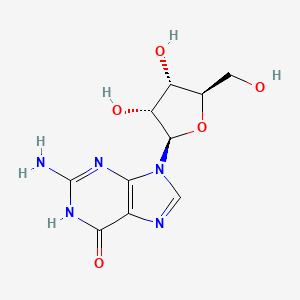 Compound
- Category
- Compound
What Guanosine is, and what it does.
- Does it work
- It suits people interested in dietary nucleotides, the way infant formulas and gut-focused blends use them. Anyone eating meat, fish or yeast already takes some in daily.
- How much to take
- No daily amount is on record for guanosine on its own. Nucleotide blends are dosed as a mixture rather than as one nucleoside, so there's no single band to lead with.
- Time to feel it
- Nobody has measured a time course in people. Dietary nucleotide work reads out on gut and immune measurements over weeks rather than on sensation.
- The first dose
- Day one passes without a sensation. What it contributes goes into the nucleotide pool your cells draw on, which nobody experiences directly.
- With regular use
- Over weeks it adds to the purine pool your cells recycle. Studies of dietary nucleotides track gut lining and immune measurements rather than anything you would feel.
- How well tolerated
- Nucleotides are eaten daily in ordinary food and are used in infant formula. Purines end up as uric acid, so anyone watching urate levels should check with a clinician.
- How it feels
- There's no subjective experience on record. It shows up in laboratory measurements rather than in mood, energy or digestion.
- The overlooked benefit
- Guanosine is the raw material for GTP, the nucleotide that powers G-protein signalling, translation and tubulin assembly. A lot of ordinary cell traffic rides on it.
The proof, claim by claim.
What these words mean
These words describe the research, not the molecule's worth. Research strength is how much work stands behind one claim, and it is never a product score.
- substrate for the purine salvage pathwayNarrative review
- contribution to the body's urate poolNarrative review
2 more claims
- dietary nucleotides and intestinal lining developmentAnimal study
- dietary nucleotides and immune measurements in infantsRandomised trial
Why these belong in the same formula, 10 pairings
Why these belong in the same formula. Each row says what the basis is, from settled biochemistry through to a trial that measured the pair.
The purine skeleton of guanosine is assembled from a glycine molecule that contributes carbons four and five plus nitrogen seven. Without glycine availability the de novo pathway stalls at the second step. This is textbook biosynthesis, which makes glycine a genuine upstream partner rather than a marketing pairing.
Glutamine amide nitrogen is used at the first committed step of purine synthesis and again when xanthosine monophosphate is converted to guanosine monophosphate. Cells with limited glutamine supply shift toward the salvage pathway instead. The relationship is settled biochemistry and applies to endogenous production rather than to what an oral guanosine dose does.
Carbons two and eight of the purine ring are donated by formyl-tetrahydrofolate at two separate steps. Folate status therefore sets a ceiling on how fast a cell can build new purines, which is why folate-limited tissue shows reduced nucleotide synthesis. Supplementing guanosine does not substitute for this, since the salvage and de novo routes serve different demands.
When B12 is short, folate accumulates as 5-methyltetrahydrofolate and cannot be recycled into the formylated species purine synthesis needs. The result is a functional folate shortage inside the cell even when total folate looks adequate. This is why the two vitamins are considered together whenever nucleotide synthesis is the subject.
The biologically active species at a GTPase site is Mg-GTP, not free GTP. Magnesium coordinates the beta and gamma phosphates and positions them for hydrolysis. Every signalling role attributed to guanine nucleotides depends on this cation being present.
Both nucleosides are cleaved by purine nucleoside phosphorylase and the resulting bases converge on xanthine oxidase and end as urate. Taken together they add to the same purine load. Anyone who has been advised to watch dietary purine intake should count both, since the endpoint marker is the same.
Work in Lactiplantibacillus reports that guanine nucleotide availability relates to how the organism handles environmental stress during processing. This concerns the bacterium's own physiology in culture, not anything measured in a person taking a probiotic. It is a formulation-side observation and should be read that way.
Purine synthesis begins with PRPP, which is built from ribose-5-phosphate. The sugar half of guanosine comes from that pool, so pentose phosphate pathway flux constrains nucleotide production. This is upstream biochemistry and does not imply that taking ribose raises guanosine levels in tissue.
Guanosine catabolism ends at uric acid, and ascorbate at higher doses has a uricosuric effect through competition at renal urate reabsorption. The interaction concerns a blood marker, not a clinical outcome, and the size of the effect is modest. It is worth knowing for anyone tracking serum urate.
The 7-methylguanosine cap on messenger RNA is installed using SAM as the methyl source, as are several internal guanine modifications. Methyl donor supply therefore sits alongside nucleotide supply in RNA metabolism. This is cellular biochemistry rather than a reason to combine the two as supplements.
Nothing specific on file for Guanosine. Match the label to the daily amount above, and tell your doctor what you take.
Not medical advice. Show the label to your pharmacist.What Guanosine actually does.
Guanosine is a basic building block made of the base guanine attached to a sugar.
3 more mechanisms
Adding phosphate groups to guanosine produces GMP, GDP and GTP, and that last one powers several core cell processes, including cell signaling and building proteins and cell structure.
Your body can recycle guanosine through a salvage pathway using a specific enzyme, which costs your cells much less energy than building it from scratch.
When your body breaks guanosine down, it eventually becomes uric acid, so taking in purine nucleosides like this adds to your body's overall uric acid pool.
Where Guanosine comes from.
Most of it comes from yeast. Either the RNA inside yeast cells is chopped up into its building blocks, or bacteria are grown that pump the nucleoside straight out into the tank. It is the same molecule your own cells make and recycle constantly.
What this route gives you
The same molecule is reached more than one way. Which route a given product used is a manufacturing choice, and the finished compound is the same either way.
6 steps on record
Torula or brewer's yeast is grown for its high RNA content, or a purine-overproducing Bacillus or Corynebacterium strain is fermented directly.
Yeast RNA is cleaved by 5'-phosphodiesterase to the four 5'-nucleotides, or the organism secretes guanosine or inosine into the broth.
Cells and solids are removed, then the nucleoside or nucleotide is captured on ion exchange or adsorption resin.
Repeated crystallisation from water gives the nucleoside or its sodium salt at high purity.
Purity and the ratio of guanosine to related purines are confirmed before release.
Sold as the free nucleoside, as the disodium monophosphate, or as part of a mixed nucleotide blend.
Getting Guanosine from food.
The whole-food sources on file. A supplement closes the gap, it does not replace dinner.
A gram-for-gram figure (how much of each you would eat to match a dose) will appear here once it is sourced and reviewed. This page will not print a number it cannot cite.
The forms it comes in.
2 more forms
The essence, in one line each.
- RNAs bearing a 5'-triphosphate guanosine end recruit GTP-binding proteins that suppress RIG-I driven type I interferon signalling, identifying a mechanism by which the guanosine cap structure sets innate immune sensing.In vitro study. Wolczyk et al., 2026 (Molecular Cell). PMID 42105765 ↗
1 more finding
- Guanine nucleotide availability is proposed as a contributor to stress tolerance in Lactiplantibacillus, based on culture and mechanistic work.In vitro study. Sui et al., 2026 (Foods). PMID 42354212 ↗
Chosen from the 3 we read for Guanosine.
The studies, linked.
2 sources behind our Guanosine verdict, every one linked to PubMed, the journal or ClinicalTrials.gov.
- Clinical trialImproving Cardiometabolic Health in Black Individuals Through Therapeutic Augmentation of Cyclic Guanosine Mono-Phosphate Signaling PathwayClinicalTrials.gov ↗Phase 2, 200 participants, Not yet recruiting
1 more linked trial
- Clinical trialCytidine-phosphate-guanosine (CpG) DNA in Hepatocellular Carcinoma Combination TherapyClinicalTrials.gov ↗Phase 1, 100 participants, Unknown
From clinical trials and PubMed, ranked by study type and citation weight, not cherry-picked.
FDA Disclaimer: These statements have not been evaluated by the Food and Drug Administration. This information is for educational purposes only and is not intended to diagnose, treat, cure, or prevent any disease. Consult your healthcare provider before starting any supplement regimen.