Insulin.
Insulin is the hormone that moves glucose from blood into muscle and fat and shuts off the liver's glucose output. It is a prescription injectable, not a supplement ingredient.
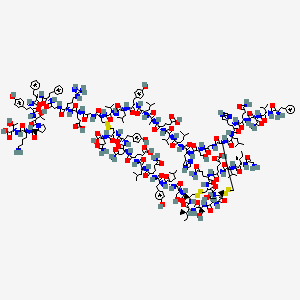 Hormone
- Category
- Hormone
What Insulin is, and what it does.
- Does it work
- This entry exists for reference and interaction checking. Insulin is prescribed and dosed by a clinician, and it is not something to source from a supplement shelf.
- How much to take
- No supplement amount exists, and none should. Dosing is individual, set and adjusted by a prescriber against blood glucose readings.
- Time to feel it
- Injected insulin acts within minutes to hours depending on the form, from rapid-acting analogues to long-acting ones that run flat across a day.
- The first dose
- Under a prescriber, day one is glucose readings and adjustment. Swallowed, it does nothing systemic, because stomach acid and gut proteases destroy the peptide.
- With regular use
- Over weeks, the effect is read from glucose logs and longer-term glycaemic markers rather than from sensation. Potassium moves into cells, so that gets watched too.
- How well tolerated
- This belongs entirely with a doctor, never in a self-directed routine.
- How it feels
- Nothing directly. What people notice comes from glucose moving: shakiness, sweating and hunger if it goes too low, which is a signal to act on straight away.
- The overlooked benefit
- It drives potassium into cells through the sodium-potassium pump, which is why clinicians pair insulin with glucose to shift potassium, quite apart from its glucose role.
The proof, claim by claim.
What these words mean
These words describe the research, not the molecule's worth. Research strength is how much work stands behind one claim, and it is never a product score.
- glucose uptake into muscle and fat through GLUT4 translocationNarrative review
- suppression of liver glucose output and of fat breakdownNarrative review
3 more claims
- movement of extracellular potassium into cellsRandomised trial
- loss of systemic activity when swallowed, from gastric and intestinal proteolysisNarrative review
- control of absorption rate by zinc hexamer dissociation in formulationsRandomised trial
Why these belong in the same formula, 20 pairings
Why these belong in the same formula. Each row says what the basis is, from settled biochemistry through to a trial that measured the pair.
Insulin shifts potassium out of the bloodstream and into muscle and liver cells within minutes. Anyone using insulin who also takes potassium supplements is stacking two inputs that move the same ion in opposite directions on plasma levels. This is a monitoring issue rather than a benefit, and potassium supplementation alongside insulin belongs under medical supervision. The interaction is direction-dependent, not a fixed additive effect.
Magnesium sits inside the insulin signalling cascade as a cofactor for the receptor tyrosine kinase step. An updated meta-analysis of oral magnesium in adults with high or borderline blood sugar reported improvement in insulin resistance indices. Those indices are calculated markers, not clinical endpoints, so read the finding as a signal about signalling efficiency. Low magnesium status is the setting where the effect is most plausible.
Melatonin receptors sit on pancreatic beta cells, and melatonin timing interacts with the circadian pattern of insulin secretion. A 2026 systematic review found insulin resistance markers improved while fasting glucose did not move. A marker shifting without the downstream glucose value shifting is a weaker result than it first reads. Evening dosing also lands at the time of day when glucose tolerance is naturally lowest.
Chromium has been studied for decades as a modifier of insulin sensitivity, and the mechanistic story runs through receptor signalling amplification. Results in people with adequate chromium status are inconsistent. Someone using insulin who adds chromium is changing one input into a system already being dosed externally. The pairing is worth flagging for monitoring rather than framing as an upgrade.
Berberine activates AMPK and increases peripheral glucose uptake independently of injected insulin. Two agents lowering glucose through separate routes produce an additive downward effect. That is exactly the pairing where blood sugar can fall further than either input alone would predict. Anyone on insulin should regard this combination as requiring medical oversight.
Alpha-lipoic acid increases GLUT4 translocation and has been associated with modest reductions in blood glucose. Layered on top of exogenous insulin, the direction of effect is the same for both. The practical consequence is additive glucose lowering rather than any change in how insulin itself works. Dose adjustment questions belong with the prescriber.
Inulin blunts the post-meal glucose rise by slowing carbohydrate delivery and feeding short-chain fatty acid producing bacteria. That changes the shape of the glucose curve a mealtime insulin dose is matched to. A related trial of prebiotic xylo-oligosaccharides found taxonomic shifts in gut bacteria without an increase in insulin sensitivity, which is a useful caution against assuming every prebiotic moves the metabolic endpoint. The timing effect is more reliable than the sensitivity effect.
Gymnemic acids interfere with intestinal glucose uptake and blunt sweet taste perception. The evidence base is small and mostly short. Stacked with insulin the direction is additive glucose lowering. Read this as a flag for monitoring rather than a recommendation.
Bitter melon contains constituents described as insulin-mimetic in laboratory work. Human trials have been inconsistent in size and quality. Anyone dosing insulin should count this as a second glucose-lowering input rather than a neutral botanical. The mechanism is plausible. The magnitude in people is not well pinned down.
Cinnamon polyphenols have been reported to influence insulin receptor phosphorylation in cell work. Human results range from modest fasting glucose reductions to no detectable difference. A failure to detect a difference is not evidence that cinnamon does nothing, and it is also not support for the claim that it works. The pairing is worth noting mainly because both inputs point the same way.
Myo-inositol and D-chiro-inositol form the phosphoglycan second messengers that carry the insulin signal inside the cell. A systematic review found that metabolic phenotype predicted which women with the irregular-ovulation, raised-androgen pattern responded biochemically to inositol supplementation, which is a reminder that the effect is population-dependent. The mechanistic link to insulin signalling is settled biochemistry. Whether supplementation changes an endpoint depends heavily on who is taking it.
Beta cells carry vitamin D receptors, which gives a mechanistic reason to look at status. A systematic review of African populations with high blood sugar reported widespread low vitamin D alongside genetic associations. Association is not causation here, and correcting a low reading is a different question from supplementing someone already replete. Read the link as hypothesis-generating.
An umbrella review pooling meta-analyses of resveratrol reported effects on glycaemic indices that were small and inconsistent across the underlying reviews. Glycaemic indices are calculated markers. Alongside exogenous insulin the theoretical direction is additive. The size of any real-world contribution looks minor.
Selenium interacts with insulin signalling through selenoprotein P, and higher selenium exposure has been linked in some cohorts to worse rather than better glucose handling. A 2026 systematic review looked at cardiovascular risk factors rather than insulin action directly. The relationship is not a simple more-is-better curve. Anyone using insulin and taking high-dose selenium should have this on their monitoring list.
A 2026 review examined curcumin supplementation and body weight, body mass index and waist circumference in adults with high blood sugar. Body composition is one step removed from insulin action itself. Curcumin also has poor oral bioavailability without a delivery aid, which limits how much reaches circulation. The insulin link here is indirect.
Taurine is present at high concentration in islet tissue and has been linked to secretory function in animal models. Human supplementation data on glucose endpoints is thin. The mechanistic case is stronger than the clinical case. Read this as mechanistic rather than clinical.
Insulin crystallises in secretory granules around two zinc ions, and the ZnT8 transporter loads that zinc. Injectable insulin formulations also use zinc to control hexamer dissociation and therefore onset speed. This is structural chemistry, not a supplementation claim. Low zinc status affects storage and secretion. Extra zinc in a replete person does not extend the logic.
Glucomannan forms a viscous gel that delays carbohydrate delivery to the small intestine. That changes the timing of the glucose rise a mealtime insulin dose is matched against. The effect is on curve shape rather than on insulin sensitivity. Taking it apart from other oral products is standard because viscous fibre also slows their absorption.
DNJ blocks the brush border enzymes that release glucose from starch, lowering the post-meal peak. Combined with mealtime insulin, both inputs lower the same value through different routes. That is an additive effect worth flagging rather than a benefit to promote. Gas and bloating from undigested carbohydrate are the usual trade-off.
Carnitine shuttles long-chain fatty acids into mitochondria, and lipid oversupply to muscle is one described route to reduced insulin sensitivity. Human supplementation results on glucose markers are small and mixed. The pathway argument is cleaner than the trial record. Count it as mechanistic.
Nothing specific on file for Insulin. Match the label to the daily amount above, and tell your doctor what you take.
Not medical advice. Show the label to your pharmacist.What Insulin actually does.
It is a small protein your pancreas makes and releases when blood sugar rises.
3 more mechanisms
It tells muscle and fat cells to open the doors that let glucose in.
It tells the liver to stop making sugar and fat cells to stop releasing fat.
It pulls potassium out of the blood and into cells, which is why potassium is watched closely alongside it.
Where Insulin comes from.
It used to come from ground-up animal pancreas. Now it is grown by bacteria or yeast that have been given the human gene, then cleaned up and bottled.
What this route gives you
Produced by a cultured organism rather than harvested. The strain is selected and the conditions are controlled, so batches sit closer together than a field crop.
5 steps on record
E. coli or Saccharomyces cerevisiae carrying a human proinsulin or insulin-precursor gene, grown on a defined fermentation medium.
The precursor is expressed, refolded to form the correct disulfide bridges, then cut with trypsin and carboxypeptidase B to release the mature A and B chain molecule. Analogues are made by altering the gene sequence before expression.
Multi-step ion exchange and reversed-phase chromatography removes host proteins, precursor fragments and endotoxin.
Zinc content, phenolic preservative and buffer pH are set to control hexamer stability, which determines onset and duration.
Filled into vials, cartridges or pens as a sterile solution or suspension under prescription-medicine manufacturing rules.
The forms it comes in.
5 more forms
The essence, in one line each.
- Insulin added to colostrum altered small intestinal histomorphology and gene expression in newborn calves.Animal study. Hare KS et al., 2023 (Journal of Dairy Science). PMID 37268570 ↗
3 more findings
- Colostrum insulin supplementation showed no detectable effect on immunoglobulin G absorption in the same calf model.Animal study. Hare KS et al., 2023 (JDS Communications). PMID 37521057 ↗
- Exogenous insulin altered lipid metabolism markers in peripartum dairy cows carrying excess body condition.Animal study. Guo Y et al., 2024 (Frontiers in Veterinary Science). PMID 39881718 ↗
- Glucose and insulin in the isolation medium affected the yield and quality of primary human hepatocytes.In vitro study. Damm G et al., 2019 (EXCLI Journal). PMID 31839763 ↗
Chosen from the 12 we read for Insulin.
The studies, linked.
12 sources behind our Insulin verdict, every one linked to PubMed, the journal or ClinicalTrials.gov.
11 more linked trials
- Clinical trialThe Durability of Twice-Daily Insulin Lispro Low Mixture Compared to Once-Daily Insulin Glargine When Added to Existing Oral Therapy in Patients With Type 2 Diabetes and Inadequate Glycemic ControlClinicalTrials.gov ↗Phase 4, 2,091 participants, Completed
- Clinical trialStudy on the Efficacy and Safety of Henagliflozin Combined with Continuous Subcutaneous Insulin Infusion in the Treatment of Type 2 Diabetes Mellitus Based on Continuous Glucose Monitoring SystemClinicalTrials.gov ↗Phase 4, 210 participants, Completed
- Clinical trialCharacteristics of Type 2 Diabetes Patients, Treated With Insulin and Their Follow up Care in GuadeloupeClinicalTrials.gov ↗205 participants, Completed
- Clinical trialComparing Two Glucose Sampling Frequencies for an Intensive Insulin Protocol During Craniotomy in Non-Diabetic Patients-How Efficiently and Safely Can We Maintain Target Glucose LevelsClinicalTrials.gov ↗Early phase 1, 120 participants, Completed
- Clinical trialComparison of Three Protocols for Tight Glycemic Control in Cardiac Surgery PatientsClinicalTrials.gov ↗120 participants, Completed
- Clinical trialThe Effect of Tirzepatide on α and β Cell Function and Insulin Sensitivity in Patients With Type 2 Diabetes MellitusClinicalTrials.gov ↗Phase 1, 117 participants, Completed
- Clinical trialLow-dose Dasiglucagon for Prevention of Insulin-Induced Hypoglycemia in People With Type 1 DiabetesClinicalTrials.gov ↗Phase 2, 20 participants, Completed
- Clinical trialEffects of Liquid Oil vs Oleogel Co-ingested With a Carbohydrate-rich Meal on Human Blood Triglycerides, Glucose, Insulin and Appetite.ClinicalTrials.gov ↗18 participants, Completed
- Clinical trialThe Bionic Pancreas Feasibility Trial Testing the Bionic Pancreas With ZP4207ClinicalTrials.gov ↗Phase 2, 13 participants, Completed
- Clinical trialAn Open-label, Randomised, 2-period Cross-over Study to Assess the Efficacy and Safety of 36-hour Closed-loop Glucose Control in Comparison With Conventional Subcutaneous Insulin Pump Treatment in Adolescents With Type 1 DiabetesClinicalTrials.gov ↗Phase 2, 12 participants, Completed
- Clinical trialThe Impact of Early Automated Insulin Delivery (AID) Therapy on Diabetes Control and Comorbidities, and Cost-effectiveness of AID Treatment - a Prospective, Randomized, Controlled Study on Pediatric Patients With Type 1 DiabetesClinicalTrials.gov ↗100 participants, Recruiting
From clinical trials and PubMed, ranked by study type and citation weight, not cherry-picked.
Problems people have reported.
Read this carefully. These are 860,126 voluntary, unverified reactions reported to the FDA (openFDA). The number mostly reflects how popular Insulin is, not how risky it is. A report is not proof Insulin caused anything. It is a signal of what to watch for, nothing more.
3 more reported effects
Source: openFDA adverse-event reports. Voluntary reporting, not an incidence rate.
FDA Disclaimer: These statements have not been evaluated by the Food and Drug Administration. This information is for educational purposes only and is not intended to diagnose, treat, cure, or prevent any disease. Consult your healthcare provider before starting any supplement regimen.