Maltitol.
Maltitol sweetens close to sugar with fewer calories, and mouth bacteria cannot ferment it into acid. That is why it shows up in sugar-free chews and gummies.
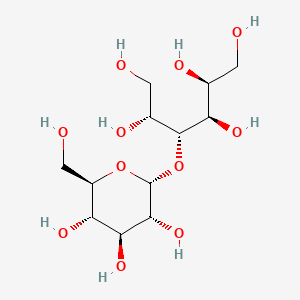 Compound
- Category
- Compound
What Maltitol is, and what it does.
- Does it work
- Suits people cutting sugar who want a sugar-like texture in a chew or gummy. Sensitive guts should start small, since the unabsorbed part pulls water into the bowel.
- How much to take
- No daily amount is on record. It is a sweetener rather than an active, so the practical guide is your own gut tolerance, and that varies a lot between people.
- Time to feel it
- Sweetness is instant. If a serving goes past your personal threshold, the gut side arrives a few hours later, once the unabsorbed part reaches the colon.
- The first dose
- Day one is sweetness plus a faint cooling in the mouth. A large serving can bring gurgling or wind later the same day. A small one usually passes unnoticed.
- With regular use
- Over weeks the lasting point is dental. Plaque bacteria cannot make acid from it, so it does not drive the plaque pH drop that fermentable sugars produce.
- How well tolerated
- Well tolerated in small servings. Above an individual threshold it brings bloating, wind and looser stools, which is why polyol labels carry a laxation note.
- How it feels
- Sweet and sugar-like, with a mild cool note weaker than xylitol's. The honest downside is a heavy, gassy gut if you eat a lot of it in one sitting.
- The overlooked benefit
- It is not glucose-free. Gut maltase splits part of every dose, so the glucose rise per gram is lower than sugar's but real, which matters if you track glucose.
The proof, claim by claim.
What these words mean
These words describe the research, not the molecule's worth. Research strength is how much work stands behind one claim, and it is never a product score.
- not fermented to acid by plaque bacteriaIn vitro study
- osmotic gut effects above an individual thresholdRandomised trial
2 more claims
- reduced available energy per gram compared with sugarNarrative review
- cooling mouthfeel from endothermic dissolutionIn vitro study
Why these belong in the same formula, 7 pairings
Why these belong in the same formula. Each row says what the basis is, from settled biochemistry through to a trial that measured the pair.
Neither polyol is fermented to acid by oral Streptococcus mutans, so both raise salivary pH through chewing-stimulated flow rather than feeding acid production. A retrospective analysis of xylitol and maltitol gums reported plaque and salivary pH changes with both. Xylitol carries the additional documented step of interfering with S. mutans metabolism, which maltitol does not share. These are plaque and pH markers, not a caries outcome.
Maltitol that escapes absorption is partly split by intestinal maltase into glucose and sorbitol, so sorbitol appears in the gut lumen from maltitol alone. Adding sorbitol to the same product stacks two poorly absorbed polyols with the same osmotic behaviour. The practical consequence is that the tolerance threshold for the combined product is lower than for either alone, which is why total polyol per serving matters more than any single name on the ingredient list.
Maltitol is used specifically to displace sucrose, and the two behave differently at both ends. Oral bacteria ferment sucrose to acid within minutes and do not ferment maltitol. Maltitol is also absorbed slowly and incompletely, so the post-meal glucose rise is smaller than for an equal weight of sucrose. Where both appear in the same product, the sucrose fraction determines the acid challenge.
Unabsorbed maltitol passes to the colon, where bacteria ferment it to short-chain fatty acids and gas. Inulin does the same by a different route as a fructan. Combining them in one product stacks the total fermentable load, and gas, bloating and looser stools track that total rather than either ingredient's own reputation. Splitting intake across the day is the usual way people stay under their own threshold.
Poorly absorbed magnesium salts such as the oxide and the citrate draw water into the bowel osmotically, which is why they loosen stools at higher intakes. Unabsorbed maltitol does the same thing by the same physical mechanism. Taken together in one sitting, the two add up, and the looseness people blame on the magnesium may be coming from the sugar-free chocolate.
The fraction of maltitol that escapes small intestinal absorption is fermented in the colon, and lactobacilli and bifidobacteria are among the genera that can use polyols. Whether a supplemented strain benefits measurably from co-ingested maltitol has not been shown in controlled human work. The reliable part is that the substrate arrives. What the community does with it is strain-dependent.
Enamel remineralisation depends on calcium and phosphate being available in saliva at a pH that favours deposition rather than dissolution. Sugar-free gum works on the pH side by stimulating salivary flow and not feeding acid production. Calcium-phosphate systems added to gums address the mineral side. The two act on different halves of the same equation, and the evidence is on surface markers rather than on cavity counts.
Nothing specific on file for Maltitol. Match the label to the daily amount above, and tell your doctor what you take.
Not medical advice. Show the label to your pharmacist.What Maltitol actually does.
Mouth bacteria cannot eat it, so it does not create the acid dip that sugar does after you chew something sweet.
3 more mechanisms
Some gets split and absorbed, and a fair chunk of it never does. What is left goes to the colon, where bacteria ferment it and make gas.
What stays in the gut pulls water in with it. Past a certain amount per sitting you get gas and a loose stool, and that amount is different for everyone.
It nudges blood sugar less than sugar does, but it is not a free pass. Part of it becomes glucose in your gut and gets absorbed like any other glucose.
Where Maltitol comes from.
It starts as ordinary starch, gets broken down into maltose, then gets hydrogenated so one half turns into sorbitol. The result tastes close to sugar, carries fewer calories, and mouth bacteria cannot ferment it into acid.
What this route gives you
Chemically synthesised. The molecule is identical to the one a plant or an animal makes, and building it deliberately means a known purity, a fixed dose and no crop contaminants. For several nutrients this is the only route that reaches a usable amount.
5 steps on record
Food-grade starch is the starting material. The plant source varies by manufacturer and region and is not always declared on the label.
Starch is liquefied with alpha-amylase then treated with beta-amylase or pullulanase to release maltose, the glucose-glucose disaccharide.
Maltose is hydrogenated under pressure over a Raney nickel catalyst. The reducing glucose unit becomes sorbitol while the second glucose stays intact, giving maltitol.
The nickel catalyst is filtered out and the syrup is passed over ion exchange resins and activated carbon to strip residual metals, salts and colour.
The purified solution is either crystallised into a white powder or concentrated into maltitol syrup, which retains a mixture of hydrogenated oligosaccharides.
The forms it comes in.
1 more form
The essence, in one line each.
- In a retrospective study of 100 children, chewing gums with either maltitol or xylitol reduced dental plaque and increased salivary pH.Cohort study. Ludovichetti FS et al., 2025 (Dentistry Journal). PMID 40559136 ↗
Chosen from the 1 we read for Maltitol.
The studies, linked.
5 sources behind our Maltitol verdict, every one linked to PubMed, the journal or ClinicalTrials.gov.
- Clinical trialStudy on the Effect of Chewing Sugar-free Gum on Re-mineralization of Early Caries Via Quantitative Light-induced FluorescenceClinicalTrials.gov ↗482 participants, Completed
4 more linked trials
- Clinical trialDigestive Tolerance and Postprandial Glycaemic and Insulinaemic Responses Evaluation of Different Maltitol/FOS Mixtures in Healthy AdultsClinicalTrials.gov ↗36 participants, Completed
- Clinical trialThe Influence of Maltitol on the Absorption and Metabolism of Flavanols From ChocolateClinicalTrials.gov ↗15 participants, Completed
- Clinical trialEfficacy and Tolerability of a Specialized Food Products for Dietary Therapeutic and Preventive Nutrition Based on Ice Cream (Ice Cream With Brazzein, Maltitol and Oligofructose; Ice Cream With Brazzein, Erythritol, Maltitol and Inulin) Compared to Standard (Sundae) Ice CreamClinicalTrials.gov ↗100 participants, Active not recruiting
- Clinical trialAnalysis of Effects of Specialized Food Products Based on Ice-Cream on Esophageal MotilityClinicalTrials.gov ↗30 participants, Recruiting
From clinical trials and PubMed, ranked by study type and citation weight, not cherry-picked.
FDA Disclaimer: These statements have not been evaluated by the Food and Drug Administration. This information is for educational purposes only and is not intended to diagnose, treat, cure, or prevent any disease. Consult your healthcare provider before starting any supplement regimen.